
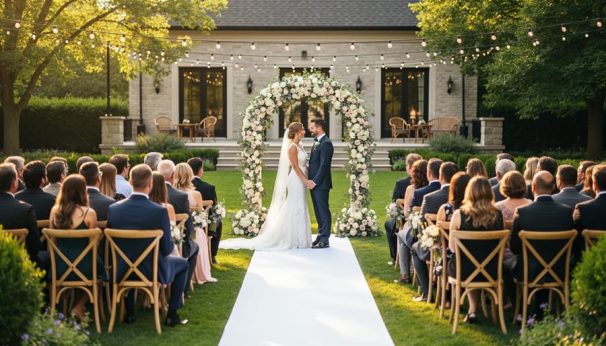
Planning an outdoor wedding in Toronto means navigating a surprisingly wide price spectrum. Based on 2026 venue data, you’re looking at per-person costs that range from around $50 for cocktail-style receptions to $95+ for full plated dinners at established properties like Old Mill Toronto. Package pricing at smaller venues like La Vecchia Lakeshore runs $4,000 to $7,000, while event spaces such as The Bram & Bluma Appel Salon quote between $2,040 and $4,170 for venue rental before catering. What drives that gap? Capacity, season, location, and what’s included in the base fee.
Capacity plays a bigger role than most couples expect. A garden venue that fits 80 guests will price differently than a waterfront estate that accommodates 450. Peak-season Saturdays between June and September book up fast, and many venues require deposits six to twelve months out. Off-peak dates in May or early October often unlock better rates and more flexibility, but you’ll need to weigh weather risk against savings.
This guide breaks down what Toronto outdoor venues actually cost, how capacity affects your budget, and what availability looks like heading into the 2026 season. You’ll find real pricing examples, a breakdown of what’s included versus what costs extra, and practical trade-offs between DIY logistics and full-service packages. Whether you’re eyeing a historic estate in Etobicoke or a downtown rooftop with skyline views, you’ll walk away knowing what to budget and which questions to ask when you tour.
Toronto Outdoor Wedding Venue Costs: What You’ll Actually Pay
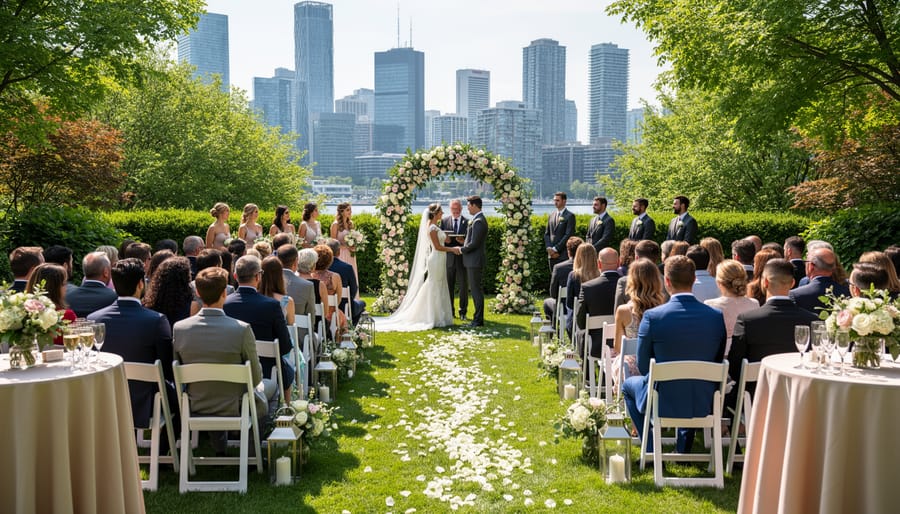
If you’re starting to price out outdoor wedding venues in Toronto, here’s what the numbers actually look like in 2026. Real venues charge anywhere from around $50 per person for daytime events to well over $100 per person for peak-season evening celebrations, with site fees and packages varying based on what’s included.
Let’s look at three Toronto-area venues with current verified pricing so you can see the range you’re working with:
| Venue | Location | Capacity | Pricing |
|---|---|---|---|
| Old Mill Toronto | Etobicoke | Up to 450 seated / 720 cocktail | $50, $95 per person (cocktail), $51, $75 per person (brunch), starting at $75 per person |
| The Bram & Bluma Appel Salon | Toronto | Up to 490 seated / 575 cocktail | $2,040, $4,170 total |
| La Vecchia Lakeshore | Etobicoke | Up to 80 seated / 120 cocktail | $4,000, $7,000 packages |
Old Mill Toronto offers per-person pricing that scales with your event format: a brunch wedding starts around $51 per person, while a cocktail reception ranges from $50 to $95 depending on menu choices and service level. Their standard starting rate is $75 per person, which typically includes ceremony space and basic setup.
The Bram & Bluma Appel Salon uses a different structure, with total package pricing between $2,040 and $4,170. This approach works well for mid-sized events where you want a clear upfront cost rather than calculating per-head as your guest list shifts.
La Vecchia Lakeshore, a smaller waterfront venue, offers wedding packages from $4,000 to $7,000. At a maximum capacity of 80 seated or 120 cocktail-style, it’s designed for intimate gatherings and the package price reflects an all-in approach.
These numbers give you a starting point, but what you’ll actually pay depends on factors we’ll break down in the next sections: what’s included in the base price, which services cost extra, and how capacity, location, and timing shift the total. If you’re also comparing nearby options, Vaughan venue costs follow similar pricing structures but may offer different value depending on your guest count and preferred setting.
Understanding these real venue numbers helps you build a realistic budget before you start touring properties or making deposits.
Understanding Your Venue Cost Breakdown
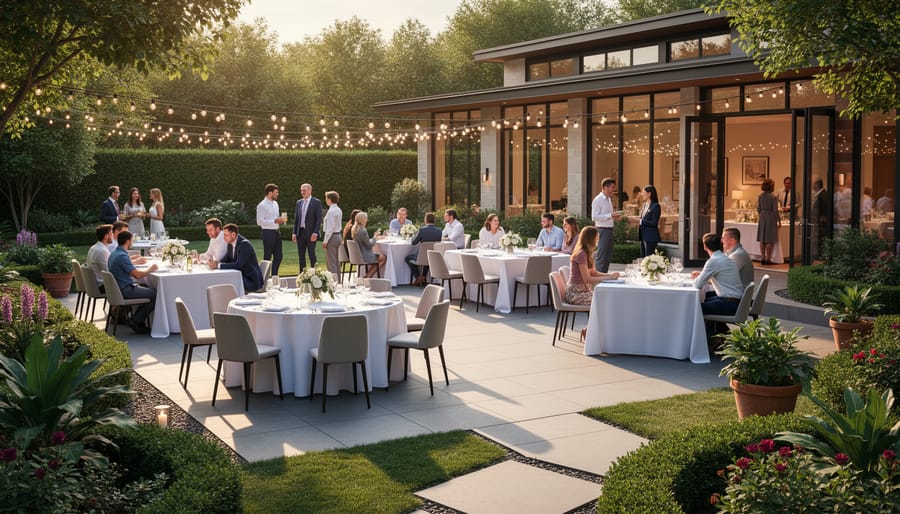
Toronto outdoor venue quotes can look overwhelming at first glance, but once you understand the structure, you’ll know exactly what you’re paying for, and what’s still on your list to budget. Most venues present their pricing in one of two ways: a flat site-rental fee that gives you the space and basic amenities, or a per-person package that bundles the venue with catering and service. Knowing which model you’re working with is the first step in any wedding budget breakdown.
Site rental vs. per-person packages: A site rental gives you access to the outdoor space for a set number of hours, usually six to eight, and often includes essentials like tables, chairs, basic setup and teardown, parking access, and any required permits or insurance the venue holds. You bring in your own caterer, bar service, rentals, and coordination. This model works well if you want full control over vendors and are comfortable managing multiple moving parts. Per-person packages, on the other hand, bundle the venue fee with catering, bar service, staffing, and sometimes rentals like linens and glassware. Old Mill Toronto’s starting rate of $75 per person, for example, typically rolls several services into one line item, simplifying budgeting but reducing flexibility.
When you’re reading a venue quote, look for these common line items and what each typically covers:
- Site rental fee: outdoor ceremony and reception space for a set number of hours, often including parking and liability insurance
- Setup and teardown: venue staff placing tables, chairs, and basic decor before and clearing after your event
- Permits and licenses: city permits for outdoor gatherings, alcohol service, amplified sound, or temporary structures
- Catering and bar service: food, beverage, kitchen staff, bartenders, and service team (often bundled in per-person pricing)
- Rentals: linens, glassware, flatware, china, additional furniture, tents, lighting, and dance floors (frequently an add-on)
- Staffing: coordinators, servers, bartenders, security, valet, and restroom attendants beyond the base team
- Overtime fees: additional hours beyond the contracted event window, charged per hour or per half-hour
What you see as “extras” depends entirely on the venue’s model. La Vecchia Lakeshore’s package range of $4,000 to $7,000 might include catering and service, while The Bram & Bluma Appel Salon’s $2,040 to $4,170 range may cover only the space and basic amenities, leaving you to book every other vendor separately. Always ask for a detailed line-item breakdown, not just a total, so you can compare apples to apples across venues and spot where hidden costs, like overtime, service charges, or mandatory staffing, might push you over budget. Understanding the structure upfront saves surprises later and helps you allocate funds where they matter most to your vision.
What Influences Outdoor Venue Pricing in Toronto

Several factors combine to shape what you’ll pay for an outdoor wedding venue in Toronto, and understanding them helps you target your search and negotiate effectively. The same venue can vary widely in cost depending on when you book, how many guests you invite, and what’s bundled into the package.
Location within the Greater Toronto Area plays a significant role. Downtown venues with premium addresses and skyline views typically command higher rental fees than properties in Etobicoke or outlying neighborhoods. For example, The Bram & Bluma Appel Salon in Toronto proper has package pricing starting around $2,040, while La Vecchia Lakeshore in Etobicoke offers wedding packages from $4,000 to $7,000. That said, location pricing isn’t always linear, an established estate venue in the suburbs with extensive grounds and built-in amenities can cost as much as or more than a downtown option, so don’t assume distance from the core always equals savings.
Guest count and venue capacity directly affect your bottom line. Most outdoor venues price per person once catering and bar service are included, so a 150-person wedding will cost substantially more than an 80-person celebration even at the same venue. Old Mill Toronto, which accommodates up to 450 seated or 720 for cocktail receptions, prices cocktail events between $50 and $95 per person. Smaller venues like La Vecchia Lakeshore, with capacity up to 80 seated or 120 for cocktails, work with package pricing that reflects their more intimate scale. If your guest list is flexible, trimming even 20 guests can yield real savings without sacrificing the celebration.
Day of the week and season shift pricing noticeably. Saturday evenings in June, September, and early October carry premium rates because demand peaks then. Friday and Sunday weddings often come at a lower cost, and some venues offer midweek discounts. Shoulder-season months, late spring and early fall outside the absolute peak, can offer better availability and pricing while still providing pleasant weather. Weather contingencies matter, too: venues that include backup indoor space or tent rentals in their packages may charge more upfront but save you the stress and expense of arranging last-minute coverage.
Included services and amenities vary widely and have a major impact on value. A venue quoting $75 per person (like Old Mill Toronto’s starting rate) that includes catering, bar service, linens, tables, chairs, setup, breakdown, and on-site coordination delivers more value than a $50-per-person rate with none of those elements included. Ask every venue for a detailed breakdown of what’s in the base price and what costs extra, rentals, staffing, permits, parking, and overtime fees can add up quickly. Some parks and garden venues charge low or no rental fees but require you to bring in everything, which often ends up costing more than an all-inclusive package once you factor in coordination time and vendor management.
Venue type also influences pricing structure. Waterfront properties, heritage estates, and botanical gardens often have higher baseline fees due to their unique settings and upkeep costs. Public parks may offer the lowest rental fees but come with permit requirements, limited infrastructure, and restrictions on vendors or timing. Private estates and purpose-built event spaces typically fall in the middle, offering a balance of ambiance, amenities, and flexibility.
Capacity Planning: Matching Guest Count to Venue Size
Understanding how venues measure capacity is the first step in matching your guest list to the right space. Toronto outdoor venues typically list two numbers: seated capacity and cocktail-style capacity. Seated capacity assumes guests will have assigned chairs at tables for a full meal, requiring more square footage per person. Cocktail capacity allows for a larger headcount because guests stand and mingle, needing less dedicated space. For example, Old Mill Toronto accommodates up to 450 seated or 720 for cocktail receptions, while The Bram & Bluma Appel Salon holds up to 490 seated or 575 cocktail-style. If you’re planning an intimate celebration, La Vecchia Lakeshore offers a more personal setting with capacity for 80 seated or 120 cocktail guests.
Capacity directly affects per-person pricing because venues often tier their rates based on guest count minimums. A venue that seats 200 might require you to guarantee 150 guests during peak season, which means your total cost stays consistent even if your actual headcount is lower. Larger venues like Old Mill Toronto can spread fixed costs across more guests, sometimes bringing the per-person rate down as your headcount climbs. Smaller venues like La Vecchia Lakeshore work well for couples seeking small wedding venues but your per-person rate might be higher because fixed costs are divided among fewer people.
Don’t forget to account for more than just tables and chairs when calculating space needs. You’ll want room for a dance floor, bar stations, a ceremony area if you’re hosting the vows outdoors, a DJ or band setup, and buffer zones for guest flow. A venue listed at 200 seated might feel cramped if you’re adding all these elements, so it’s smart to visit the space with your planner and visualize the layout. Ask the venue coordinator to walk you through their floor plans for weddings similar to yours in size and style, and confirm whether their stated capacity includes space for everything you envision.
Booking Timelines and Availability: What to Expect
Popular outdoor wedding venues in Toronto typically book 12 to 18 months in advance for peak summer and early fall dates, though this window can be shorter for off-season weekends or weekday celebrations. When a venue lists “availability,” it means dates that haven’t been formally contracted, not that the space is guaranteed to remain open while you deliberate. Many couples secure their preferred venue within days of touring, especially for sought-after Saturday slots between May and October.
Understanding this competitive landscape helps you approach your search with realistic expectations. Start by shortlisting venues early in your planning process, even if you’re still finalizing other details. Most venues allow you to check real-time availability online or through an inquiry form, but a phone call often yields faster, more detailed responses about what’s truly open versus what’s on hold for other couples. Our GTA venue guide includes direct booking tips and contact strategies for popular properties across the region.
When you reach out to venues, ask specific questions that clarify both calendar availability and logistical timelines. Confirm whether your preferred date is open, how long they’ll hold it without a deposit, what the deposit and payment schedule look like, and when final guest counts are due. For outdoor venues, also ask about backup plans for inclement weather, what lead time they need for setup, whether you need separate permits for tents or amplified music, and if they have restrictions on ceremony times based on sunset or park hours.
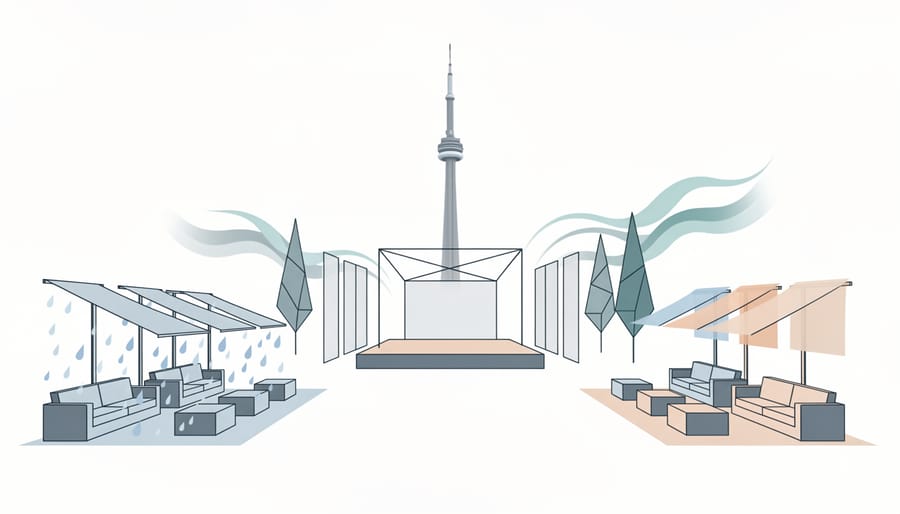
Weather contingencies and permit requirements can extend your planning timeline beyond the venue contract itself. Toronto’s unpredictable spring and fall weather means many outdoor venues require you to book a rain plan simultaneously, which may involve additional costs or separate availability checks for indoor spaces. Municipal parks and public gardens often require permits filed weeks or months in advance, so factor that administrative lead time into your booking window. The clearer you are about these dependencies upfront, the smoother your timeline becomes.
DIY Elements vs. Full-Service Packages: Where You Can Save (or Spend)
Choosing between a DIY-friendly venue and an all-inclusive package fundamentally changes both your budget and your planning timeline. Venues that let you bring in outside vendors typically charge lower base fees, you’re renting the space and buying flexibility, while full-service packages bundle site rental, catering, bar service, coordination, and often rentals into a single per-person price. The Old Mill Toronto’s $75-per-person starting rate, for example, reflects a package approach where most essentials are included, whereas a DIY-friendly venue might charge $2,000-$4,000 for site rental alone and leave the rest to you.
The tasks you can realistically handle yourself fall into a clear hierarchy. Here’s what couples typically take on, from simplest to most demanding:
- Signage and directional prints: print at home or through an online service, frame or mount yourself
- Wedding favors and welcome bags: assemble and package at your own pace in the weeks before the wedding
- Centerpieces and table decor: arrange flowers or candles the day before if the venue allows early access
- Ceremony backdrop or arch: rent or build a simple structure, but factor in transport and setup time on-site
- Full decor installation: requires a team, a vehicle, and several hours on setup day, consider hiring day-of help even if you source items yourself
Beyond decor, professionals become necessary for catering, bar service, liability insurance, and equipment rentals like tents, chairs, tables, and lighting. These aren’t just conveniences; most venues require licensed caterers and insured bartenders, and coordinating deliveries, setup schedules, and teardown across multiple vendors demands experience. A venue coordinator or day-of planner typically costs $1,500-$3,000 but prevents logistical breakdowns that can derail your timeline.
The budget impact depends on your labor willingness. DIY elements can save $2,000-$5,000 on decor and personal touches, but only if you have the time, transport, and helpers to execute them. All-inclusive packages remove decision fatigue and transfer risk to the venue, which matters at outdoor sites where weather, permits, and equipment coordination are less forgiving. If you’re considering venues with accommodation factor in whether overnight access lets you stage DIY elements gradually rather than racing against a ceremony start time.
The stress trade-off is real: couples who DIY decor but hire professionals for food, drink, and coordination report manageable workloads, while those who try to self-coordinate multiple vendors often wish they’d paid for a package. Know your limits, and budget for the help you’ll actually need on the day.
DIY vs Hiring a Pro
Hiring a wedding coordinator or planner adds roughly $1,500 to $3,000 to your budget, but that investment can save you thousands in vendor negotiations and timeline mishaps. A pro brings relationships with rental companies, caterers, and florists, often securing better rates than you’d get on your own. They also handle day-of logistics, setup schedules, vendor arrivals, timeline pivots, so you’re not troubleshooting a late tent delivery or coordinating bartender breaks during cocktail hour.
DIY is tempting when you see the price tags at all-inclusive venues but it demands dozens of hours for vendor research, contract review, and on-site coordination. You’ll need someone to direct setup crews, manage the run-of-show, and solve problems while you’re getting ready. Many couples split the difference: hire a day-of coordinator for $800 to $1,200 to execute your plan without taking on the full planning fee. That middle path keeps you in control of design and budget decisions while ensuring a professional handles execution when it matters most.
Pros and Cons
Pros
- Natural light and scenery create stunning photo opportunities without additional decor costs.
- Venues with flexible vendor policies let you control catering and bar costs, potentially saving thousands.
- Larger outdoor spaces often accommodate more guests at lower per-person rates than indoor venues.
- Gardens, waterfront views, and park settings provide built-in ambiance that reduces styling expenses.
Cons
- Weather contingencies require backup plans, rental tents, or indoor alternatives that add to your budget.
- Outdoor venues may need additional rentals for restrooms, lighting, heating, or cooling depending on the season.
- Peak-season availability fills quickly, often requiring booking 12 to 18 months in advance.
- Permit requirements, noise bylaws, and site access restrictions can limit your timeline and vendor choices.
These trade-offs matter most when you’re comparing quotes across different venue types. A waterfront estate might cost more upfront but include tables, chairs, and parking, while a city park rental looks cheaper until you add tent rentals, generator fees, and portable facilities. Factor in your guest count, your timeline, and your comfort level with weather risk before committing. The right outdoor venue balances your vision with your budget realities, and understanding these pros and cons helps you ask the right questions during venue tours.
Common Questions About Toronto Outdoor Wedding Venue Costs
When researching outdoor venues in Toronto, couples often have the same core questions about pricing, inclusions, and timing. Here are the answers to help you plan more confidently.
Do outdoor venues cost less than indoor venues?
Not necessarily. Outdoor venues range from parks requiring rentals for everything to full-service estates with similar pricing to indoor ballrooms. Venues like Old Mill Toronto start at $75 per person, comparable to many indoor options, while smaller spaces like La Vecchia Lakeshore offer packages from $4,000 to $7,000 depending on services included.
What’s typically included in a rental fee?
Base rental fees usually cover site access, setup and teardown time, parking, tables and chairs, and basic liability insurance. Per-person packages often include catering, bar service, linens, and staffing. Always request an itemized quote to see exactly what you’re paying for versus what costs extra.
How do weather contingencies affect pricing?
Venues with indoor backup space may charge a premium or require you to rent a tent as insurance. Some include weather contingency planning in their packages, while others charge separately for tent rentals, heating, or last-minute indoor space activation. Clarify these terms before signing a contract.
When is the best time to book for value?
Peak season runs May through September, with June and September dates filling first. Shoulder months like April and October often offer more flexible pricing and better availability, and weekday weddings typically cost 15 to 25 percent less than Saturdays. Booking 12 to 18 months ahead gives you the widest selection.
One question that comes up often is whether you can negotiate venue pricing. Most established venues have set package rates, but there’s room to adjust what’s included rather than the base price. You might negotiate upgraded bar service at the standard tier price, waived vendor fees for bringing in your own florist, or complimentary extras like valet parking or an extended cocktail hour. Flexibility increases if you’re booking an off-peak date or willing to work within the venue’s preferred vendor list.
Understanding venue capacity also affects cost planning. The Bram & Bluma Appel Salon accommodates up to 490 seated or 575 for cocktail style, which allows couples to adjust their guest list and format to fit their budget. Smaller venues like La Vecchia Lakeshore, with capacity up to 80 seated or 120 for cocktails, work well for intimate weddings where per-person costs can be offset by a shorter guest list.
The key to getting accurate answers for your specific situation is asking detailed questions upfront. Request a full cost breakdown, clarify what happens if it rains, confirm capacity limits for your preferred setup style, and ask about any recent price increases or seasonal adjustments. Toronto venues are competitive, so transparency is standard when you ask the right questions.
Outdoor wedding venue costs in Toronto reflect a spectrum of choices, and understanding that range empowers you to plan with confidence. As you’ve seen, pricing hinges on capacity, location, what’s included in your package, and when you book. A venue in Etobicoke with per-person pricing around $50 to $95 delivers a very different experience and cost structure than a downtown space with a flat rental fee plus à la carte services. Capacity matters, too, hosting 80 guests versus 450 changes not just the total bill but also your logistical needs and vendor coordination.
Don’t stop at the advertised base price. Request itemized quotes that spell out site rental, catering minimums, service charges, rentals, staffing, and any weather-contingency costs. Visit your shortlisted venues in person to see the space, meet the team, and ask specific questions about what’s negotiable and what’s fixed. A venue that looks affordable on paper might require substantial add-ons, while a higher upfront package could bundle everything you need and simplify your planning.
Your perfect outdoor setting exists within your budget, it just takes clarity on what you’re paying for and what matters most to you. Trust your research, lean on detailed quotes, and choose a venue that aligns with your vision and your financial reality. You’re not just booking a location; you’re creating the backdrop for one of the most meaningful days of your life.