
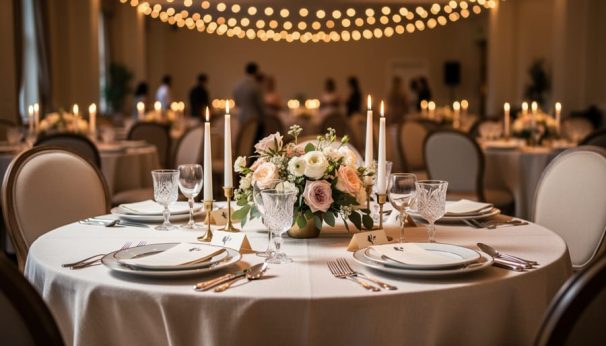
Small weddings (typically under 75 guests) need venues that can feel full and welcoming without swallowing your guest list in empty space. The right small wedding venue offers flexible minimum guest counts or buy-outs, intimate room configurations, transparent per-person pricing starting around $500 for the simplest rentals, and packages that don’t force you to pay for services designed for 200-person celebrations.
If you’re planning an intimate wedding in 2026, you’re part of a meaningful shift. Couples are choosing smaller guest lists intentionally, not as a compromise, and that changes everything about venue selection. A ballroom that seats 250 won’t just look empty with 40 guests. It will feel wrong, and your photographer will struggle to capture the warmth you’re creating. You need spaces designed or adaptable for your actual headcount, where your celebration fills the room with energy instead of echoing across vacant tables.
The challenge isn’t finding any venue. It’s finding one that treats your small wedding as a complete celebration rather than a half-empty big wedding. Many venues enforce minimums of 100+ guests or charge the same base fees regardless of size. Others offer ceremony-only rentals (often one-hour blocks) that include essential setup like chairs, registry tables, and even thoughtful touches like tissues and water stations, but these rarely include food service unless you book an accompanying reception package.
This guide walks you through what actually matters when you’re comparing small wedding venues: guest count flexibility, transparent pricing structures, layout options that scale down gracefully, and the questions you should ask before signing a contract. You’ll learn which venue types naturally suit intimate celebrations, how to spot hidden costs, and how to avoid paying for space and services you don’t need.
What Makes a Venue Right for a Small Wedding?

The biggest mistake couples make when planning a small wedding is booking a venue designed for large celebrations and hoping it will scale down gracefully. A ballroom built for 250 guests doesn’t become charming when you add 25 people, it becomes cavernous and impersonal, no matter how many candles you light or how thoughtfully you cluster tables. Small weddings need venues that feel intentionally intimate, not accidentally empty.
Atmosphere matters more than square footage when you’re celebrating with fewer than 75 guests. Look for spaces with architectural features that naturally create coziness: lower ceilings, defined seating areas, warm lighting, or garden settings where proximity feels intentional rather than cramped. A boutique event space designed for 50 people will always feel more special than renting a fraction of a grand hall.
Pricing structures reveal whether a venue truly welcomes small weddings or merely tolerates them. Watch for minimums that force you to pay for 150 guests when you’re hosting 40, or inflexible packages that bundle services you don’t need. The best small wedding venues offer straightforward rental models, hourly rates or flat fees that reflect actual capacity use. With ceremony rentals ranging from $500 to $9,000 depending on location and amenities, you should find options that align with your guest count without subsidizing empty chairs.
Pay attention to what’s genuinely included versus what requires add-ons. Quality small wedding venues often provide thoughtful details as standard: chair setup and breakdown, registry and guestbook tables, water stations, even tissues and mints for guests. These aren’t luxuries, they’re signs the venue understands intimate celebrations and has streamlined the experience accordingly. If a space makes you rent every single item separately or insists on preferred vendor lists that inflate costs, it’s not built for small weddings. It’s a large venue trying to fill slow dates.
Key Factors to Consider When Comparing Small Wedding Venues
Guest Count and Capacity
The difference between a venue’s maximum capacity and your actual guest list is critical for small weddings. A space that holds 250 guests will feel cavernous and impersonal with 25 people scattered across it. You want a venue where your group fills the room comfortably, creating energy and intimacy rather than awkward empty space.
Small weddings span a wide range: a 10-person elopement in a hotel suite creates a completely different atmosphere than a 75-person celebration in a garden or loft. For micro weddings under 20 guests, look for spaces designed for gatherings rather than events, private dining rooms, boutique ceremony sites, or outdoor nooks that naturally accommodate small groups. These settings should feel like an intentional choice, not a downsized compromise.
As your guest count climbs toward 50 or 75, you gain flexibility but still need proportionate spaces. A venue that comfortably seats 50 to 100 is your sweet spot, large enough to avoid feeling cramped, small enough to maintain closeness. Many ceremony rental spaces accommodate 10 to 250 guests, but that range means you’ll need to visit and visualize your specific headcount in the room.
When touring venues, imagine your exact number of guests seated. Can you picture easy conversation flowing? Will everyone feel included during toasts? That’s the real capacity test.
Pricing Models and What’s Included
Small wedding venue pricing varies widely based on structure and what’s included. You’ll encounter four main models: hourly rentals (common for ceremony-only spaces), flat site fees, per-person minimums, and all-inclusive packages. Hourly rates typically start around $500 for basic ceremony rentals with one-hour access, while premium full-day packages can reach $9,000 or more depending on services bundled.
Understanding what’s actually included prevents surprise costs later. Most venues provide basics like setup and removal of chairs, registry and guestbook tables, and essential amenities (water stations, coat racks, tissues). Some upscale properties include decorative elements like oak pillars or archways. However, you’ll almost always arrange flowers independently, and catering is frequently separate unless you’re booking an all-inclusive package or restaurant venue.
The sweet spot for transparent wedding costs is venues that itemize exactly what the rental covers versus what you source yourself. Ask for a detailed breakdown during tours: which furniture comes standard, whether staffing for setup is included, if there’s a coordinator on-site, and what vendor services you must book through preferred lists. This clarity helps you compare true total costs, not just the advertised base rate.
Rental Duration and Booking Terms
Rental duration shapes everything from your timeline to your budget. Many ceremony-only venues operate on strict one-hour windows, enough for the service itself, but with minimal buffer for photos or lingering guests. If you want pre-ceremony setup time or a relaxed post-ceremony cocktail hour in the same space, confirm whether that hour includes your full event or just the official ceremony.
All-day access venues give you breathing room: unhurried setup, time for first-look photos, and flexibility if things run late. This matters more for small weddings than you might expect, intimate gatherings often feel less rushed, and couples want to savor the day rather than watch the clock.
Ask who handles setup and breakdown. Some venues include chair arrangement, registry tables, and even tissues and water stations in your rental; others expect you or your coordinator to do it all. VRBO venue rentals and private estates typically require full DIY coordination, while hotels and event spaces often provide turnkey service. Clarify responsibilities upfront, especially if you’re working without a planner, so you’re not scrambling the morning of your wedding.
Types of Small Wedding Venues Compared
Hotels and Resorts
Hotels and resorts offer small wedding couples a turnkey solution that eliminates much of the logistical stress. You get ceremony and reception spaces under one roof, plus on-site accommodations for you and your guests, making them especially attractive for weekend packages where everyone can celebrate together without worrying about transportation or checkout times.
What sets hotel venues apart is the level of professional support baked in. Most include a dedicated event coordinator who handles setup details you might not even think about: arranging chairs in your ceremony configuration, positioning the registry desk and guestbook table, setting out tissues and mints, and ensuring water stations and coat racks are where guests need them. You show up to a polished, ready-to-go space.
The food-and-beverage component is another major advantage. Many upscale properties require that your ceremony includes a coordinated dining function, which streamlines vendor management and often results in exceptional catering since the kitchen team knows the space intimately. Setup and breakdown are handled by venue staff, so you’re not coordinating volunteers or worrying about timing.
That convenience comes with structure, though. Hotels typically rent ceremony spaces in one-hour windows, and while some elements like oak pillars or arches may be included if needed, you’ll still arrange your own floral. Pricing at resort properties can stretch from moderate to premium, well into the thousands depending on location and season, but for couples who value a worry-free, elegant experience with everything coordinated by professionals, the investment often pays off in peace of mind.
Boutique Event Spaces and Lofts
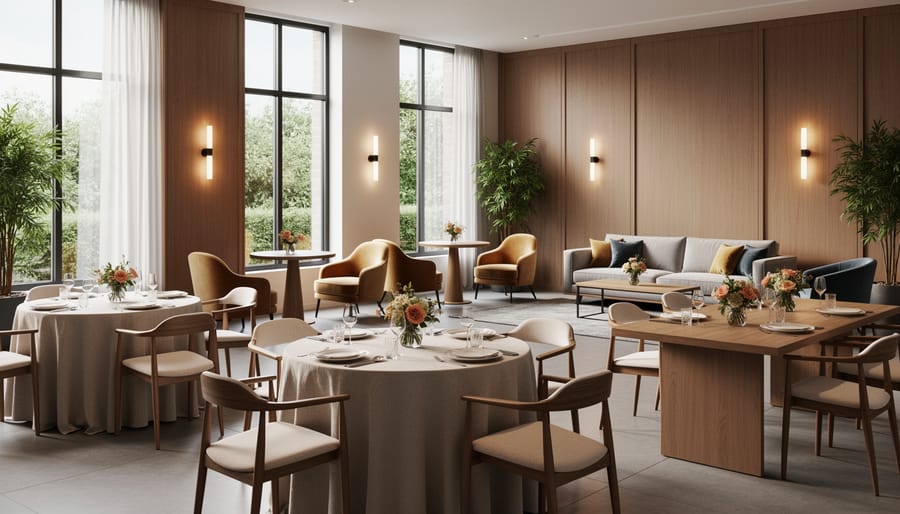
Boutique event spaces and lofts bring an effortlessly cool, gallery-like quality to small weddings. These design-forward venues, think exposed brick, industrial beams, floor-to-ceiling windows, and carefully curated interiors, are built to shine at smaller scales. You won’t feel like you’re rattling around in an empty ballroom, because the architecture itself creates intimacy.
What makes these spaces ideal for couples chasing a modern aesthetic is the creative freedom they offer. Most boutique venues operate with flexible vendor policies, so you can hire your dream photographer, florist, or caterer without working through a required list. Many also rent by the hour rather than locking you into expensive minimums, which means you control both the timeline and the budget. Rental rates typically fall between $500 and $9,000 depending on the market and included services, and you can filter venues by maximum capacity to find spots designed for 10 to 75 guests rather than retrofitting a grand hall.
The tradeoff is that you’ll handle more logistics yourself. Setup, breakdown, and coordination usually rest with you or your planner, though some venues include basics like chair arrangement and tables. If you love the idea of a blank canvas where your vision takes center stage, boutique spaces deliver that in spades.
Private Estates and Gardens
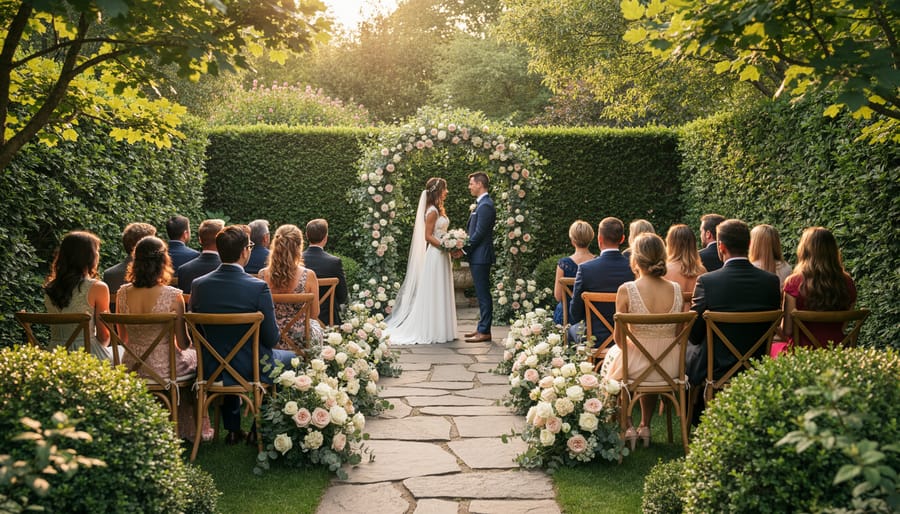
Private estates and gardens offer something truly magical for small weddings: the feeling that you’ve stepped into your own secret world. These venues shine when you want lush backdrops, open-air romance, and the freedom to design a celebration that feels authentically yours. Think garden ceremonies under vine-covered pergolas, cocktails on manicured lawns, and reception dinners under string lights as the sun sets.
The biggest draw is privacy. With smaller guest counts, you can rent entire estates or garden spaces that would feel stretched thin at 150 guests but are perfectly proportioned for 30 or 50. Many provide charming indoor backup spaces (a historic manor house, a greenhouse, a covered pavilion) so you’re not gambling entirely on the weather.
That said, outdoor venues do require more planning. You’ll need to arrange flowers yourself at most locations, and you’re working with nature’s schedule, spring and summer are ideal, but fall can surprise you with perfect golden afternoons. Ask about what’s included beyond the space itself. Some estates provide tables, chairs, and basic setup (similar to the ceremony packages at indoor venues), while others are blank-canvas rentals where you coordinate everything.
If you love the idea of garden photos, natural light, and a relaxed vibe where guests can wander and mingle, an estate or garden venue rewards the extra weather planning tenfold.
Restaurants and Chef-Owned Venues
Restaurants and chef-owned venues transform your small wedding into a culinary event where the meal is the main attraction, not an afterthought. These spaces are purpose-built for hospitality, meaning you get professional service, a polished ambiance, and food prepared by people who take it seriously. If you and your guests care about what you’re eating, this venue type delivers in ways a generic event space with contracted catering simply can’t match.
The built-in advantage is obvious: you don’t have to vet caterers, negotiate separate contracts, or worry about kitchen access and food safety logistics. The restaurant handles everything from menu design to plating to service flow. Many chef-owned venues offer tasting menus, wine pairings, and seasonal ingredients that elevate the entire experience. You’re not just renting a room, you’re booking a team that knows how to make people feel taken care of.
Best for couples who view dinner as an experience, not just fuel, and who want their guests to leave raving about the meal as much as the vows. Private dining rooms, wine cellars, and buyout options work beautifully for gatherings of 20 to 75 guests, and the intimate scale means personalized service and attention to detail you won’t get at a large banquet hall.
How We Ranked the Best Small Wedding Venues
When we evaluated small wedding venues, we applied a specific set of criteria that reflects what actually matters for intimate celebrations, not just what works for traditional large-scale events. Our ranking framework prioritizes value relative to guest count, because a $3,000 venue that hosts 20 guests comfortably represents a different value proposition than one charging the same for 75. We looked closely at what’s included in the rental fee: chair setup, tables, registry desks, water stations, tissues, and coordination support all factor into the true cost and convenience of your day.
Flexibility proved critical in our assessment. The best small wedding venues allow you to bring your own vendors, customize the timeline within reasonable boundaries, and tailor the experience to your vision rather than forcing you into rigid packages. We also evaluated atmosphere and intimacy factor, how the space actually feels with fewer people. A ballroom designed for 250 will feel cavernous with 30 guests, while a thoughtfully proportioned venue creates the warm, connected vibe that makes small weddings special.
| Venue Type | Typical Guest Count | Average Pricing Tier | Best For |
|---|---|---|---|
| Hotels & Resorts | 25-75 guests | $2,500-$9,000 | Couples wanting full-service, polished experiences |
| Boutique Event Spaces | 15-50 guests | $1,500-$5,000 | Design-conscious couples seeking creative control |
| Private Estates & Gardens | 10-60 guests | $2,000-$6,500 | Relaxed, outdoor-loving couples with weather backup plans |
| Restaurants | 10-40 guests | $500-$4,000 | Foodies prioritizing exceptional cuisine |
Reviews from real couples carried significant weight in our recommendations. We looked for consistent feedback about responsiveness, transparency in pricing, and whether the venue delivered on its promises. Booking ease matters too, venues that clearly communicate availability, provide straightforward contracts, and don’t bury hidden fees earned higher marks. This same framework applies whether you’re exploring GTA venue options or searching in your own region. Use these criteria to hold venues accountable during your search, and you’ll find a space that genuinely fits your celebration rather than one that merely tolerates smaller numbers.
Our Top Recommendations by Wedding Size and Style
For micro weddings with 10 to 20 guests, look for venues that embrace genuine intimacy rather than trying to fill a big space. Private dining rooms at chef-owned restaurants, boutique hotel suites with event privileges, and small garden spaces work beautifully at this scale. You’ll typically invest between $500 and $2,500 for the venue itself, with many options offering all-inclusive packages that bundle ceremony and reception into one seamless celebration. At this size, you can often book hourly or half-day rentals rather than committing to full weekend packages. The best micro wedding venues provide just enough structure, setup of chairs, a registry desk, and basic amenities like water stations and a coat rack, while keeping the vibe relaxed and personal.
When you’re planning an intimate gathering for 25 to 50 guests, you’ve got the sweet spot for small wedding venues. This range opens up elegant options like boutique event spaces, historic estates with indoor-outdoor flow, and hotel event rooms designed for mid-sized celebrations. Expect pricing between $2,000 and $5,000 for venue rental, with many properties including ceremony setup (chair arrangement, guestbook table, gift table) and basic coordination in that rate. At this guest count, you’ll want a space that feels intentionally cozy rather than half-empty, so prioritize venues with flexible room configurations or defined ceremony areas that don’t require filling 200 seats to look complete. Many venues at this tier offer one-hour ceremony windows with the option to extend for reception time, giving you control over your timeline without paying for unused hours.
- Micro weddings (10-20 guests): Private dining rooms, boutique suites, small gardens; $500-$2,500 range
- Intimate gatherings (25-50 guests): Event lofts, historic estates, hotel event rooms; $2,000-$5,000 range
- Small receptions (50-75 guests): Ballrooms with flexible capacity, full-service resorts, chef-owned venues; $4,000-$9,000 range
Small receptions for 50 to 75 guests bridge intimate and traditional celebrations, requiring venues with a bit more polish and infrastructure. Full-service hotel ballrooms, established event estates, and upscale restaurants with dedicated event spaces work well here. You’re looking at $4,000 to $9,000 for venue rental, often with food and beverage minimums that make the most sense when you’re hosting this many people. The advantage at this size is access to comprehensive services: professional setup and breakdown, included amenities like oak pillars for ceremony backdrops, coat racks, and guest comfort items, plus experienced event coordination. Just remember that flowers are typically your responsibility regardless of venue tier, so factor that into your planning budget. The key is finding a venue that can host your full guest list comfortably without requiring you to fill a 250-person capacity to avoid an echoey, underpopulated feel.
Common Mistakes to Avoid When Booking a Small Wedding Venue

Booking a venue feels exciting until you realize you’ve locked yourself into terms that don’t fit your celebration. The biggest pitfall? Choosing a space designed for 200 guests when you’re hosting 30. A ballroom that swallows your intimate group creates an awkward, echoey atmosphere no matter how many candles you add. Look for venues where your guest count fills at least 60-70% of the space, or opt for locations with divisible rooms that can be closed off to match your size.
Speaking of minimums, many couples skim past the fine print on spending requirements. Venues may advertise low rental fees but attach steep per-person minimums or require you to book ceremony and reception together, even if you only need one. Always ask for the total financial commitment in writing, including any food and beverage minimums that apply regardless of your headcount.
The phrase “all-inclusive” causes confusion, too. One venue’s all-inclusive might mean chairs, tables, linens, setup, and a coordinator, while another only covers the bare room rental and expects you to source everything else. Since some ceremony packages include essentials like chair setup, registry desks, guestbook tables, tissues, mints, and water stations, while others provide only the four walls, request an itemized list of what’s actually included. Don’t assume flowers, decor, or even basic furniture are part of the deal, at many venues, you’ll arrange those yourself.
Setup and breakdown responsibilities trip up couples who envision a relaxed timeline. If your one-hour ceremony window means vendors must arrive, set up, host your event, and clear out within 60 minutes total, you’ll feel rushed. Confirm how much access time you get before and after your booked period, and whether staff handles teardown or if that falls to your wedding party.
Vendor restrictions deserve close attention. Some small venues require you to use their preferred caterer or florist, limiting your ability to control costs and style. Others charge fees if you bring in outside professionals. For outdoor garden or estate venues, ask about weather backup plans in writing. “We’ll figure it out” isn’t a plan, you need a guaranteed indoor alternative or tent option included in your contract, not a vague promise that leaves you scrambling if it rains.
Questions to Ask Before You Sign the Contract
Walking into a venue tour is exciting, but the real work begins when you sit down to review the contract. Before you sign anything, ask these questions to protect your budget, clarify expectations, and avoid surprises down the road.
Start with capacity and guest count. Confirm the minimum and maximum guest count for your chosen space, and ask what happens if your final number drops below the minimum. Some venues charge a penalty fee, while others adjust the pricing model. Clarify whether the capacity includes vendors and photographers, since that distinction matters when you’re planning for 30 guests and suddenly realize the count is actually 35.
Next, get specific about what’s included in the rental fee. Ask for a written breakdown of everything bundled into the price: chairs, tables, linens, setup and breakdown, coat racks, registry desks, water stations, and any decorative elements. If the venue mentions “ceremony setup included,” ask exactly what that entails, does it cover just chair arrangement, or does it extend to guestbook tables and gift displays? Confirm who provides essentials like tissues, mints, or cocktail hour furniture, so you’re not scrambling to source basics at the last minute.
Time restrictions can make or break your day’s flow. Ask about access windows: when can your vendors arrive to set up, and when must everyone be out? If you’re booking a one-hour ceremony slot, clarify whether that includes guest arrival time or starts when the processional begins. Request details on overtime fees if your reception runs long, and ask whether you can access the space the day before for a rehearsal.
Vendor policies often contain the most consequential fine print. Find out whether the venue requires you to use their preferred caterer or allows you to bring your own. Ask about restrictions on florists, photographers, DJs, and alcohol service. Some venues have exclusive partnerships that limit your choices, while others welcome any licensed vendor. If you’ve already hired a photographer or baker you love, confirm they’re allowed before you commit.
Cancellation and date-change terms deserve careful attention. Ask about the refund policy if you need to cancel, what percentage of your deposit is non-refundable, and whether you can move your date without penalty if circumstances change. Understand the timeline for making changes, some venues allow free date changes up to six months out, while others lock you in immediately.
Setup and breakdown support varies widely. Confirm who handles furniture arrangement, table styling, and post-event cleanup. Ask whether venue staff will be on-site during your event, or if you’re responsible for coordinating everything yourself. For outdoor venues, ask about weather contingencies: is there a backup indoor space, and does it cost extra? What’s the decision deadline for moving the ceremony indoors?
Finally, ask about hidden fees. Request a full list of additional charges that might apply: service fees, gratuities, security deposits, cleaning fees, overtime charges, or vendor load-in fees. Ask whether sales tax is included in quoted prices, and clarify the payment schedule so you can budget accordingly.
What if my guest count changes?
Most venues allow adjustments up to a certain deadline, typically two to four weeks before your date. Ask about the minimum guest count in your contract and whether you’ll owe a penalty if your final number drops below that threshold.
Do I need wedding insurance for a small venue?
Yes, especially if you’re paying significant deposits or booking an outdoor space. Wedding insurance protects against cancellations, vendor no-shows, and damage claims, and many venues now require proof of liability coverage before you can finalize your contract.
Can I bring my own decorations?
It depends on the venue. Some encourage personalization and allow anything from candles to hanging installations, while others restrict open flames, tape on walls, or certain types of confetti. Always ask about decoration policies and whether you need to arrange your own flowers or can use what the venue provides.
What happens if it rains?
Ask whether the venue has a backup indoor space included in your rental fee or if moving indoors costs extra. Clarify the decision deadline, most venues require you to call the weather by 24 to 48 hours before your ceremony, so you’ll need a contingency plan rather than a game-day audible.
These questions aren’t about being difficult, they’re about entering your wedding day confident that you and your venue are on the same page. The right venue will welcome your questions and provide clear, written answers that protect both of you.
Choosing a wedding venue for a small celebration isn’t about settling for less, it’s about creating something more. The right intimate venue gives you three powerful advantages: the warmth of a cozy atmosphere where every guest feels included, greater control over your budget without the pressure of filling hundreds of seats, and the freedom to personalize every detail exactly the way you envision.
As you tour venues, trust your instincts about fit. Does the space feel intentionally intimate, or just empty? Will you have the flexibility to make it yours, or are you locked into a one-size-fits-all package? The best small wedding venues understand that size doesn’t diminish significance, it amplifies it.
Your wedding day should reflect what matters most to you as a couple, not what a venue can accommodate. When you find a space that feels right for your guest count, supports your vision, and welcomes your people with genuine care, you’ve found your place. Small weddings aren’t a compromise. They’re a celebration designed around connection, and that’s the most meaningful choice you can make.