
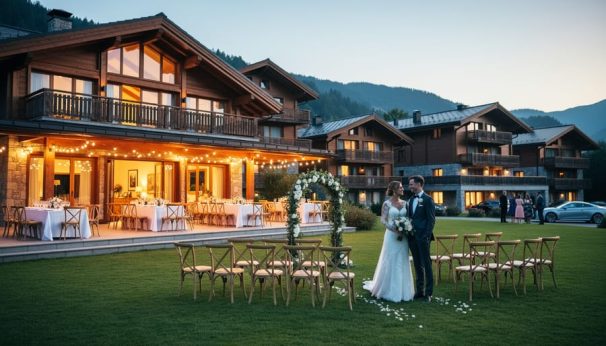
A wedding venue with on-site accommodation is a property that combines your ceremony and reception spaces with guest lodging under one roof, letting everyone stay, celebrate, and enjoy an unhurried multi-day experience without shuttling between locations. Think of it as a wedding destination where your favorite people can arrive Friday evening, wake up together Saturday morning, and linger over brunch Sunday before heading home.
This trend has surged as couples seek more than a single-evening event. You’re not just booking a pretty backdrop anymore. You’re curating an experience where grandparents can chat over morning coffee with your college friends, where no one worries about driving after the reception, and where the celebration naturally spills into welcome drinks, post-ceremony pool time, and farewell breakfasts. The logistics simplify dramatically when your caterer, bar, dance floor, and every guest room exist within the same property gates.
The right venue with lodging transforms a traditional wedding timeline into something richer and more relaxed. Properties like Edelweiss Village in British Columbia’s Columbia Valley offer six historic Swiss chalets accommodating up to 33 overnight guests, plus space for camping and RVs for larger groups. Oak Island Resort provides 105 recently renovated guestrooms, while Fraser River Lodge welcomes up to 47 guests on-site. These aren’t cookie-cutter ballrooms. They’re carefully chosen settings where the venue itself becomes part of your story, not just a rental space you vacate by midnight.
What follows is a practical roadmap to choosing the venue-with-lodging option that fits your vision, guest list, and celebration style.
Why Choose a Venue With On-Site Lodging
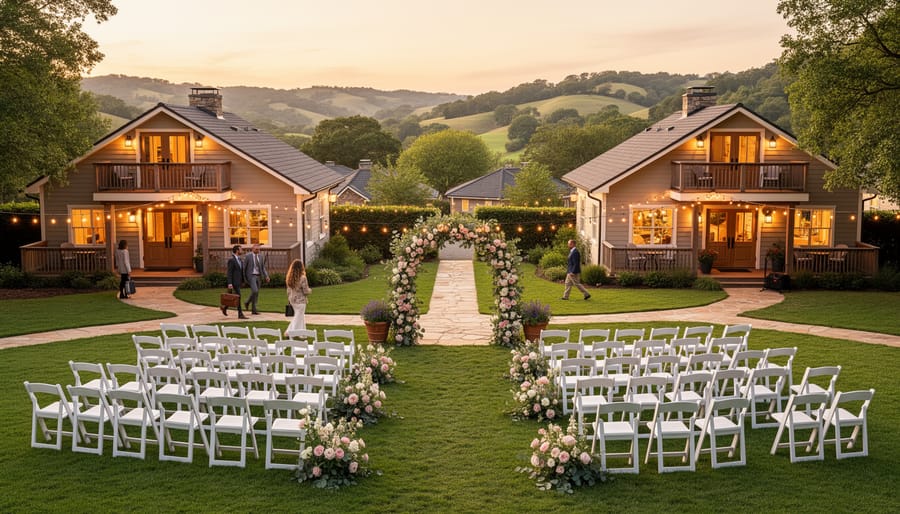
Choosing a venue with on-site lodging transforms your wedding from a single-day event into an immersive experience that your guests will talk about for years. Instead of everyone scattering to different hotels after the reception, you’re creating a private retreat where your favorite people can relax, reconnect, and celebrate together without watching the clock.
The practical benefits start before anyone even arrives. You eliminate the logistical nightmare of coordinating shuttle services between multiple locations, and your guests don’t need to worry about driving after dancing and toasting. Everyone wakes up in the same place the morning after, ready for a leisurely farewell brunch instead of rushing to checkout times across town. For couples planning weekend venues, this setup naturally extends your celebration across multiple days without the complexity of booking separate accommodations.
There’s something magical about keeping your wedding party under one roof. Your bridesmaids can help you get ready in their robes, popping between rooms without a strict timeline. Late-night conversations continue on shared porches or around a fire pit. Your grandmother doesn’t need to navigate unfamiliar roads in the dark. These are the moments that turn a beautiful wedding into an unforgettable gathering.
I’ve watched couples describe the relief of knowing their out-of-town guests could simply walk to their rooms after the last dance, still laughing about the speeches. One bride told me her favorite memory wasn’t even from the ceremony, it was breakfast the next morning when both families sat together, reliving the best moments while they were still fresh.
You’re also gaining flexibility that traditional venues can’t offer. Need extra time for photos the next day? Your photographer doesn’t need to travel back. Want to host a welcome dinner the night before? The venue is already yours. This approach brings the intimacy and extended celebration of a destination wedding close to home, without requiring your guests to book flights or take excessive time off work.
Key Factors When Choosing Wedding Venues With Accommodation
Guest Capacity and Accommodation Types
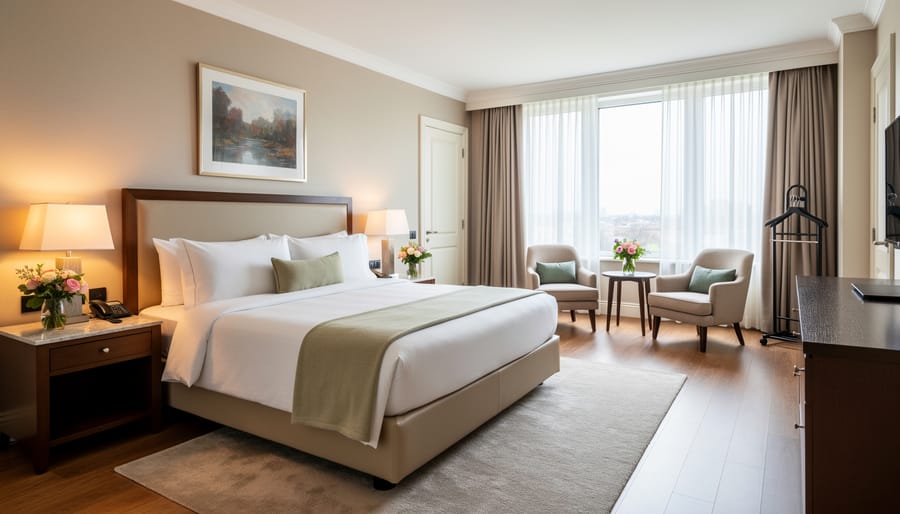
Start by thinking honestly about your guest list numbers, both who you’re inviting and how many will realistically stay overnight. Not everyone lives far enough away to need accommodation, but those who do will appreciate having it steps from the celebration.
Venues with accommodation come in wildly different styles, and matching the right type to your guest count makes all the difference. If you’re planning an intimate wedding, a property like Edelweiss Village in BC’s Columbia Valley offers six historic Swiss chalets that accommodate up to 33 overnight guests, with additional camping and RV sites for guests who prefer that style. It’s perfect for couples wanting that cozy, everyone-under-one-roof feeling without needing a massive property.
For larger weddings, resort-style venues like Oak Island Resort provide 105 recently renovated guestrooms, ideal when you have 80 or more guests and need varied room types to suit different families and budgets. Meanwhile, Fraser River Lodge sits comfortably in the middle, accommodating up to 47 guests, which works beautifully for mid-sized weddings where most guests are traveling in.
Think about your crowd, too. Do you have adventurous friends who’d love glamping? Older relatives who need hotel-style comfort? Young families who’d prefer cabin privacy? The best venues offer a mix, chalets for your wedding party, hotel rooms for parents, camping for your outdoorsy cousins. Don’t assume one accommodation style fits everyone. Tour the full range of what’s available and picture where each group of guests would be most comfortable.
Location and Accessibility
Location shapes your wedding weekend far more than you might expect. A venue tucked into BC’s Columbia Valley, like Edelweiss Village just minutes from Golden, delivers stunning mountain vistas and a getaway atmosphere that turns your wedding into a mini-vacation for guests. That scenic remoteness creates magic, but it also means your guests need clear directions, realistic travel timelines, and perhaps shuttle coordination if they’re flying into Calgary or Vancouver.
Proximity to airports matters differently here than with traditional venues. Since guests are staying on-site, a two-hour drive from the nearest airport becomes less burdensome when it’s a one-time journey to a full weekend experience, not multiple back-and-forth trips. Remote settings actually work in your favor by encouraging guests to arrive early and stay late, fully immersing themselves in your celebration rather than rushing off after the reception.
The key is matching location to your guest list. If most guests are local or driving, a countryside estate an hour outside the city feels adventurous. If you’re drawing guests from across the country, consider whether the journey enhances or complicates their experience, and communicate travel logistics early so no one feels stranded.
Exclusive Use vs. Shared Property
Exclusive-use venues give you the entire property for your celebration, no other events happening, no strangers in the hallways, just your group. This setup works beautifully if you’re planning a multi-day affair and want full control over the schedule and atmosphere. You can host a rehearsal dinner Friday night, the ceremony and reception Saturday, and a farewell brunch Sunday without worrying about checkout times or competing events. The trade-off? You’ll typically need to book all available rooms, which works best for weddings with enough guests to fill the space.
Shared-property venues, like larger resorts, let you reserve ceremony and reception areas while other guests use the hotel amenities. You’ll pay only for the rooms your guests actually book, giving you more flexibility if your final count shifts. However, you’ll need to coordinate your timeline around the venue’s other commitments, and the atmosphere feels less intimate when you’re sharing the pool or restaurant with vacationers. Consider what matters more: complete privacy and flexibility, or the ability to scale your accommodation needs up or down.
Types of Wedding Venues With Accommodation Compared
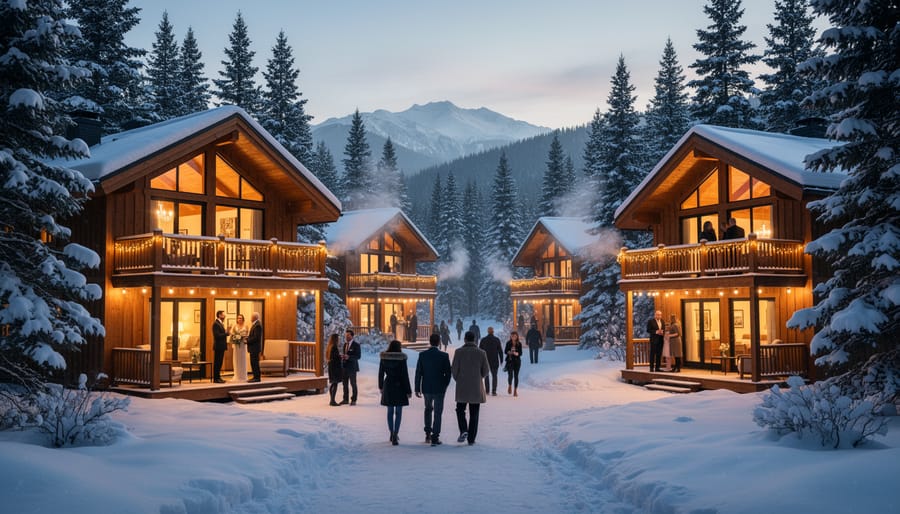
Choosing the right venue style shapes your entire wedding weekend. Understanding the distinct categories of wedding venues with accommodation helps you match the setting to your vision and your guests’ needs.
Resort Hotels offer the polished convenience many couples crave. These properties provide hotel-style rooms with private bathrooms, daily housekeeping, and amenities like pools, spas, and restaurants. Oak Island Resort exemplifies this category with 105 recently renovated guestrooms that give your celebration a luxurious, self-contained feel. Your guests enjoy the comfort of traditional hotel service while you benefit from professional event coordination. This style suits couples who want a seamless experience without requiring guests to rough it, and it works beautifully for weddings where older family members or guests with mobility concerns will be staying on-site.
Lodge and Cabin Properties strike a balance between rustic charm and modern comfort. Fraser River Lodge represents this category well, offering accommodation for up to 47 guests in a more intimate wilderness setting. Guests stay in individual cabins or lodge rooms that feel like a mountain retreat, often with shared common spaces that encourage mingling. The atmosphere is relaxed and adventurous without sacrificing creature comforts. This venue type appeals to couples who love the outdoors and want their wedding to feel like a cozy getaway, particularly those planning small wedding spaces that foster genuine connection.
Historic Estates and Manor Houses bring Old World elegance to your celebration. These venues typically offer a limited number of luxurious suites in the main building, sometimes with additional cottages on the grounds. Guests experience the romance of staying in a heritage property with period details, manicured gardens, and an exclusive, sophisticated atmosphere. This style suits couples drawn to vintage aesthetics and formal elegance.
Ranch and Farm Venues provide a down-to-earth, pastoral setting. Accommodations might range from renovated farmhouses to bunkhouses or glamping tents scattered across the property. The vibe is casual and communal, with outdoor activities and farm-to-table dining enhancing the experience. Couples who value sustainability and a laid-back celebration find this style particularly appealing.
Historic Village and Unique Properties offer something completely different. Edelweiss Village in British Columbia’s Columbia Valley exemplifies this creative category with six historic Swiss chalets accommodating up to 33 overnight guests, plus camping and RV options for additional flexibility. The blend of heritage architecture and varied accommodation styles creates a destination feel that’s truly memorable. If you’re considering mountain settings, our Jasper venue guide explores similar Alpine-inspired options. This category suits adventurous couples who want their wedding to feel like a curated experience rather than a standard event.
| Venue Type | Accommodation Style | Typical Capacity | Best For |
|---|---|---|---|
| Resort Hotel | Hotel rooms, suites, full amenities | 100+ guests (e.g., Oak Island Resort: 105 rooms) | Polished, traditional celebrations; multi-generational groups |
| Lodge & Cabins | Private cabins, lodge rooms, rustic-modern | 30-50 guests (e.g., Fraser River Lodge: 47) | Intimate, nature-focused weekends; outdoor enthusiasts |
| Historic Village | Heritage chalets, camping, RV sites | 30-35+ guests (e.g., Edelweiss Village: 33 in chalets + camping) | Unique, destination-style celebrations; flexible accommodation needs |
| Estate/Manor | Luxury suites, cottages, elegant rooms | 20-40 guests | Formal, sophisticated affairs; vintage-loving couples |
| Ranch/Farm | Farmhouse rooms, bunkhouses, glamping | 20-60 guests | Casual, sustainable celebrations; communal atmosphere |
Each venue type creates a different rhythm for your wedding weekend. Resort hotels keep everything predictable and comfortable. Lodges and cabins invite guests to unplug and connect with nature. Historic properties add gravitas and romance. Ranches encourage a boots-on-the-ground, authentic experience. And unique properties like historic villages offer unexpected charm that becomes part of your wedding story. Consider which atmosphere aligns with how you want your guests to feel throughout the celebration, not just during the ceremony itself.
How We Chose Our Recommendations
We evaluated wedding venues with accommodation based on real-world factors that matter when you’re hosting guests overnight, not lab measurements or arbitrary scores. Our focus was finding properties that genuinely solve the logistics challenge while creating the experience couples want.
Guest capacity topped our list, we looked for venues offering a meaningful range, from intimate gatherings to larger celebrations. Edelweiss Village’s capacity for 33 overnight guests in six historic Swiss chalets suits smaller weddings beautifully, while Oak Island Resort’s 105 recently renovated guestrooms can handle substantial guest lists. We also considered Fraser River Lodge’s 47-guest capacity as a mid-range sweet spot.
Accommodation variety mattered because your guests aren’t identical. We favored venues offering different lodging styles rather than cookie-cutter rooms. Properties with options like private chalets, hotel-style rooms, camping spots, or RV sites (like Edelweiss Village provides) give guests choices that fit their comfort level and budget.
Location appeal played a significant role. We prioritized venues in settings that enhance the celebration, scenic Columbia Valley backdrops, waterfront properties, or countryside retreats that feel special without being impossibly remote.
Finally, we assessed flexibility for different wedding styles. Can the venue handle a casual outdoor ceremony as easily as an elegant ballroom reception? Does the property feel right for your vision, whether that’s rustic charm or polished elegance?
These aren’t ranked recommendations, they’re starting points reflecting what worked for real couples with varying needs.
What to Look for During Your Venue Tour
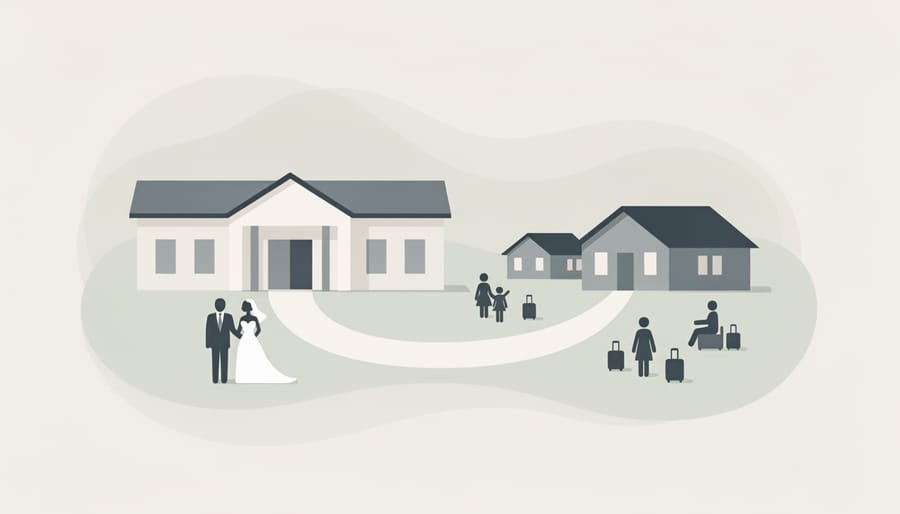
Touring a venue with accommodation requires evaluating two distinct experiences at once: the ceremony and reception spaces that you’ll see as a couple, and the guest rooms where your friends and family will unwind after the party. Start by walking through both ceremony and reception areas during the same time of day you’re planning your events, natural light shifts dramatically, and you’ll want to see how spaces feel at sunset if you’re booking an evening reception. Then tour at least three to five different guest rooms, not just the showcase suite. Ask to see the most basic room category, because not every guest will book the premium option, and you want to ensure everyone has a comfortable stay.
Pay close attention to how far guests will need to walk between spaces. At a property like Edelweiss Village with its six historic chalets spread across the grounds, the scenic stroll between accommodation and celebration spaces is part of the charm, but you’ll want to know the actual walking time and whether paths are well-lit and accessible at night. Ask specific questions about room assignment logistics: Can you influence which guests stay in which buildings? How are room bookings coordinated, directly through you or individually by guests? What’s included in the accommodation rate versus what costs extra, like breakfast or late checkout?
Check accessibility features throughout the property. Are there ground-floor rooms for guests with mobility challenges? Do pathways have ramps or only stairs? How does the venue handle accessibility between spaces if you’re hosting events across multiple buildings? Finally, request a detailed timeline walk-through with your coordinator, mapping out how a multi-day celebration flows, from welcome drinks to ceremony to after-party to morning-after brunch, and confirm which spaces are available when, especially if the venue isn’t offering exclusive use.
Common Mistakes to Avoid
Even the most organized couples can trip over common pitfalls when booking a venue with accommodation. Understanding these mistakes ahead of time saves you stress, money, and awkward conversations with disappointed guests.
Many couples assume that since accommodation is available, everyone will use it, then find themselves locked into a minimum room guarantee they can’t meet. In reality, local guests often prefer sleeping at home, especially if they have kids or pets. Before committing to a specific number of rooms, survey your guest list to gauge genuine interest. Ask who’s likely to stay on-site versus who’ll drive home that evening.
Another frequent oversight is failing to clarify exactly what’s included in accommodation packages. Some venues bundle room costs into your overall contract; others charge guests directly at discounted rates. You might discover the “included breakfast” only covers continental offerings, not the hot meal you imagined, or that the romantic fireplace suite costs significantly more than standard rooms. Get everything in writing: what guests pay, what you pay, which amenities come standard, and whether there are additional resort fees or parking charges.
Here are specific mistakes that can derail your planning:
- Overlooking accessibility needs, not all rooms have step-free access, roll-in showers, or ground-floor options, which matters greatly for elderly relatives or guests with mobility challenges
- Assuming room quality is uniform, the renovated wing might be gorgeous while older sections feel dated; always tour multiple room types before deciding
- Missing booking deadlines, venues release unsold room blocks back to general inventory, often 30-90 days before your wedding, leaving late-deciding guests scrambling for alternatives
- Skipping the overflow plan, when your venue accommodates 47 guests but you’ve invited 120, you need nearby hotel recommendations and clear communication about who gets priority on-site
- Not establishing a guest payment timeline, confusion about when deposits are due or how guests reserve their rooms creates frustration and potentially empty rooms you’re paying for
- Forgetting about checkout logistics, if your farewell brunch happens at 11 a.m. but checkout is 10 a.m., guests face an awkward rush or extra fees
The couples who avoid these headaches are the ones who communicate early and often. Send accommodation details with your save-the-dates, not your invitations. Create a simple FAQ sheet explaining how to book, what’s covered, and what the deadline is. Assign someone, your wedding planner, a trusted family member, or the venue coordinator, to field accommodation questions so you’re not managing room assignments while finalizing your vows.
Frequently Asked Questions
Choosing a wedding venue with on-site accommodation raises practical questions that differ from booking a traditional ceremony-and-reception space. Here are the answers to the most common concerns couples have during the decision-making process.
Do we have to book all the rooms at the venue?
Most venues don’t require you to book every available room, though some offer discounts or perks if you do reserve the entire property. Exclusive-use venues may include accommodation as part of a full buyout package.
How far in advance should our guests book their rooms?
Guest rooms at popular wedding venues typically need to be reserved 6-9 months ahead, especially for peak season dates. Your venue coordinator can help you set up a room block with a deadline that works for everyone.
Are room costs separate from the venue rental fee?
Yes, in most cases guest accommodations are charged separately from your ceremony and reception space rental. Some packages bundle everything together, so clarify what’s included upfront to avoid surprises when comparing weekend venue pricing.
Can we mix on-site and off-site guests?
Absolutely. Many couples reserve on-site rooms for immediate family and the wedding party while other guests stay at nearby hotels, giving everyone flexibility based on budget and preference.
What happens if guests want different accommodation styles?
Venues offering varied options, like Edelweiss Village’s mix of historic Swiss chalets, camping spots, and RV sites, let guests choose what suits them best. Communicate all available options early so everyone can pick their preferred setup.
How do room blocks work at wedding venues with accommodation?
You’ll typically reserve a set number of rooms at a group rate with a cutoff date, after which unreserved rooms are released back to general availability. Your guests book individually but receive your negotiated rate when they mention your wedding.
Understanding these logistics upfront helps you communicate clearly with guests and avoid last-minute confusion. The key is working closely with your venue coordinator to establish realistic timelines and transparent booking processes. Most venues have handled countless weddings and can guide you through room block management, cancellation policies, and how to handle overflow guests if your on-site capacity fills up.
Guest accommodation preferences vary widely, so building in flexibility serves everyone better than trying to enforce a one-size-fits-all approach. Some guests will jump at the chance to stay where the celebration happens, while others may prefer the familiarity of a chain hotel or the cost savings of a budget option nearby.
Choosing a wedding venue with on-site accommodation transforms your celebration from a single-day event into an immersive experience your guests will remember for years. You’re not just selecting a backdrop for photos, you’re creating a space where your loved ones can relax, connect, and celebrate without worrying about driving home or finding hotels across town. The convenience of having everyone together under one roof (or across charming chalets and cabins) means more time for genuine moments and fewer logistics headaches for you.
As you narrow down your choices, focus on what matters most to your unique vision. Do you need capacity for 100 overnight guests, or is an intimate gathering of 30 more your style? Are you drawn to the rustic charm of lodge properties or the polished amenities of a resort setting? Trust your instincts about atmosphere and how the space makes you feel during your tour.
Your wedding should reflect who you are as a couple, and the right venue with accommodation will support that vision while making the entire weekend easier for everyone involved. You’ve got this, and your guests are going to love every minute.