
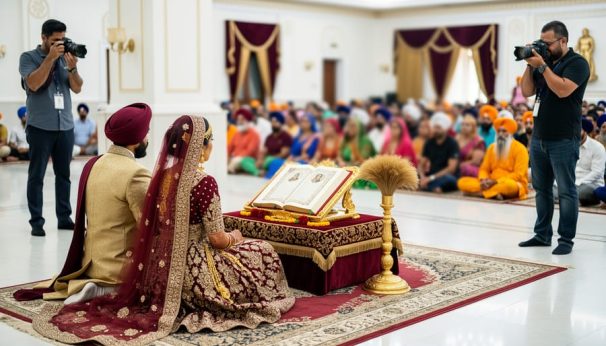
A comprehensive Indian wedding photography checklist ensures your photographer captures every sacred moment of your Anand Karaj ceremony while respecting Gurdwara protocols and the spiritual significance of your celebration. From the Maiyan ritual through the four Laavan pheras around Guru Granth Sahib Ji, you’ll need a culturally informed shot list that balances religious reverence with the joy of your big day.
Here’s what makes Sikh wedding photography different: your ceremony takes place in a sacred space where protocol matters as much as creativity. The Akal Takht has reaffirmed that Anand Karaj ceremonies must occur inside a Gurdwara with Guru Granth Sahib Ji at the centre, which means your photographer needs to understand how to work respectfully within these guidelines. Unlike weddings held in hotels or banquet halls, Gurdwara photography requires knowledge of movement patterns, coverage restrictions, and cultural sensitivities that shape every angle and approach.
The best teams ask about Gurdwara-specific rules before you book, not after deposits are paid. That early conversation signals they understand the unique considerations shaping your day and confirms they won’t treat your ceremony like a generic backdrop.
Your checklist serves two purposes. First, it communicates your must-have shots to your photographer so nothing gets missed in the flow of the day. Second, it helps you evaluate whether a photographer truly understands Sikh traditions or just shoots pretty pictures. When you’re navigating wedding photography costs and comparing packages, cultural competence should weigh as heavily as portfolio aesthetics.
Why Gurdwara-Specific Rules Matter Before You Book
When a photographer asks you detailed questions about your Gurdwara’s rules during your first conversation, that’s a good sign. Reputable teams ask about gurdwara-specific rules before quoting, not after deposits are paid, because they understand that every venue has its own protocols. Some Gurdwaras restrict flash photography during the Anand Karaj, others limit where photographers can stand during the Laavan, and many have specific guidelines about photographing Guru Granth Sahib Ji. These aren’t obstacles; they’re sacred boundaries that shape how your ceremony is documented.
The Akal Takht has reaffirmed that Anand Karaj ceremonies must now only take place inside a Gurdwara, with Guru Granth Sahib Ji at the centre. This makes Gurdwara venue planning and photographer coordination even more critical. During initial consultations, ask your photographer if they’ve shot at your specific Gurdwara before, how they’ve handled religious protocol restrictions in the past, and what their backup plan is if certain angles or flash aren’t permitted. A photographer who gets defensive or dismissive about these questions isn’t the right fit.
The best photographers see protocol as creative challenge, not limitation. They know how to capture the emotion of the Milni without disrupting the greeting line, document the Laavan respectfully while still showing the couple’s connection, and work within your Gurdwara’s boundaries to deliver beautiful images that honor both your faith and your celebration.
1. Pre-Wedding Preparation Shots: Getting Ready Moments
The getting-ready hours offer intimate glimpses into the emotion and anticipation before the ceremony begins. Start by capturing the bride’s traditional wedding outfit laid out carefully, the vibrant salwar kameez or lehenga, intricate dupatta, and gleaming jewelry waiting to be worn. Document family members helping the bride into her attire, adjusting her dupatta, fastening necklaces, and securing the Kalire to her bangles. These moments reveal both the beauty of Sikh bridal traditions and the loving hands that prepare the bride.
For the groom, photograph the turban-tying process in detail. Whether a family elder wraps the dastar or a professional ties an elaborate groom’s turban, this ritual carries deep cultural significance. Capture the concentration on faces, hands adjusting fabric, and the groom’s expression as he transforms into his wedding day self. Detail shots matter here: the kirpan being secured, the kara on his wrist, his sherwani buttons being fastened.
Don’t miss the quiet exchanges between parents and their children during these hours. A mother’s tears as she adjusts her daughter’s jewelry, a father’s proud smile watching his son prepare, these fleeting moments carry enormous emotional weight and become treasured images for generations.
2. The Milni Ceremony: Family Greeting and Blessing
The Milni ceremony offers some of the most emotionally charged moments you’ll want preserved forever. This is where your families become one, literally, as corresponding relatives from both sides (fathers, uncles, brothers) exchange flower garlands and embrace, often with tears streaming down their faces.
Your photographer should position themselves to capture both the formal garland exchanges and the authentic reactions that follow. The best shots happen in those seconds between choreographed tradition and spontaneous emotion: a father’s proud smile, uncles laughing as they clasp hands, younger siblings standing on tiptoes to place garlands around taller relatives.
The joyful chaos of extended family members greeting each other, children darting between adults, and guests watching with delight creates a tapestry of candid moments. Make sure your photographer knows to capture wide shots establishing the full gathering alongside tight portraits of individual embraces. These images document not just a ritual, but the genuine warmth of two families joining together.
3. Guru Granth Sahib Ji: The Sacred Centerpiece
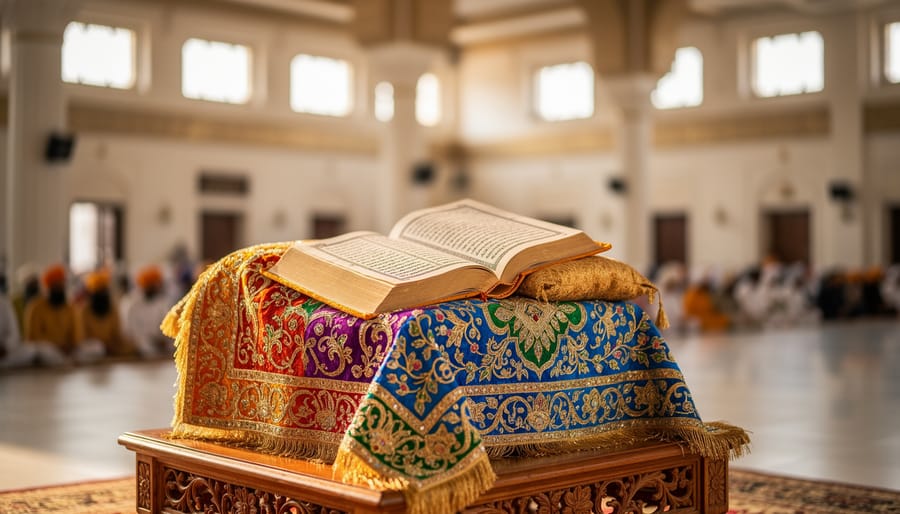
Guru Granth Sahib Ji sits at the heart of every Anand Karaj ceremony, and your photographer needs to approach capturing this sacred presence with deep reverence. This isn’t simply a backdrop element, it’s the spiritual foundation of your entire wedding, and photographs should reflect that significance.
Your photographer should work from angles that honor religious protocol while still documenting this central element of your ceremony. That typically means shooting from positions that don’t obstruct the congregation’s view or disrupt the flow of worship. Some Gurdwaras have specific restrictions about photographing Guru Granth Sahib Ji directly, while others permit respectful documentation from certain angles. These rules vary by location, which is why reputable photographers ask about gurdwara-specific guidelines before quoting, not after you’ve paid your deposit.
The best images capture Guru Granth Sahib Ji within the context of the ceremony: the couple walking the Laavan with the holy book as their witness, the Granthi reading the sacred verses, the palki sahib draped in beautiful cloth. These shots preserve the spiritual atmosphere without crossing boundaries of respect. Talk with both your photographer and the Gurdwara management ahead of time to ensure everyone understands the protocols, so your photos honor the sacred nature of this moment properly.
4. The Entrance and Procession: Bride and Groom Arrival
The bride and groom’s entrance into the Gurdwara marks the transition from preparation to sacred ceremony, and your photographer needs to be positioned strategically to capture this pivotal sequence. As the couple arrives and processes toward the ceremony space where Guru Granth Sahib Ji awaits, watch for the nervous glances they exchange, the steadying hand of a parent, and the visible shift in their expressions as anticipation builds.
Your photographer should document the moment they cross the threshold into the Gurdwara, removing their shoes in reverence, and the quiet gathering of composure before they enter the main hall. The procession itself offers powerful storytelling opportunities: the couple walking together or separately depending on tradition, family members flanking them, the deliberate pace as they approach the sacred area, and the weight of what’s ahead reflected in their faces.
These shots establish the ceremony’s emotional arc. Brief them on angles that respect the space while capturing genuine reactions from both the couple and waiting guests who turn to watch their arrival.
5. The Four Laavan Pheras: Walking Around Guru Granth Sahib Ji
The four Laavan pheras form the spiritual heart of Anand Karaj, four ceremonial walks around Guru Granth Sahib Ji that represent the couple’s journey toward God. Your photographer must capture each circuit distinctly, because the couple’s synchronized steps and evolving expressions tell a powerful story: from initial reverence to deepening connection as they complete their sacred vows together.
Frame wide shots that show the couple’s full path around Guru Granth Sahib Ji, establishing the ceremony’s sacred geography. Then move in for mid-range images capturing their linked hands, matching strides, and the quiet intensity on their faces as they absorb the meaning of each verse. These aren’t rushed moments, each Laavan carries profound spiritual weight, and thoughtful compositions will preserve that gravity.
Don’t neglect the witnessing family members seated around the perimeter. Parents watching their children complete the pheras, grandparents offering silent blessings, siblings exchanging tearful glances, these reactions add emotional depth that complements the family prep photos captured earlier. The collective reverence of the Sangat grounds the ceremony in community, reminding viewers that Sikh marriage isn’t just a private bond, it’s a spiritual commitment witnessed and supported by all present.
6. The Anand Sahib Prayer: Closing Ceremony Moments
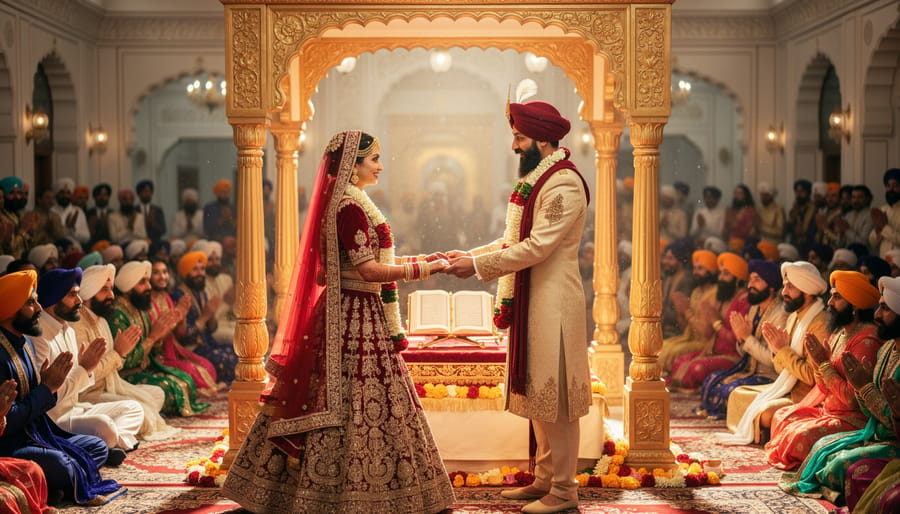
The Anand Sahib prayer marks the spiritual conclusion of your Anand Karaj ceremony, and these quiet, reverent moments deserve thoughtful documentation. As the Granthi recites the final verses, your photographer should capture wide shots of the congregation seated in prayer, heads covered and hands folded. The collective stillness creates a profound atmosphere that’s visible in photos.
Focus on the couple’s expressions during these closing prayers, the peace, gratitude, and spiritual reflection on their faces tell a powerful story. Ask your photographer to document you both receiving blessings from the Granthi and elders, including the moment when Karah Prasad (sacred sweet offering) is distributed to the congregation.
These images should convey the sacred transition from ceremony to married life. The soft natural light often present in Gurdwaras during this time, combined with the serene postures of guests in prayer, creates images that feel both intimate and communal. Remind your photographer to work silently and unobtrusively during these moments, using available light rather than disruptive flash, respecting the sanctity of this closing prayer while preserving memories of your ceremony’s spiritual conclusion.
7. Family Blessings and Emotional Exchanges
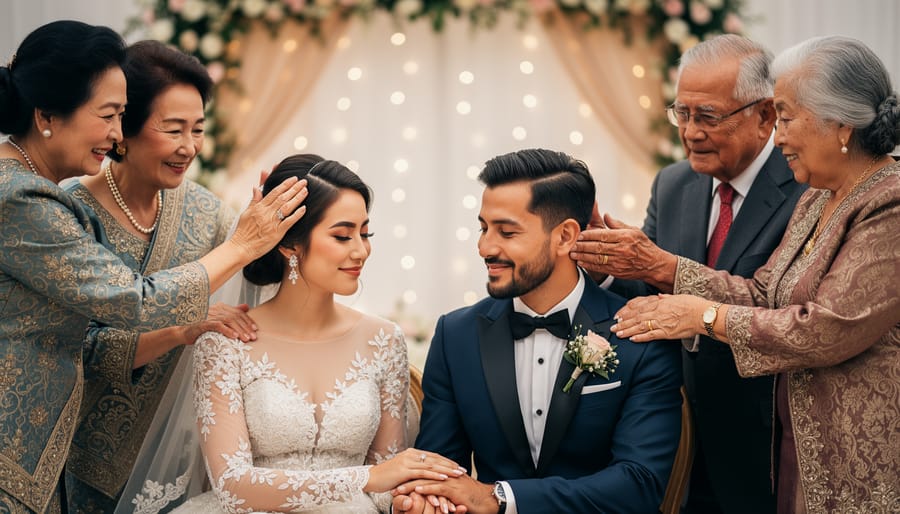
After the Anand Sahib prayer concludes, some of the most powerful photographs emerge as parents and elders step forward to bless the newly married couple. These unscripted moments overflow with raw emotion, mothers wiping away tears while embracing their daughters, fathers offering quiet words of wisdom to sons-in-law, grandparents placing trembling hands on bent heads in benediction. Your photographer should position themselves to capture these exchanges without interrupting them, using a longer lens if necessary to preserve the intimacy while documenting the tears, smiles, and meaningful glances that pass between generations.
The passing of family jewelry, the gentle adjustments to the bride’s chunni by her mother-in-law, and the group embraces where extended family members surround the couple create layered, emotion-rich compositions. These are the images couples return to years later, remembering not just how they looked but how they felt receiving their family’s love. Guests witnessing these moments often tear up themselves, and if you’ve shared guest outfit ideas with attendees beforehand, their coordinated traditional attire adds visual richness to wide shots of the entire family gathered in blessing. Brief your photographer to stay alert through this entire window, these spontaneous exchanges cannot be recreated.
8. Candid Congregation Moments: Guests in Attendance
The Sangat, the gathered community, forms a living tapestry of witness during the Anand Karaj, and these authentic, unposed moments reveal the collective spirit of a Sikh wedding. Your photographer should capture guests seated cross-legged on the floor, heads covered in reverence, faces reflecting the spiritual gravity of the ceremony alongside genuine smiles as they watch the couple unite. Children in miniature turbans and colorful salwar kameez, elderly relatives with hands folded in prayer, friends whispering blessings to one another, these candid glimpses show the love and support surrounding your marriage.
Look for shots that capture the depth of emotion rippling through the congregation during the Laavan, the shared moment when everyone rises for the Ardas, or the spontaneous joy when relatives recognize a particularly moving verse. These images honor the communal nature of Sikh weddings, where the entire Sangat participates in your sacred union rather than simply observing from the sidelines.
9. The Gurdwara Interior and Architecture
The Gurdwara itself provides a powerful backdrop that grounds your wedding photos in spiritual context. Wide-angle shots capturing the prayer hall’s architecture, ornate chandeliers, decorative arches, the Palki Sahib housing Guru Granth Sahib Ji, establish the sacred setting where your union takes place. These establishing frames give your album depth, showing future generations not just moments but the reverent space that held them.
Your photographer should capture architectural details that reflect Sikh tradition: intricate patterns on walls, the canopy above Guru Granth Sahib Ji, natural light streaming through windows. Since the Akal Takht has reaffirmed that ceremonies must occur inside Gurdwaras with Guru Granth Sahib Ji central, these interior shots carry added significance, they document the authentic religious setting of your Anand Karaj.
Discuss with your photographer which angles work within the Gurdwara’s specific layout. Some spaces allow elevated viewpoints; others require shooting from floor level. Respectful coverage means working with the architecture rather than disrupting the ceremony flow to chase dramatic angles.
10. Detail Shots: Jewelry, Kalire, and Traditional Elements
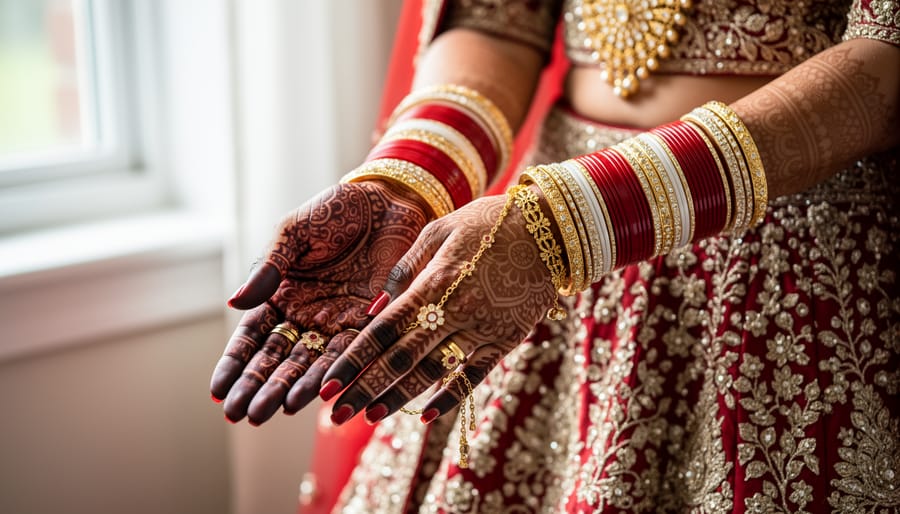
The smallest details often carry the deepest meaning in Sikh weddings. Close-up photography of traditional elements tells the story of heritage, craftsmanship, and spiritual significance that wider shots can miss.
Bridal jewelry deserves careful attention, the bride’s chooda (red and white bangles), nath (nose ring), maang tikka (forehead ornament), and elaborate necklace sets represent centuries of Punjabi tradition. Each piece carries symbolic weight, and macro shots capture the intricate metalwork and gemstone details that family members may have carefully selected or passed down through generations.
The kalire, those stunning umbrella-shaped ornaments dangling from the bride’s chooda, make for spectacular detail shots. Photograph them catching the light, hanging gracefully over the bride’s wrists, and especially during the traditional moment when she shakes them over unmarried friends’ heads. The metalwork, dangling elements, and sound they create are quintessentially Sikh wedding magic.
Don’t overlook the groom’s religious articles: his kirpan (ceremonial sword) tucked into his outfit represents courage and defense of the weak, while his kara (steel bracelet) symbolizes restraint and connection to Waheguru. These aren’t just accessories, they’re articles of faith that deserve respectful, detailed documentation.
Henna designs covering the bride’s hands and feet warrant multiple angles. Capture both the overall patterns and tight shots showing the artist’s precision, especially any names or dates worked into the design.
11. Post-Ceremony Couple Portraits
After the sacred Anand Karaj concludes, you’ll want portraits that capture the joy and relief of being married while still honouring the Gurdwara setting. These shots should feel genuine rather than overly posed, reflecting the spiritual journey you’ve just completed together.
Work with your photographer to find quiet corners of the Gurdwara that allow for intimate moments without disrupting the flow of departing guests or ongoing prayers. Natural light from windows often creates beautiful, soft portraits that feel reverent rather than flashy. Your photographer should understand that flash restrictions may still apply in certain areas, so discuss backup approaches for dimmer spaces.
Capture a mix of formal poses and candid exchanges: your first smile as a married couple, adjusting each other’s outfits, reading blessings guests wrote in cards, or simply holding hands. These in-between moments often become the most treasured images because they show your genuine connection rather than staged perfection. If the Gurdwara has beautiful architecture or decorative elements visible from respectful angles, incorporate them as backdrop to ground your portraits in the sacred space where your union was blessed.
12. Extended Family Group Photos
Extended family group photos are where Sikh weddings truly shine, as they honor the deep cultural value placed on family bonds and community. Plan these portraits right after the Anand Karaj concludes, while everyone is still gathered and emotionally present. Start with immediate family, parents, siblings, grandparents, then work outward to aunts, uncles, cousins, and close family friends who have been part of your journey.
Create a shot list in advance that includes both sides of the family, ensuring no one feels left out. Traditional groupings might include the couple with the bride’s family, then with the groom’s family, followed by combined family portraits that symbolize the union of two families. Don’t forget generational photos, grandparents with grandchildren, all the cousins together, or childhood friends who’ve known you since your Gurdwara days.
Your photographer should work efficiently to keep the flow moving, especially if you have reception venue timing constraints. Assign a family member to help wrangle groups and announce combinations. This person knows your family dynamics and can gather people quickly, turning what could be a chaotic hour into a smooth, joyful process that respects everyone’s importance in your celebration.
13. The Doli or Vidaai: Bride’s Departure
The Vidaai marks one of the most emotionally charged moments in any Sikh wedding, when the bride bids farewell to her childhood home and family. Your photographer needs to capture the tears, embraces, and whispered blessings that make this transition so profound, balancing documentary coverage with sensitivity to the family’s raw emotions.
Position your photographer to capture the bride’s parents offering final blessings, the tearful hugs with siblings, and that last backward glance as she prepares to leave. The moments when mothers wipe away tears or fathers struggle to maintain composure tell the complete story of this bittersweet passage.
If you’re planning specific farewell rituals, like tossing rice over her shoulder or the tradition of the bride’s brothers escorting her to the car, discuss these details during your style + shot planning sessions so nothing gets missed in the emotional rush.
Candid shots often prove more powerful here than posed portraits. The unguarded moments, a grandmother clutching the bride’s hand, cousins crying together, or the groom gently comforting his new wife, capture the authentic emotion that makes this tradition so meaningful across generations.
14. The Reception Entrance and Celebrations
The reception entrance marks the transition from sacred ceremony to joyful celebration, and your photographer should be ready to capture the explosive energy as you make your grand debut as newlyweds. Position them to catch both your entrance and the immediate reactions, guests jumping to their feet, arms raised in celebration, and the collective roar of excitement as you walk in. These wide shots establish the atmosphere while close-ups of beaming faces show the genuine happiness radiating through the room.
Bhangra performances and dance celebrations create some of the most dynamic and colourful images of the entire wedding day. Your photographer needs to anticipate the movement, dancers mid-leap, dhol players in full rhythm, colourful dupattas and turbans swirling through the air. Candid moments between planned performances are equally valuable: uncles attempting dance moves, children mimicking the professionals, and spontaneous circles forming as guests join the celebration. The goal isn’t just documenting what happened, but preserving the infectious joy and cultural pride that fills a Sikh wedding reception when two families come together in celebration.
15. Reception Highlights: Speeches, Cake, and First Dance
The reception brings a welcome shift after the ceremony’s solemnity, your photographer can finally capture uninhibited joy. Speeches deserve close attention: position your photographer to catch both the speaker’s expressions and the couple’s reactions, especially during emotional toasts from parents or close friends. The cake cutting offers a classic moment, so ensure good lighting and multiple angles that capture both the action and the couple’s faces as they feed each other that first bite.
The first dance is pure gold for photographers. Brief your photographer to move around the dance floor during this moment, capturing wide shots that show the entire scene, medium shots that include guest reactions in the background, and close-ups of your expressions as you hold each other. Parent dances follow the same principle, these tender moments between generations deserve both intimacy and context.
Throughout the evening, candid shots matter most. The best reception photos aren’t posed, they’re your uncle leading an impromptu bhangra circle, your grandmother laughing with friends, or your niece twirling in her lehenga. Remind your photographer to wander, anticipate spontaneous moments, and capture the genuine celebration that makes your reception uniquely yours.
How to Work with Your Photographer on This Checklist
Once you have this checklist in hand, schedule a meeting with your photographer at least three months before the wedding. Bring the list printed or on your phone and walk through it together, marking which shots are absolute priorities and which ones you’d love if timing allows. This conversation matters because Anand Karaj ceremonies follow a sacred rhythm you cannot rush, the four Laavan happen when they happen, and religious protocol always takes precedence over photography.
Start by asking whether your photographer has worked inside your specific Gurdwara before. Different venues have different guidelines about where photographers can stand during ceremony moments, whether tripods are permitted, and if flash photography is restricted near Guru Granth Sahib Ji. A photographer who asks about these rules upfront, before you sign a contract, shows they understand that respecting the sanctity of the ceremony comes first.
As you review the checklist together, explain why certain moments hold particular meaning for your family. Maybe your grandmother will tie the palla during the Laavan, or your brother will carry your Kalire. These details help your photographer anticipate where to position themselves and what emotional exchanges to watch for. Cultural context transforms a photographer from someone clicking a camera into a storyteller who knows what matters.
Create a realistic timeline together that builds in buffer time. Ceremonies rarely run early, families need moments to greet each other, and elders move at their own pace. Your photographer should never make you feel rushed between the Anand Sahib prayer and family portraits because they overbooked their day.
- Share this checklist at least three months before the wedding
- Schedule a venue walkthrough with your photographer to confirm Gurdwara-specific rules
- Mark must-have shots versus nice-to-have moments based on your family priorities
- Explain the cultural significance behind key traditions so your photographer anticipates them
- Build buffer time into your timeline for ceremony flow and elder participation
Trust works both ways. If your photographer suggests skipping a formal setup because it would disrupt the ceremony flow or violate protocol, listen. They’re protecting both the sanctity of your Anand Karaj and the authenticity of your photos. The best images emerge when everyone works together, honoring tradition while capturing the joy and reverence that make Sikh weddings so profoundly beautiful.
How We Chose This List
We built this checklist by prioritizing three core criteria: religious protocol, ceremonial chronology, and cultural authenticity. Every shot category needed to respect the sacred nature of Anand Karaj while reflecting actual ceremony flow, from pre-wedding preparations through the four Laavan to post-ceremony celebrations.
First, we consulted experienced Sikh wedding photographers who understand that reputable teams ask about gurdwara-specific rules before quoting, ensuring our list aligns with real-world practice. We weighted moments that occur inside the Gurdwara more heavily, recognizing that reaffirmed guidelines require Anand Karaj ceremonies to take place in a Gurdwara with Guru Granth Sahib Ji at the centre.
Second, we ranked shots by their emotional and spiritual significance rather than aesthetic appeal alone. Moments centered on family blessings, sacred rituals, and community witness took precedence over purely decorative details.
Finally, we applied photography ethics as a filter: every recommended shot must be capturable respectfully, without disrupting the ceremony or violating religious constraints. This practical lens ensured the checklist serves couples who want comprehensive coverage while honoring the sanctity of their union.
Common Questions About Sikh Wedding Photography
Every couple planning their Sikh wedding photography has questions about balancing beautiful images with religious respect. The sacred nature of Anand Karaj ceremonies in the Gurdwara comes with specific considerations that differ from other wedding settings, and understanding these upfront prevents day-of surprises and ensures your photographer can work within the guidelines while still capturing stunning memories.
Is flash photography allowed during Anand Karaj ceremonies?
Most Gurdwaras prohibit flash photography during the ceremony itself, as it disrupts the sacred atmosphere and can distract from the spiritual focus on Guru Granth Sahib Ji. Professional photographers experienced with Sikh weddings work with natural light and fast lenses to capture beautiful images without flash.
What should I tell my photographer about Gurdwara protocols?
Share the specific rules from your Gurdwara in writing, including restrictions on positioning, flash usage, and movement during the Laavan. Reputable photographers will ask about gurdwara-specific rules before quoting, and may even contact the venue directly to confirm guidelines.
Can photographers move around during the ceremony?
Movement restrictions vary by Gurdwara, but most require photographers to remain in designated areas that don’t interfere with the ceremony or block the Sangat’s view of Guru Granth Sahib Ji. Your photographer should scout positions beforehand and work discreetly from approved spots.
How do I ensure my photographer understands the cultural significance?
Choose a photographer who asks detailed questions about Sikh traditions, has experience with Anand Karaj ceremonies, and demonstrates respect for religious protocol in their consultation. Share this checklist with them and discuss which moments hold the most meaning for your family.
The key to respectful yet comprehensive coverage lies in selecting a photographer who approaches the ceremony with cultural sensitivity. They should understand that Anand Karaj isn’t just a photo opportunity but a sacred union taking place in the presence of Guru Granth Sahib Ji, and their positioning, equipment choices, and demeanor should reflect that reverence. When photographers research venue-specific guidelines before contracts are signed rather than discovering restrictions later, it signals their professionalism and experience with Sikh weddings.
Communicate your priorities clearly. If certain family blessings or emotional moments matter most, let your photographer know so they can position themselves appropriately within the allowed areas. The best results come from collaboration between couples, photographers, and Gurdwara administrators, ensuring everyone understands the guidelines and works together to honor both the ceremony’s sanctity and your desire for lasting memories.
Your wedding day will move quickly, but with this checklist in hand, you’ll rest easier knowing your photographer is prepared to capture every moment that matters. The beauty of planning ahead is that it lets you be fully present during your Anand Karaj, knowing the sacred ceremony, joyful traditions, and emotional connections are all being documented with care.
Share this list with your photographer as early as possible, ideally before you sign the contract. Walk through it together, confirm they understand the Gurdwara-specific protocols, and discuss any family traditions unique to your celebration. The right photographer won’t just check boxes, they’ll capture the spiritual weight of your vows, the love in your parents’ eyes, and the collective joy of your Sangat.
These aren’t just photos. They’re the visual story of two families uniting, two souls committing before Guru Granth Sahib Ji, and a community celebrating with reverence and pure happiness. Years from now, you’ll return to these images and feel it all over again, the excitement, the tears, the profound sense of beginning something sacred together.