

Booking a Cabo wedding venue requires a strategic 12-month timeline that starts with securing your date and room block, followed by coordinated vendor onboarding and guest communications. The process typically begins 10 to 12 months before your wedding when you finalize your venue contract and send save-the-dates, then unfolds through a series of critical deadlines that keep your destination celebration running smoothly. Unlike hometown weddings where you can pop by vendors’ offices or adjust details on short notice, Cabo bookings demand earlier commitments and tighter coordination between your venue, resort coordinators, and approved vendor teams.
Here’s the honest truth about destination wedding planning: the timeline feels counterintuitive at first. You’ll send formal invitations three to four months out (much later than traditional weddings), but you’ll need to lock in your room block and major decisions far earlier. Your venue’s wedding coordinator becomes your primary point of contact, introducing you to package-included vendors and sharing trusted external options for everything from photographers to florists. Understanding this unique rhythm, especially the 8-week RSVP deadline and the 30 to 60-day room-block cutoff, transforms what could be a stressful guessing game into a manageable, step-by-step process that protects both your vision and your budget.
What You’ll Need Before Booking Your Cabo Venue
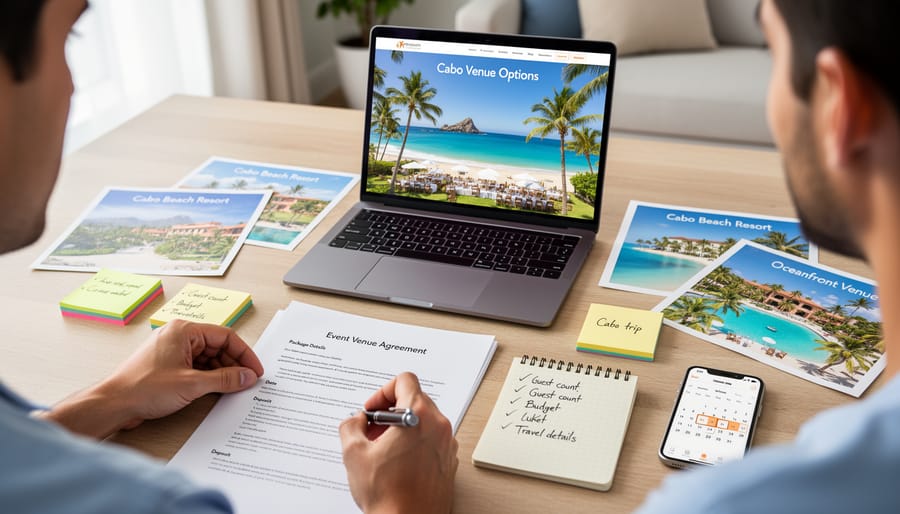
Walking into venue conversations unprepared wastes everyone’s time and can cost you your dream date. When you’re ready to book a Cabo wedding venue, you need specific information at your fingertips, not vague ideas about “someday” or “maybe 100 guests.”
Start with a realistic guest count estimate. You don’t need the exact number yet, but knowing whether you’re planning for 40 people or 140 changes everything about venue capacity, budget, and logistics. Factor in that destination weddings typically see lower attendance than local celebrations, many couples estimate 60-70% of invited guests will actually travel.
Your budget range guides the entire conversation. Be honest with yourself about what you can spend on the venue itself, separate from travel, accommodations, and other wedding expenses. Venues with accommodation often bundle ceremony, reception space, and lodging, which affects how you allocate your budget.
Nail down your preferred wedding date and at least two backup options. Cabo’s peak season runs November through May, when weather is most predictable and demand highest. Having flexible dates gives you negotiating power and increases your chances of securing your top-choice venue.
Before you contact venues, gather:
- Your must-have amenities list (ocean views, indoor backup space, getting-ready suites)
- Group travel preferences (all-inclusive versus à la carte, resort versus boutique hotel)
- Initial vendor wish list (photographer, videographer, florist, band or DJ)
- Any special requirements (dietary restrictions, accessibility needs, cultural ceremony elements)
These details help venues assess whether they’re the right fit and provide accurate package pricing. The more specific you are upfront, the faster you’ll move from inquiry to signed contract.
Important Considerations Before You Commit
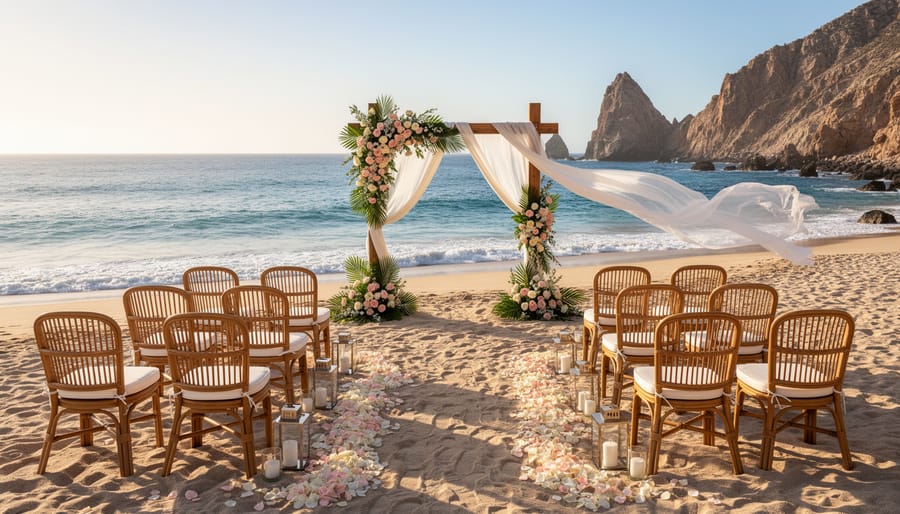
Before you sign anything or transfer a deposit, ask about weather contingency plans, specifically what happens if a hurricane or tropical storm hits during your wedding week. Venues should have clear backup indoor spaces and rescheduling policies, not vague promises to “work something out.” If they dodge this question or claim weather is never an issue, that’s your first red flag.
Guest count changes will happen, it’s the nature of destination weddings where travel costs affect attendance. Ask upfront how much flexibility you have: Can you drop from 80 guests to 65 without penalty? What if you need to add 15 more? Some venues lock you into minimum guarantees with steep fees for coming in under count, while others allow reasonable adjustments up to a certain cutoff date. Get these thresholds in writing before you commit.
Package restrictions deserve scrutiny too. If a venue insists you use only their in-house caterer but the menu options don’t match your vision, or if they ban outside photographers when you’ve already fallen in love with someone’s portfolio, walk away. The “deal” stops being a deal when it forces you into compromises that will bother you every time you look at your wedding photos. Trust your gut on this, if the restrictions feel suffocating now, they’ll feel worse six months into planning.
Finally, be wary of prices that seem impossibly low compared to other Cabo venues. Destination wedding venues have real costs for staffing, permits, and coordination. A suspiciously cheap package often means hidden fees that surface later, subpar service, or a venue that’s struggling financially and may not be around for your wedding date.
The Complete Cabo Wedding Booking Timeline
10-12 Months Out: Save-the-Dates and Initial Venue Deposit
Once you’ve fallen in love with a Cabo venue, it’s time to lock it down. At the 10-12 month mark, you’ll tackle two critical tasks: sending save-the-dates to your guests and securing your venue with a deposit.
Start with your save-the-dates. For a destination wedding, these aren’t just courtesy announcements, they’re essential planning tools for your guests. Your save-the-date should include your wedding date, the Cabo location, and a heads-up that formal invitations with travel details will follow. Many couples also create a simple wedding website at this stage with preliminary hotel recommendations and flight tips, giving guests time to budget and request time off work.
Simultaneously, you’ll work through the venue booking paperwork. Your venue coordinator will walk you through the contract, which typically outlines what’s included in your package, payment schedules, and any policies specific to the property. This is when you’ll ask detailed questions about everything from guest minimums to weather backup plans. Don’t rush this conversation, understanding the fine print now prevents surprises later.
If you’re considering weekend venue packages this is the time to discuss how multi-day celebrations work at your chosen resort. Your coordinator can explain how welcome parties, rehearsal dinners, and day-after brunches fit into the venue’s framework.
Expect to provide an estimated guest count during this phase. It doesn’t need to be exact, but the venue uses this number to ensure they can accommodate your group and to start preliminary planning for catering and setup.
3-4 Months Before: Formal Invitations with Full Schedule
Your formal invitations mark the transition from “save the date” excitement to concrete plans. At the 3-4 month mark, you’re sending a complete package that your guests can actually act on, not just the ceremony details, but the full weekend itinerary.
This invitation needs to work harder than a traditional wedding mailing. Include your ceremony and reception schedule, welcome dinner or rehearsal details if you’re hosting one, and any group activities you’ve planned. Spell out travel logistics: airport information, recommended arrival and departure windows, and ground transportation options your venue might offer.
The accommodation section deserves special attention. List your room-block details with the booking deadline (remember, that cutoff typically hits 30-60 days out), direct booking instructions, and the group rate code. If your venue offers different room categories at various price points, explain the options so guests can choose what fits their budget.
Coordinate this mailing with your venue coordinator. They’ll need your preliminary headcount to adjust catering minimums and confirm setup options. Some venues require menu selections or meal counts around this time, so ask what information they need and when.
Your guests now have everything required to book flights, request time off work, and make final decisions about attending, which sets you up perfectly for that RSVP deadline eight weeks out.
8 Weeks Out: RSVP Deadline and Final Headcount
The eight-week RSVP deadline is where your planning shifts from estimates to concrete numbers. Your Cabo venue needs this headcount to finalize catering orders, confirm table arrangements, and lock in linens and centerpiece quantities. Set your RSVP date clearly in your invitation and follow up personally with stragglers a week before the cutoff, destination weddings often see slower response rates than local events because guests need to coordinate travel schedules and time off work.
Once responses are in, communicate any significant changes to your venue coordinator immediately. A shift from 80 to 95 guests isn’t just about adding chairs; it might affect your ceremony setup, bar staffing, and even whether your chosen reception space still works comfortably. Your coordinator will walk you through how the new count impacts your package and whether any costs adjust accordingly.
This deadline also triggers decisions with other vendors. Your photographer needs to know group sizes for timeline planning. Your florist finalizes boutonniere and centerpiece counts. Your DJ or band adjusts equipment setup based on dance floor space. Think of the RSVP deadline as the domino that sets everything else in motion, miss it or guess wrong, and you’ll scramble to adjust arrangements when your focus should be on enjoying the final weeks before departure.
30-60 Days Before: Room Block Cutoff
The room-block cutoff typically lands 30 to 60 days before your wedding date, and this deadline deserves your full attention. Your resort or hotel venue will release any unreserved rooms back into their general inventory at this point, meaning guests who haven’t booked yet may face higher rates or limited availability. More importantly, you’ll need to provide your venue with final accommodation numbers so they can finalize logistics like welcome bags, transportation schedules, and group activities.
Start reaching out to guests about three weeks before the cutoff. A friendly email or text works better than waiting for stragglers to remember on their own. Let them know the exact cutoff date, what happens to their discounted rate if they miss it, and how to book using your group code. Some guests genuinely forget, while others are waiting on work approvals or travel companions, a quick nudge helps everyone.
Once the cutoff passes, confirm the final room count with your venue coordinator in writing. This number affects everything from welcome dinner headcounts to shuttle capacities, so accuracy matters. If you’ve overestimated your block, don’t panic, most venues are flexible when you’ve communicated clearly throughout the process.
Final Weeks: Vendor Coordination and Last Details
The final stretch before your Cabo wedding transforms from planning to confirming. Two to three weeks out, you’ll shift into coordination mode, this is when your venue’s wedding coordinator becomes your closest partner. Schedule a final walkthrough call to review every detail: ceremony setup, reception layout, audio equipment for vows and toasts, backup plans if weather shifts, and the precise timeline for your weekend. Confirm your coordinator has the correct headcount from your RSVP deadline and that catering, bar service, and seating reflect those numbers.
This is also when you finalize arrangements with any external vendors your coordinator helped you source. Send each vendor, photographer, florist, DJ, hair and makeup team, a master timeline so everyone knows where to be and when. Verify they have the venue contact information and any access requirements for load-in. Many Cabo resorts require vendor credentials or specific arrival windows, so confirm these logistics now rather than the morning of your ceremony.
Create a shared document with your partner that lists every confirmation number, contact name, and outstanding task. Review your contract one more time to ensure you haven’t missed any final payments or paperwork deadlines. Pack a folder with printed confirmations, vendor contacts, and your timeline, cell service can be unpredictable, and having paper backups brings peace of mind. You’ve built the foundation with your earlier timeline steps; these final weeks are about tightening the bolts so you can arrive in Cabo ready to celebrate, not scramble.
Understanding Vendor Access at Cabo Venues
Your venue’s wedding coordinator acts as your vendor matchmaker, but they’re working within a specific framework. When you book, the coordinator will walk you through the vendors already included in your package, typically the caterer, florist, and sometimes a photographer or DJ. These package vendors already know the venue’s layout, requirements, and rules, which streamlines coordination considerably.
Beyond the package vendors, coordinators maintain relationships with external professionals they trust. They’ll share contact information for photographers, videographers, hair and makeup artists, and other specialists who’ve worked successfully at the venue before. This isn’t a closed list, it’s a starting point based on vendors who understand the property and won’t create logistical headaches.
All-inclusive resorts tend to have tighter restrictions. You might be required to use their in-house catering and bartending, with limited ability to bring in outside vendors except for highly specialized services like a particular photographer you can’t live without. Some charge vendor fees when you hire someone external, covering the cost of coordinating an unfamiliar professional on their property.
Open-vendor venues give you more flexibility but also more responsibility. You’re building your team from scratch, which means more research and vetting. Your coordinator can still provide recommendations, but you’ll need to confirm each vendor’s familiarity with destination wedding logistics and their willingness to travel.
Ask your coordinator upfront about vendor restrictions, fees for outside professionals, and any vendors they strongly recommend against (yes, that happens). The goal is assembling a team that works smoothly within your venue’s ecosystem rather than fighting against it.
How to Verify Your Booking Is Complete
Once you’ve submitted your venue deposit and signed the paperwork, you’ll want to confirm everything is truly locked in. A complete booking includes specific documents and touchpoints that protect both you and the venue, and knowing what to look for helps you catch any gaps before they become problems.
Your venue should provide a signed contract that spells out your wedding date, guaranteed guest count minimums and maximums, package details with exact inclusions, payment schedule with all deposit and final payment dates, and cancellation or rescheduling policies. You should also receive a booking confirmation letter or email that references your contract and confirms receipt of your deposit. If the venue requires liability insurance or permits for certain locations on the property, those requirements should appear in writing.
Red flags that something’s incomplete: vague language about what vendors are included, missing deposit receipt or confirmation number, unsigned contracts where only your signature appears, or verbal promises that don’t match the written agreement. If your coordinator mentions “we’ll figure that out later” about major elements like ceremony location or catering minimums, push for written clarification now.
- Review the signed contract line by line and verify every detail matches what you discussed.
- Confirm you’ve received a deposit receipt with transaction details and booking reference number.
- Check that all payment deadlines are clearly listed and align with the timeline you planned.
- Verify the contract includes your chosen ceremony and reception locations by name.
- Create a shared folder with your partner where you store all booking documents and correspondence.
- Schedule your first planning call with the venue coordinator, typically 6 to 9 months before the wedding.
Set up a communication rhythm with your coordinator, monthly check-ins work well until you hit the three-month mark, then shift to every two weeks. Save every email confirmation and take notes during phone calls. This paper trail becomes invaluable as you move through the planning phases and make decisions about flowers, music, and menu selections. When you can pull up exact wording from earlier conversations, you’ll avoid misunderstandings and keep everyone aligned on your vision.
Common Questions About Booking Cabo Wedding Venues
How far in advance should I book a Cabo venue?
Start your venue search 12 to 18 months before your wedding date, especially for peak season dates from October through May. Popular beachfront venues book quickly, and securing your spot early gives you leverage in negotiating and planning the rest of your timeline.
Can I visit the venue before booking?
Most couples visit Cabo venues in person before committing, and many venues offer complimentary site tours or discounted preview stays. If an in-person visit isn’t possible, request a virtual tour and ask for recent wedding photos or videos from multiple angles and times of day.
What if my guest count changes?
Build flexibility into your contract by asking about guest-count adjustment windows and any associated fees. Most venues allow changes up to 30 or 60 days before your wedding, but significant reductions might affect your package pricing or minimum requirements.
When do I meet with my wedding coordinator?
Your venue coordinator typically reaches out within a week or two of booking to introduce themselves and begin the planning conversation. Most coordinators schedule regular check-ins throughout your engagement, with more frequent meetings starting three to four months out.
Understanding the coordination with out-of-town guests starts the moment you book. Create a simple wedding website with travel details, accommodation options, and your timeline so guests can plan ahead. Send your save-the-dates 10 to 12 months before the wedding, giving everyone time to request vacation days and watch for flight deals. Your formal invitation with the complete weekend schedule goes out three to four months ahead, and you’ll set that RSVP deadline for eight weeks out to finalize headcounts.
A typical Cabo venue package includes ceremony and reception space, tables and chairs, basic linens, and coordination services. Many packages bundle in catering, bar service, sound equipment, and sometimes photography or floral arrangements. The specifics vary widely between venues, so ask for a detailed breakdown of what’s included versus what you’ll need to source separately. Your coordinator will walk you through the package options and help you understand which vendors come with your booking and where you’ll have choices to bring in outside professionals.
Booking your Cabo wedding venue doesn’t have to feel overwhelming when you approach it with the right timeline and preparation. The key is giving yourself enough lead time, ideally 10 to 12 months, to secure your dream location and communicate clearly with both your venue coordinator and your guests. Understanding the unique rhythm of destination wedding planning sets you up for success from the start.
When you follow the structured timeline we’ve outlined, those critical milestones like save-the-dates, formal invitations, RSVP deadlines, and room-block cutoffs become manageable checkpoints rather than sources of stress. You’ll know exactly when to take each step, and you’ll have the confidence that comes from understanding how destination weddings actually work. Your venue coordinator becomes a true partner in the process, connecting you with trusted vendors and helping you navigate any questions that arise.
This planning approach also gives you time to coordinate other essential elements, like finding the perfect destination photographer who understands Cabo’s light and landscapes. The beach wedding you’ve been dreaming about is absolutely within reach, it just requires staying organized, asking the right questions, and trusting the process you’ve put in place.