
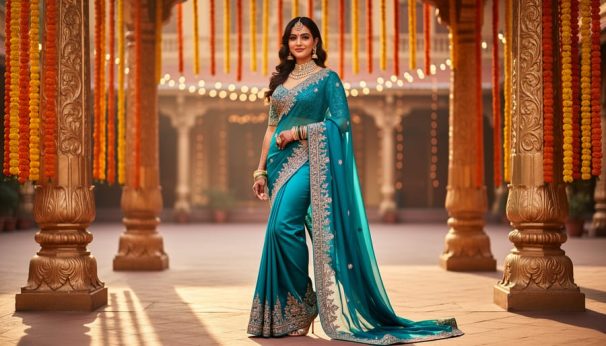
Attending an Indian wedding as a guest calls for an outfit that honors the celebration’s rich traditions while letting you feel confident and beautiful. The best choice balances cultural respect with personal style: think vibrant sarees, elegant anarkalis, or contemporary lehengas in festive colors and luxurious fabrics. Unlike Western weddings where neutrals dominate, Indian celebrations invite you to embrace bold hues like jewel tones, metallics, and intricate embroidery, though you’ll want to steer clear of white (a mourning color) and red (traditionally reserved for brides).
Choosing the right dress goes beyond aesthetics. You’re navigating ceremony traditions, venue formality, and regional customs, all while wanting to look effortlessly put-together in photos that’ll fill your Instagram feed for weeks. Whether you’re a first-time guest wondering about appropriate hemlines or a seasoned attendee hunting for something fresh, the key is finding silhouettes that flatter your body type and align with the event’s dress code. Daytime ceremonies might call for lighter fabrics and softer embellishments, while evening receptions are your moment to shine in heavily embroidered pieces with statement jewelry. The good news? Indian wedding guest attire offers incredible versatility, from ready-to-wear options at boutiques like KALKI and Panash India to custom pieces that make you feel like royalty for the night.
What Makes the Perfect Indian Wedding Guest Dress
Choosing the right dress for an Indian wedding isn’t just about looking beautiful, it’s about honoring the celebration while staying comfortable through hours of rituals, dancing, and feasting. We selected these 11 options with specific criteria in mind to help you navigate what can feel like an overwhelming decision.
First, we considered event appropriateness. Indian weddings typically span multiple days with distinct functions: daytime mehendi ceremonies call for lighter, more casual outfits, while evening receptions demand full glamour. The dresses on our list offer versatility across these different occasions, so you can find options whether you’re attending a single event or the entire weekend.
Comfort ranked equally high in our selection process. Indian weddings can stretch six to eight hours, often longer, and you’ll be moving between seated ceremonies, buffet lines, and energetic dance floors. We prioritized silhouettes that allow freedom of movement and fabrics that breathe, because the most stunning outfit loses its appeal if you’re miserable halfway through the sangeet.
Cultural respect guided every choice. Each dress style honors traditional Indian aesthetics while offering entry points for guests of all backgrounds. We also considered how these options align with broader wedding color schemes and seasonal celebrations, ensuring you’ll find something that feels both authentic and personal to your style.
1. The Classic Saree, Timeless Elegance for Any Wedding Event
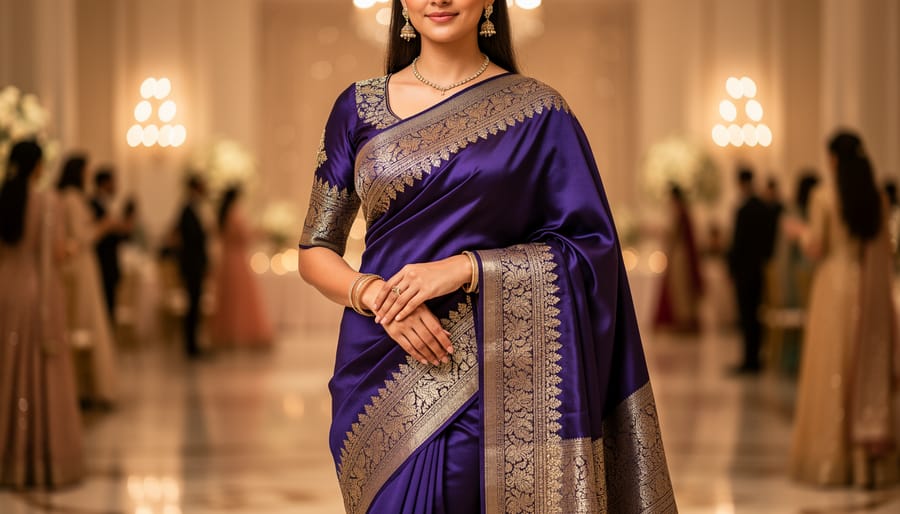
The saree remains the gold standard for wedding guest attire across India, and for good reason. This six-yard drape works for every wedding event on the schedule, from morning ceremonies to late-night receptions, giving you the kind of versatility that few other outfits can match. You’ll look culturally respectful and absolutely elegant without trying too hard.
What makes the saree such a reliable choice is the sheer range of fabrics available. Silk sarees in jewel tones bring gravitas to formal ceremonies, while lightweight chiffon and georgette versions keep you comfortable during outdoor summer celebrations or when you’re dancing through the sangeet. Each fabric carries its own personality. Rich Kanjeevaram silk announces your appreciation for tradition, whereas a flowing georgette with delicate embroidery whispers modern sophistication.
If you’ve never draped a saree before, don’t let that stop you. Pre-stitched sarees have revolutionized the game for first-timers and anyone who values convenience. These come with pleats already secured and the pallu (the draped end) attached, so you simply step in and zip up like a gown. You get all the visual drama of a traditional saree without spending twenty minutes in front of a mirror or worrying about pleats coming undone mid-celebration. They’re structured enough to stay put through hours of festivities, and nobody will know you took the easy route unless you tell them.
2. Anarkali Suit, Flattering Silhouette with Maximum Comfort
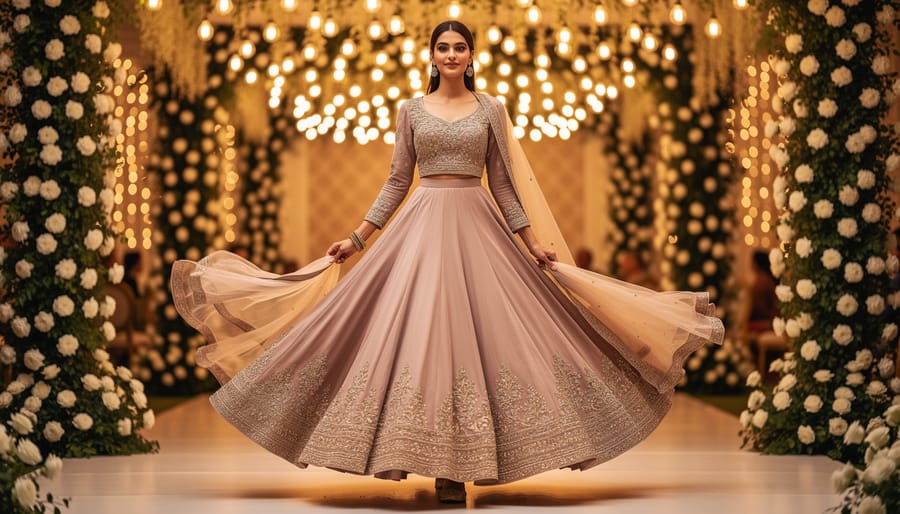
The Anarkali suit might just be your best friend at an Indian wedding. Named after a legendary courtesan, this style features a fitted bodice that flows into a dramatically flared, floor-length silhouette, think princess meets Bollywood. What makes it brilliant for wedding guests is how forgiving the design is. The empire waistline sits just below the bust, then the fabric swirls out generously, meaning you can dance, sit through lengthy ceremonies, and indulge in the feast without a single uncomfortable moment.
You’ll find Anarkalis in every fabric imaginable. Silk and brocade versions work beautifully for evening receptions, while lighter georgette or chiffon options are perfect for afternoon ceremonies when you need breathability. The real magic happens with the embellishment choices. A heavily embroidered neckline and border can make a simple fabric look opulent, or you can go for all-over sequin work if you want full glamour. Some designs feature contrasting dupattas (long scarves) that add another layer of elegance draped over one shoulder.
The Anarkali works for virtually every body type because that A-line shape naturally balances proportions. Petite guests can wear shorter versions that hit just above the ankle, while the floor-length style elongates taller frames. It’s also one of the easier Indian outfits to move in, no pleats to maintain, no risk of anything coming undone mid-celebration.
3. Lehenga Choli, Show-Stopping Style for Reception and Sangeet
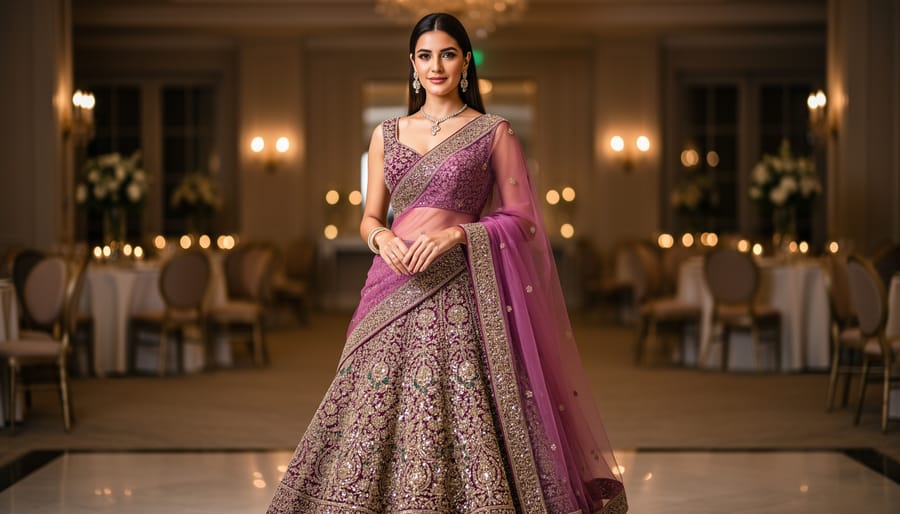
A lehenga choli makes an entrance. This two-piece ensemble pairs a fitted, often cropped blouse (the choli) with a flowing, floor-length skirt (the lehenga), creating a silhouette that’s undeniably festive and perfect for when you want to bring your A-game. Think of it as the showstopper option, the outfit that photographs beautifully under twinkling lights and moves gorgeously on the dance floor.
The magic of a lehenga choli lies in its versatility within glamour. You’ll find subtle versions in muted tones with delicate thread work that whisper elegance, and you’ll find heavily embellished pieces dripping in sequins, zari, and mirror work that command attention the moment you walk in. The skirt offers incredible freedom of movement despite its dramatic volume, while the choli can range from conservative coverage to fashion-forward cuts with interesting necklines or back details.
This outfit truly shines at evening events like the sangeet (the musical night before the wedding) or the reception. The combination of structure and flow suits these celebratory, often dance-heavy occasions perfectly. A lehenga choli signals you’re there to celebrate fully, and honestly, there’s something joyful about wearing an outfit this special. Just plan your footwear wisely since you’ll likely be in it for hours, and consider the skirt’s weight when choosing how embellished you want to go.
4. Sharara Set, Modern Meets Traditional
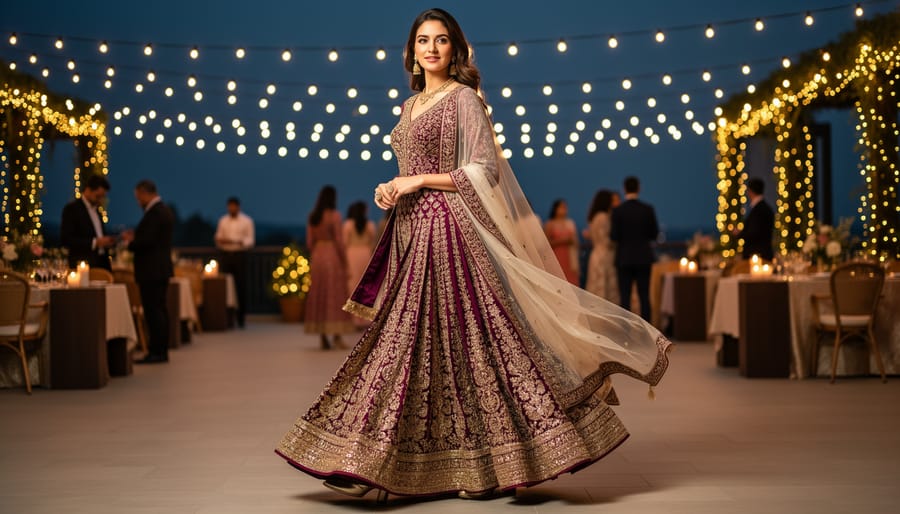
If you’re looking for an outfit that lets you move freely while still turning heads, the sharara set is your answer. This ensemble pairs a short-to-mid-length kurta (tunic) with dramatically flared pants that widen from the knee down, creating a silhouette that’s both regal and refreshingly modern.
What sets shararas apart from traditional options is their effortless blend of cultures. The flared pants echo vintage Bollywood glamour while the structured kurta keeps things contemporary, you won’t look like you’re trying too hard or costuming yourself. The wide-leg cut is incredibly forgiving on different body types and provides excellent coverage without sacrificing style.
Here’s where shararas really shine: they’re built for celebration. Those flared pants give you complete freedom of movement for dancing through the sangeet or navigating crowded reception halls. You can sit comfortably during long ceremonies, and the flowing fabric creates beautiful movement with every step. Look for sets with embroidery concentrated on the kurta and dupatta (scarf), which balances the drama of the pants without overwhelming your frame. Lighter fabrics like georgette or crepe work beautifully for warm-weather weddings, while heavier silks add formality for evening events.
5. Gharara, Vintage Charm with Contemporary Appeal
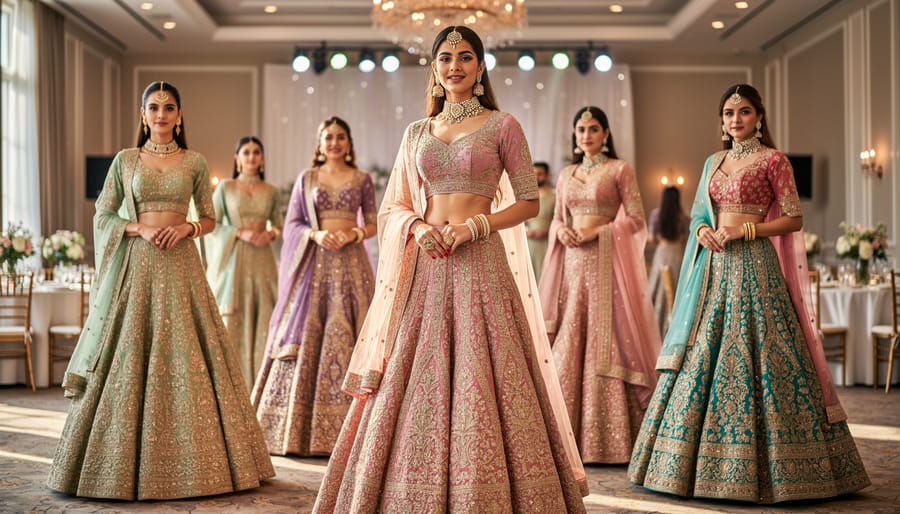
If you’re drawn to vintage aesthetics but want something refreshingly different from the standard lehenga or Anarkali, the gharara deserves your attention. This Mughal-era outfit features wide-legged pants with a distinctive gathered section just above the knee, creating dramatic flare from mid-calf down. The silhouette is unmistakably regal, imagine something a royal court member might have worn centuries ago, now updated with contemporary fabrics and embellishments.
What makes ghararas particularly appealing for wedding guests is their uniqueness. While everyone else might show up in similar styles, you’ll stand out in something that feels both historical and fashion-forward. The fitted knee area transitions beautifully into flowing fabric, offering an elegant profile whether you’re sitting through ceremonies or moving across the dance floor.
Modern designers have reimagined ghararas with lighter fabrics like organza and tissue silk, making them comfortable for hours-long celebrations without sacrificing their signature structure. Pair yours with a short or long kurta and a dupatta, and you’ve got an outfit that photographs beautifully while giving you plenty of room to breathe. It’s the perfect choice when you want to honor tradition without looking like everyone else.
6. Indo-Western Gown, Fusion Elegance for the Modern Guest
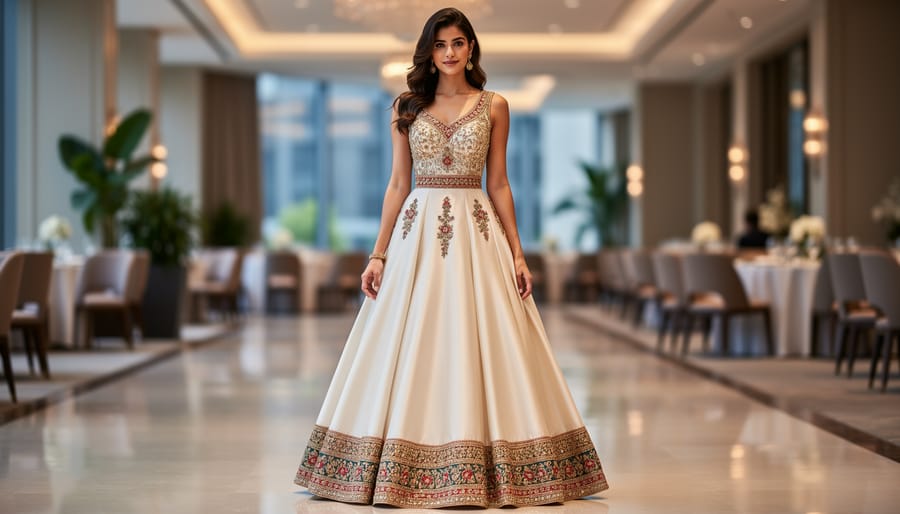
If you’ve never draped a saree or aren’t quite ready to navigate six yards of fabric at your first Indian wedding, the Indo-Western gown is your perfect middle ground. These stunning pieces combine the familiar comfort of Western evening gown silhouettes with the rich textiles, vibrant colors, and intricate embellishments that make Indian wedding attire so captivating.
Think floor-length gowns in jewel-toned silk or luxe velvet, featuring hand-embroidered necklines, sequined bodices, or delicate mirror work that catches the light as you move. Many designs incorporate traditional elements like mandarin collars, cap sleeves inspired by choli blouses, or side slits reminiscent of kurtas, all built on a gown structure you already know how to wear. The beauty is that you simply slip it on like any formal dress, no pins or pleats required.
These fusion pieces work beautifully for evening receptions and sangeet celebrations, striking the ideal balance between honoring the occasion’s cultural richness and staying within your comfort zone. You’ll look completely appropriate alongside guests in traditional attire while feeling confident in a silhouette that moves and fits the way you expect. For guests attending their first Indian wedding, an Indo-Western gown removes the intimidation factor without sacrificing an ounce of elegance or festive spirit.
7. Salwar Kameez, Understated Grace for Daytime Events
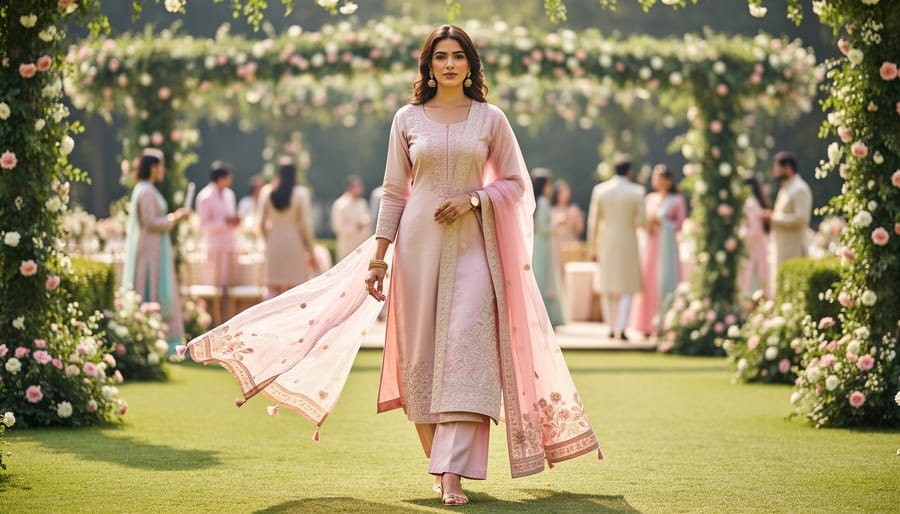
If you’re looking for something comfortable and culturally appropriate for daytime wedding events, the salwar kameez is your answer. This three-piece ensemble consists of a long tunic (kameez), loose-fitting pants (salwar), and a matching dupatta scarf. It’s the go-to choice for morning mehendi ceremonies and afternoon rituals where you’ll be sitting on the floor, applying henna, or moving between activities.
The beauty of the salwar kameez lies in its versatility. A simple cotton or silk version in soft pastels works perfectly for intimate morning gatherings, while heavily embroidered or embellished styles in richer fabrics like velvet or brocade can hold their own at more formal daytime receptions. The pants provide coverage and comfort without sacrificing elegance, and the dupatta adds that finishing touch you can drape over your shoulder or pin in place.
For guests new to Indian wedding attire, this is often the most approachable option. There’s no complicated draping involved, and the silhouette feels familiar if you’re used to Western separates. You can dress it up with statement earrings and bangles or keep it understated with minimal jewelry, making it work for your personal comfort level while still honoring the celebration’s cultural context.
8. Palazzo Suit, Breezy Comfort with Elegant Lines
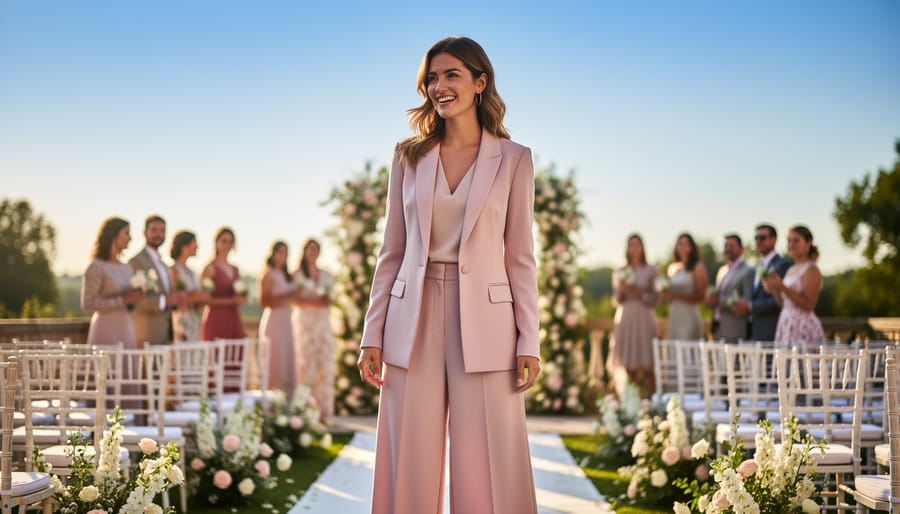
If you’re looking for effortless elegance with room to breathe, the palazzo suit deserves serious consideration. This outfit pairs wide-leg palazzo pants with a kurta (tunic) that typically falls mid-thigh to knee-length, sometimes topped with a short jacket or dupatta (scarf). The flowing trousers offer the sophistication of traditional Indian wear with a distinctly contemporary silhouette that feels fresh and current.
What makes palazzo suits particularly appealing for wedding guests is their incredible comfort during long celebrations. The wide legs allow for easy movement whether you’re navigating buffet lines, sitting through lengthy ceremonies, or dancing at the sangeet. Unlike more structured options, you won’t feel restricted after hours of wear. The breathable design makes them ideal for warm-weather weddings or indoor venues where temperatures can climb.
The modern aesthetic of palazzo suits strikes a beautiful balance between honoring tradition and showcasing personal style. You’ll find them in everything from subtle pastels with minimal embroidery for daytime mehendi ceremonies to richly embellished silk versions appropriate for evening receptions. The kurta can be straight-cut for a streamlined look or asymmetrical for added visual interest, while the pants drape beautifully without clinging.
This option works especially well if you prefer pants over skirts but still want to look unmistakably festive and wedding-appropriate.
9. Jacket-Style Lehenga, Structured Sophistication
The jacket-style lehenga brings architectural drama to traditional wedding wear, perfect for guests who want coverage without sacrificing style. This contemporary take features a structured long jacket or short cape worn over the classic lehenga choli, creating clean lines and a sophisticated silhouette that photographs beautifully.
What makes this option particularly appealing is its versatility. The jacket adds modest coverage for ceremony portions while giving you styling options throughout the celebration, wear it fully buttoned for a sleek look, open to reveal the embellished blouse underneath, or remove it entirely for the dance floor. Many designs feature contrasting embroidery on the jacket hem or sleeves, making it a statement piece in its own right rather than an afterthought.
This style works wonderfully for cooler evening receptions or outdoor winter weddings where you’ll appreciate the extra layer. The structured jacket also creates a slimming vertical line, particularly flattering if you’re self-conscious about your midsection. Look for jackets with interesting details like mandarin collars, asymmetric hemlines, or jeweled buttons that elevate the ensemble beyond basic coverage.
10. Cape-Style Anarkali, Drama Without the Fuss
If you want maximum visual impact with minimal effort, a cape-style Anarkali delivers exactly that. The flowing cape overlay transforms a classic silhouette into something genuinely eye-catching, the kind of outfit that photographs beautifully and moves gracefully as you navigate crowded wedding venues.
The genius of this style lies in the cape itself. Whether it’s sheer organza embroidered with sequins, embellished net, or richly textured brocade, the cape creates dimension and movement that static embroidery simply can’t match. Every turn sends the fabric flowing, catching light and creating those Instagram-worthy moments without you doing anything except existing.
Here’s the practical magic: you can skip the heavy jewelry entirely. The cape provides all the drama your look needs, meaning you’re comfortable throughout a six-hour celebration without weighing yourself down with statement necklaces or chandelier earrings. Simple studs and a cocktail ring often suffice. This makes cape-style Anarkalis particularly brilliant for guests attending multiple events, the same base dress can be styled dramatically different ways just by swapping the cape or removing it entirely for daytime functions.
Similar to choosing autumn wedding guest dresses the key is selecting pieces that photograph well while keeping you comfortable. Cape-style Anarkalis nail both requirements effortlessly.
11. Pre-Draped Saree, All the Elegance, Half the Effort
If you’ve ever admired sarees but felt intimidated by the intricate draping process, the pre-draped saree is your answer. This innovation transforms the traditional six-yard garment into a ready-to-wear piece with pre-stitched pleats and a fixed pallu, so you simply slip it on like a gown. No safety pins, no YouTube tutorials at 2 a.m., no panic attacks in the hotel room.
The genius lies in the construction. Designers attach the pleats to an underskirt and secure the shoulder drape, giving you that elegant saree silhouette without the learning curve. You get all the sophistication of a classic saree with the convenience of floral wedding guest dresses you’d zip up and go. It’s perfect when you’re juggling weekend wedding plans and don’t have time for draping practice.
First-time saree wearers love these because they eliminate the “will this unravel mid-dance?” worry. They’re also brilliant for destination weddings where you’re packing light and can’t bring your mom or a wedding style consultant to help with draping. The movement and flow look just as authentic as traditionally draped versions, and guests won’t spot the difference.
Where to Shop for Indian Wedding Guest Dresses
Shopping for Indian wedding guest dresses has never been easier, whether you’re browsing from your couch or looking for local expertise. The key is knowing where to find quality pieces that arrive on time and fit well.
For international shoppers, several established online retailers specialize in Indian wedding attire with worldwide shipping:
- Panash India, broad selection of wedding guest outfits with detailed sizing guides
- KALKI Fashion, curated boutique collection featuring designer and traditional pieces
- Andaaz Fashion, extensive range specifically for female wedding guests
- G3+ Fashion, reliable online source for various Indian wedding dress styles
If you’re shopping in Canada, you’ll find dedicated retailers who understand the nuances of fit and quality. The Reddit wedding community consistently recommends for Toronto-area shoppers, for their expertise in draping and styling advice, and for contemporary Indo-Western options. These Canadian sources often provide the added benefit of easier returns and faster shipping within the country.
When shopping online, pay close attention to size charts (Indian sizing often runs smaller than Western), read customer reviews about fabric quality and color accuracy, and order well in advance. Most retailers need four to six weeks for custom-stitched pieces, so don’t leave it until the last minute.
Styling Tips for Your Indian Wedding Guest Look
I’ll never forget my first Indian wedding as a guest, I showed up in a beautifully embellished lehenga and then layered on every piece of statement jewelry I owned. The result? I looked like a walking jewelry store, and by hour three, my neck hurt from all the necklaces. Lesson learned: if your dress is heavily embroidered or beaded, scale back the accessories and let the outfit shine.
Start with your outfit’s embellishment level as your guide. A richly decorated Anarkali or lehenga needs only delicate earrings and a simple bangle or two, while a clean-lined palazzo suit or salwar kameez welcomes chunky earrings, layered necklaces, or a dramatic maang tikka. Your dupatta itself is an accessory, experiment with different draping styles or let it fall loosely over one shoulder for an effortless look.
For footwear, comfort trumps height every single time. Indian weddings involve hours of standing, dancing, and navigating uneven surfaces. Block heels, embellished flats, or wedges are your friends. Keep a pair of decorative juttis or mojaris in your bag as backup, they’re traditional, comfortable, and pack flat.
Makeup can be bolder than your everyday look since the vibrant colors and rich fabrics hold up to it, but keep it balanced with your outfit. Jewel-toned eyeshadow, a bold lip in berry or deep rose, and luminous skin work beautifully. If your outfit is heavily embellished around the neckline, skip the necklace entirely and play up your eyes or lips instead.
Common Questions About Indian Wedding Guest Attire
Can non-Indian guests wear traditional Indian outfits to a wedding?
Absolutely! Indian weddings celebrate color and elegance, and hosts typically love seeing guests embrace the traditional dress code. Wearing an Indian outfit shows respect for the culture and adds to the festive atmosphere, just avoid sacred symbols or bridal colors if you’re unsure.
What colors should I avoid as a wedding guest?
Steer clear of red and maroon for the main ceremony, as these are traditionally reserved for brides in many Indian cultures. White is also best avoided, since it’s associated with mourning in some regions. Otherwise, embrace vibrant hues like jewel tones, pastels, and metallics.
How formal should I dress for an Indian wedding?
Indian weddings lean toward formal and festive, so think embellished fabrics, rich colors, and statement jewelry. Daytime events like mehendi can be slightly more casual, while evening receptions call for your most glamorous look, it’s genuinely difficult to be overdressed.
What if I’m attending multiple wedding events over several days?
Plan different outfits for each event based on the time of day and formality. A comfortable salwar kameez works beautifully for afternoon ceremonies, save your lehenga or Indo-Western gown for the reception, and consider an Anarkali for the sangeet when you’ll be dancing.
Is it okay to rent an Indian wedding guest outfit?
Renting is a smart, budget-friendly option, especially for one-time occasions. Many online retailers and local boutiques offer rental services for designer pieces, letting you wear something stunning without the commitment of purchasing an outfit you might only wear once.
Do I need to know how to drape a saree to wear one?
Not at all. Pre-draped sarees come already pleated and stitched, so you simply step into them like a gown. If you choose a traditional saree, many boutiques offer draping services, or you can watch tutorials online, it’s easier than it looks with a little practice.
These questions come up constantly when friends invite me to their weddings, and I always tell them the same thing: Indian weddings are meant to be joyful, inclusive celebrations. Hosts genuinely want you to feel comfortable and look beautiful, so don’t stress about getting every detail perfect. When in doubt, ask the couple or a close family member for guidance, they’ll appreciate that you care enough to ask, and they’ll happily point you toward what works for their specific traditions and event style.
Indian weddings are a feast for the senses, and as a guest, you’re not just invited to witness the celebration, you’re expected to be part of the visual spectacle. The beauty of choosing an Indian wedding guest dress is that there’s genuinely no single “right” answer. Whether you’re drawn to the timeless drape of a saree, the carefree comfort of a palazzo suit, or the contemporary ease of an Indo-Western gown, you’ll find an option that feels authentically you while honoring the occasion’s significance.
The most important thing? Choose something that lets you move, dance, and celebrate without a second thought. Indian weddings can span hours (sometimes days!), and your outfit should carry you through every moment with confidence and joy. Trust your instincts, wear what makes you feel beautiful, and remember that the couple invited you because they want you there, radiant, comfortable, and ready to celebrate their love story.