
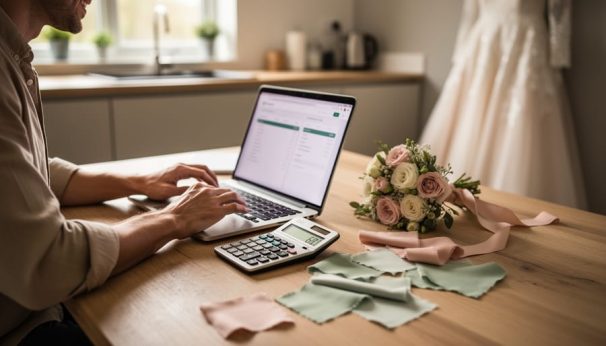
Expect to spend between $20,000 and $30,000 on your wedding if you’re following national averages, but know that beautiful, meaningful celebrations happen at every price point from $5,000 to $100,000+. The number that matters isn’t what other couples spend—it’s what you can comfortably afford without starting married life buried in debt or resentment.
Start by having an honest conversation with your partner about what you’ve actually saved, what family members have offered to contribute, and what you could realistically set aside over your engagement period. This real number becomes your foundation, not the Pinterest-perfect wedding you’ve been dreaming about since childhood. I’ve watched couples create absolute magic on $8,000 budgets and seen $60,000 weddings that felt oddly impersonal—the money matters far less than the intentionality behind how you spend it.
Understanding typical budget breakdowns helps you allocate wisely: venues and catering generally consume 40-50% of wedding budgets, photography and videography take another 10-15%, and flowers, attire, and entertainment each claim their share. But these percentages shift dramatically based on your priorities. Maybe you’re a foodie couple who’d rather splurge on an incredible farm-to-table meal and skip elaborate florals, or perhaps you’re DIY-inclined and can redirect professional service costs toward your dream photographer.
The goal isn’t matching someone else’s spending—it’s creating a celebration that feels authentically yours while keeping your financial future secure.
The Real Numbers: What Couples Are Actually Spending
Let’s talk real numbers, because nothing feels quite as overwhelming as planning a wedding when you have no idea what anything actually costs. If you’ve been googling “how much does a wedding cost?” at 2 AM, you’re definitely not alone.
According to recent data, the average wedding in Canada costs between $20,000 and $30,000. But here’s the thing about averages: they’re just the middle of a very wide spectrum. We’ve seen couples create absolutely magical celebrations for $5,000, and others who’ve invested $60,000 or more. Both are completely valid, and neither makes one wedding more “real” than another.
Regional differences play a huge role in these numbers. If you’re getting married in Toronto or Vancouver, you’re likely looking at higher venue costs and vendor rates compared to smaller cities or rural areas. A wedding in downtown Toronto might average $35,000, while the same celebration in a Maritime province could come in around $18,000. It’s not about one place being better; it’s simply about different cost-of-living realities.
Guest count is probably your biggest budget influencer. A 50-person gathering versus a 150-person celebration changes everything from catering costs to venue size requirements. As a general rule, you can estimate roughly $150-250 per guest for a full dinner reception, though this varies wildly based on your choices.
Venue type also shifts the budget landscape significantly. All-inclusive venues often appear pricier upfront but include most services, while a community hall rental might seem affordable until you add rentals, catering, and decor. Neither is inherently better or worse; they’re just different approaches with different price tags.
The most important takeaway? Your budget is personal. Whether you’re working with $10,000 or $40,000, what matters is creating a celebration that feels authentically you. There’s no shame in any number, only the joy of designing your perfect day within whatever means work for your life.

Breaking Down Your Budget: Where Every Dollar Goes
Venue and Catering: Your Biggest Investment
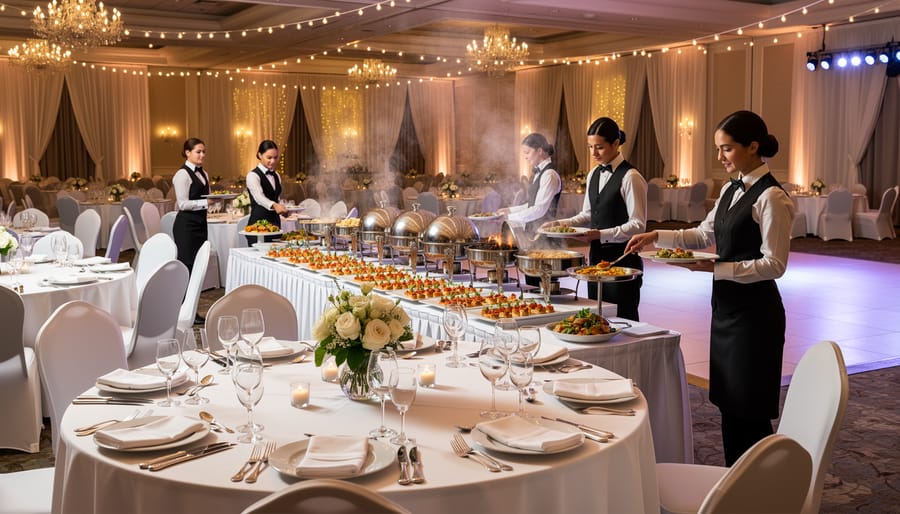
Here’s the thing about venue and catering costs: they’re going to claim the lion’s share of your budget, typically 40-50%, and for good reason. You’re not just paying for a room and some appetizers. This category includes your ceremony and reception space rental, tables, chairs, linens, dinner service, beverages (including that bar tab everyone will remember), dessert, staff, and often coordination services too.
Think of it this way: your venue sets the entire atmosphere for your celebration, and feeding your guests creates those memorable moments of togetherness. My cousin saved thousands by choosing a Friday evening instead of Saturday, and honestly? The vibe was just as magical.
To maximize value here, consider all-inclusive venues that bundle services together, which often costs less than piecing everything out separately. Seasonal timing matters too – off-peak months can slash prices by 20-30%. And don’t overlook non-traditional spaces like restaurants, gardens, or art galleries that might include tables and basic setup in their rental fee. The goal is creating an experience your guests will love while staying true to what you can comfortably afford.
Photography and Videography: Capturing What Matters
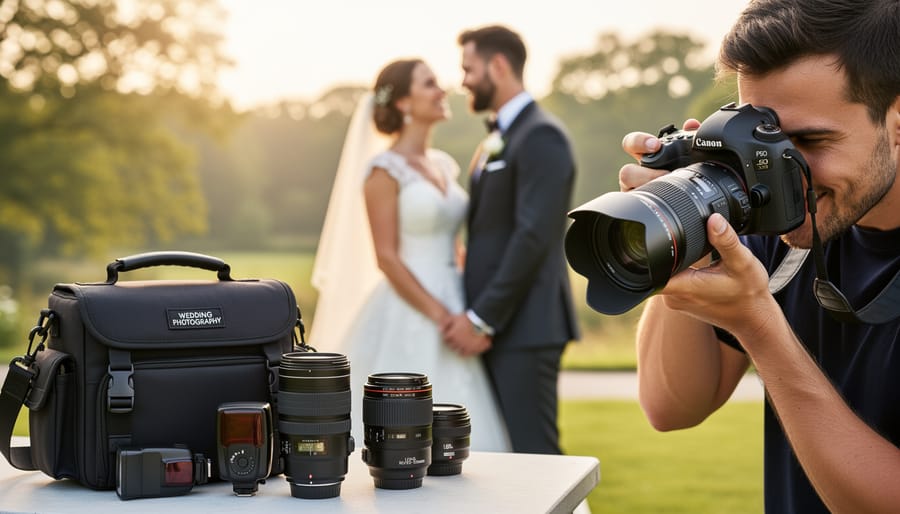
Your wedding photos and videos become the tangible memories you’ll treasure forever, making this one investment you’ll revisit for decades. Most couples allocate 10-15% of their total budget here, with photographers typically ranging from $2,000 to $8,000 and videographers adding another $1,500 to $5,000.
Here’s what influences pricing: experience level, hours of coverage, number of photographers, editing style, and what’s included in your package. A photographer charging $3,000 might offer six hours of coverage with digital files, while an $8,000 package could include engagement sessions, a second shooter, albums, and full-day coverage.
When choosing your coverage level, think about which moments matter most. Do you need getting-ready photos, or would ceremony-through-reception be sufficient? Many couples find eight hours hits the sweet spot, capturing key moments without unnecessary expense.
Pro tip from a photographer friend: review full wedding galleries, not just highlight reels. You want consistency throughout your day. Also, personality matters as much as skill since they’ll be by your side all day. Meet potential photographers over coffee or video chat to ensure you genuinely connect with them.
Attire and Beauty: Looking Your Best
Looking gorgeous on your big day typically accounts for 8-10% of your total wedding budget, though this varies widely based on your priorities. For wedding attire, expect to invest $1,500-$3,000 for a wedding dress (including alterations), $200-$800 for a suit or tuxedo, and $150-$400 for shoes and accessories. Don’t forget about alterations, which can add $200-$600 to your dress budget.
Beauty services deserve their own line item. Professional hair and makeup for the big day runs $200-$600 depending on your location and whether you’re traveling to a salon or having artists come to you. Many couples also budget for pre-wedding beauty treatments like facials or spray tans.
Here’s something I learned from experience: if you’re providing attire or covering beauty services for your wedding party, factor in those costs early. However, it’s becoming increasingly common for attendants to cover their own looks, so communicate expectations clearly to avoid awkward conversations later.
Consider renting formalwear or shopping sample sales for significant savings without sacrificing style. Your wedding day confidence matters more than the price tag.
Flowers, Decor, and Ambiance
Here’s where your personality can truly shine, and honestly, this is one category where creativity matters more than budget size. Florals and decor typically account for 8-10% of your total wedding budget, but there’s incredible flexibility here.
On a modest budget ($500-$2,000), consider seasonal blooms, greenery-heavy arrangements, and DIY centerpieces. A florist friend once told me that baby’s breath and eucalyptus can create stunning impact at a fraction of roses’ cost. Many couples also rent decor items or repurpose ceremony flowers at the reception.
Mid-range budgets ($2,000-$5,000) allow for statement pieces like floral arches, upgraded centerpieces, and specialty lighting. You can mix premium blooms with affordable fillers to achieve that luxe look.
Higher budgets ($5,000+) open doors to elaborate installations, rare flowers, and comprehensive design services.
The beauty of this category? You can always start with essentials and add extras as your budget allows. Focus on what guests will actually notice—entrance arrangements, head table florals, and ambient lighting create immediate impact. Remember, your venue’s existing aesthetic might mean you need less than you think.
Music, Entertainment, and Guest Experience
Here’s a truth I learned from my cousin’s wedding: nobody remembers the centerpieces, but everyone remembers dancing until their feet hurt. Entertainment typically accounts for 8-10% of your wedding budget, ranging from $1,000 for a skilled DJ to $5,000+ for a live band.
This investment dramatically shapes your reception atmosphere. A talented DJ reads the room, seamlessly transitioning from your grandmother’s favorite classics to songs that get your college friends on the dance floor. Live bands bring incredible energy and create those magical moments when your guests are singing along together.
Beyond music, consider what enhances your celebration. Photo booths ($500-1,200) give guests something fun to do during cocktail hour. Lawn games or unique performers like a caricature artist can reflect your personality while keeping everyone engaged.
Don’t feel pressured to hire the priciest option. Many couples find their perfect match with emerging talent or smaller ensembles. What matters most is finding someone who understands your vision and can create the vibe you’re dreaming of, whether that’s elegant and sophisticated or a full-on dance party from start to finish.
The Details That Add Up
Those charming little extras can sneak up on you quickly. Invitations typically run $300-$600 for 100 guests, though digital options offer beautiful savings. Wedding favors average $2-5 per guest, but honestly, your guests will remember your celebration more than a trinket. Transportation for the wedding party might cost $200-$800 depending on distance and vehicle choice. Don’t forget postage, welcome bags for out-of-towners, and those emergency day-of kits. My favorite tip? Prioritize what genuinely enhances your guest experience and skip the rest without guilt. These details collectively add 5-8% to your overall budget, so plan accordingly.
Hidden Costs Nobody Warns You About
Let me tell you about something that happened to my friend Sarah during her wedding planning. She’d meticulously budgeted every detail, or so she thought. Two weeks before the big day, she realized she’d forgotten to account for vendor meals, alterations that ran longer than expected, and a dozen other “little” expenses that suddenly added up to an extra $2,500. She’s not alone – most couples discover these hidden costs along the way, and I want to save you from that stressful surprise.
The truth is, your initial budget is just the starting point. Think of it as the foundation of a house – you need walls, doors, and all those finishing touches to make it complete. One of the biggest surprises? Gratuities. While some vendors include service charges in their contracts, many don’t, and it’s customary (and kind) to tip those who make your day special. Plan for 15-20% for your catering staff, bartenders, and delivery teams.
Here are the expenses that commonly catch couples off guard:
- Gratuities for vendors (typically 15-20% for catering staff, bartenders, and delivery personnel)
- Vendor meals during your reception (usually required in contracts at $25-50 per vendor)
- Alterations and tailoring for wedding attire (budget $150-600 for wedding dress alone)
- Marriage license fees and officiant costs ($50-500 depending on your location)
- Ceremony rehearsal venue rental or dinner
- Hair and makeup trials before the big day
- Guest parking fees or shuttle transportation
- Postage for invitations, especially with custom shapes or weights
- Day-of emergency kit with safety pins, stain remover, and pain relievers
- Late-night snacks or pizza for hungry guests
Another expense that sneaks up on couples? Day-of coordination for final details. Even if you’re not hiring a full-service planner, having someone manage the timeline and troubleshoot issues is worth every penny – typically $800-2,000. And don’t forget about preserving your wedding dress, framing your invitation suite, or creating a photo album after the wedding. These memory-keeping expenses aren’t urgent, but they’re meaningful investments you’ll appreciate years later.
The best approach? Add a 10-15% buffer to your overall budget specifically for these hidden costs. This cushion turns potential panic into peace of mind.
How Your Choices Shape Your Budget
Here’s something I wish someone had told me when I started planning: you’re not locked into someone else’s vision of what a wedding “should” cost. Every single choice you make is an opportunity to align your budget with what truly matters to you as a couple.
Let me share how this works in real life. My friend Sarah desperately wanted her dream venue, a gorgeous vineyard that felt slightly out of reach. Instead of giving up, she got creative with her choices. She moved her date from peak summer to early October, which instantly saved her $3,000 on the venue alone. Then she chose a Friday evening instead of Saturday, shaving off another $1,500. Suddenly, that dream venue wasn’t just possible—it fit comfortably within her budget.
The guest list might be your most powerful budget tool. Here’s the reality: cutting your guest count from 150 to 100 doesn’t just reduce catering costs. It creates a domino effect that touches nearly every expense. You’ll need fewer invitations, a smaller venue, less elaborate florals, and probably one fewer bar station. On average, each guest costs between $200 and $300 when you factor in food, drinks, rentals, and favors. Do the math on fifty fewer guests, and you’re looking at potential savings of $10,000 to $15,000.
Location choices pack serious financial punch too. Getting married in a major city versus a charming small town an hour away could mean the difference of 30 to 50 percent on vendor costs. I’ve seen couples save thousands by choosing a beautiful state park over a traditional ballroom, or by booking a restaurant’s private dining room instead of a full-scale event venue.
Seasonality plays a bigger role than most people realize. November through March weddings (excluding holiday weeks) can save you 20 to 40 percent compared to May through October. And if you’re flexible about avoiding Valentine’s Day and New Year’s Eve, winter weddings offer incredible value without sacrificing beauty—think dramatic evergreens, twinkling lights, and cozy candlelit ambiance.
The empowering truth? You’re the decision-maker here. No wedding tradition is mandatory, and every expense is negotiable based on your priorities. Maybe you splurge on an amazing photographer but skip the elaborate floral installations. Perhaps you choose a Sunday brunch reception instead of a Saturday dinner. These aren’t compromises—they’re intentional choices that put you firmly in control of your wedding budget.
Making Your Budget Work for You
Here’s the truth that wedding magazines rarely tell you: the best budget isn’t the one that matches someone else’s spreadsheet. It’s the one you can actually afford without going into debt or dipping into your emergency fund. I learned this after meeting a couple who nearly postponed their wedding because they thought they “needed” to spend what their friends had spent. Once they realized they could create something equally beautiful at half the cost, the entire planning process became joyful instead of stressful.
Start by having an honest conversation with your partner about your actual financial situation. Look at your savings, consider what family members might contribute (never assume this part), and determine what you could comfortably set aside over your engagement period. This is your real number, and it’s the only one that matters.
Once you know what you’re working with, follow this step-by-step approach to create a budget that reflects your values:
- Determine your total available funds by adding current savings, expected contributions, and realistic monthly savings until your wedding date.
- Identify your top three non-negotiables as a couple, whether that’s an amazing photographer, a specific venue, or a band that gets everyone dancing.
- Allocate percentages based on your priorities rather than standard guidelines, giving more to what matters most and less to what doesn’t.
- Build in a 10-15% contingency fund for unexpected costs that will inevitably appear, from extra postage to last-minute guest additions.
- Track every expense from day one using a simple spreadsheet or budgeting app to avoid those sneaky costs that add up quickly.
The magic happens when you get creative with your priorities. Love flowers but not expensive linens? Splurge on your florals and use the venue’s basic table settings. Want an incredible band but don’t care about fancy invitations? Invest in live music and send digital save-the-dates.
Consider opening a separate savings account specifically for wedding funds. Seeing that balance grow makes the goal feel tangible and helps prevent the temptation to dip into wedding money for other expenses. Some couples even automate transfers each payday, treating their wedding fund like any other essential bill.
When to Splurge and When to Save
Here’s what wedding planners and couples who’ve been there will tell you: there’s no universal “right answer” for where to spend and where to save. What matters is aligning your budget with what you’ll actually remember and cherish.
That said, patterns do emerge. Photography and videography consistently rank high on couples’ “glad we spent more” lists. Years from now, when the flowers have wilted and the cake is long gone, those images become increasingly precious. Many couples also find that investing in excellent food creates a ripple effect of guest satisfaction that colors how people remember the entire celebration.
On the flip side, décor often offers the most flexibility. Fresh floral centerpieces versus simple greenery can represent a difference of thousands of dollars, yet guests rarely notice these details as much as couples anticipate. One couple I spoke with saved nearly $3,000 by choosing seasonal blooms and DIY-ing their welcome sign, redirecting those funds toward a band they’d been dreaming about.
The unexpected money-saver? Invitations. While beautiful stationery sets the tone, digital options or simpler designs rarely disappoint in retrospect. Similarly, favors often get left behind, making them a candidate for either elimination or a modest budget allocation.
Consider what represents you as a couple. Music lovers might splurge on entertainment while keeping attire simple. Foodies could invest heavily in catering while choosing a less expensive venue. There’s genuine freedom in this approach.
A helpful exercise: imagine your wedding five years from now. What do you see yourselves talking about? What made your guests feel welcomed and celebrated? Those answers often reveal your true priorities.
Remember, the “best” investment is whatever aligns with your values and vision. A $500 dress can feel just as special as a $5,000 gown if it makes you feel like yourself. Trust your instincts, communicate openly with your partner about what matters most, and don’t let anyone else’s priorities override your own.
Budget Red Flags and How to Avoid Them
Planning a wedding should be exciting, not anxiety-inducing. But sometimes in the flurry of venue tours and cake tastings, we can miss important warning signs that our budget might be heading into risky territory. The good news? Recognizing these red flags early means you can course-correct before things get overwhelming.
I remember chatting with a couple who admitted they’d been avoiding budget conversations entirely because it felt “unromantic.” Sound familiar? Here’s the thing: financial transparency is one of the most loving things you can do for your relationship. Watch out for these warning signs:
- Putting wedding expenses on credit cards without a clear repayment plan within six months
- Avoiding money conversations with your partner or feeling secretive about purchases
- Constantly comparing your wedding to friends’ celebrations on social media
- Signing contracts or putting down deposits before reading the fine print
- Skipping the 5-10% contingency fund because “we’ll figure it out later”
If any of these resonate, take a deep breath. You’re not alone, and this is fixable. Start by scheduling a relaxed budget check-in with your partner over coffee or wine. Make it a judgment-free zone where you both share concerns honestly. If you’ve already overspent in one category, look at where you can reallocate rather than just adding more money to the total.
Consider this your permission to pause and reassess. A wedding expert once told me that the couples who enjoy their weddings most aren’t the ones who spent the most, they’re the ones who felt in control of their decisions. Your future together matters infinitely more than one perfect day, so protect both your finances and your peace of mind as you plan.
Here’s the truth I’ve learned after helping countless couples plan their celebrations: there’s no magic number that makes a wedding “right.” Whether you’re investing $5,000 or $50,000, what matters most is that your budget reflects your priorities and feels comfortable for your unique situation.
Your wedding budget isn’t just about dollars and cents—it’s about creating a day that genuinely represents you as a couple. Maybe that means splurging on an incredible photographer to capture every moment, or perhaps it’s investing in farm-to-table catering that showcases your values. The beauty of wedding planning in 2024 is that personalization has replaced the one-size-fits-all approach our parents knew.
If you’re feeling overwhelmed by all the numbers and decisions, remember that professional planning assistance exists for every budget level. A skilled planner doesn’t just help you spend money—they help you maximize it, finding creative solutions and vendor relationships that stretch your dollars further than you imagined possible.
At the end of the day, budgeting for your wedding is really about one thing: ensuring you start your marriage on solid financial footing while celebrating in a way that brings you joy. That’s a goal worth planning for.