
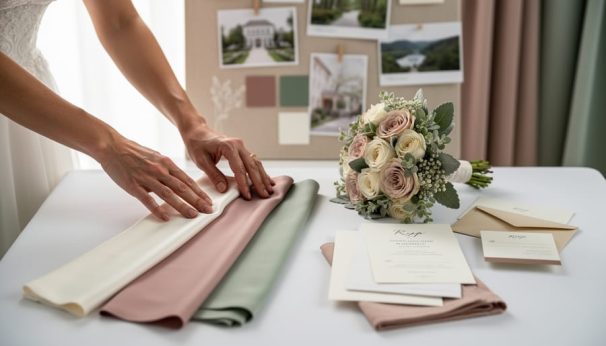
For most couples, a flexible ad hoc approach to style analysis wins, as long as it rests on a few firm anchors, because weddings are built from dozens of small decisions that rarely arrive in a neat order. “Ad hoc” simply means you explore style as it comes up: a gorgeous napkin colour on Tuesday, a venue photo that changes your whole palette by Friday, with no rigid framework telling you what to decide first. A structured analysis, by contrast, maps your colours, textures, florals, and mood in a set sequence before you commit to a single thing.
So which one is yours? If you’re the couple who gets energized by browsing, loves to react to what you see, and wants your day to feel personal and a little spontaneous, ad hoc fits beautifully. If you’re juggling multiple vendors, a tight timeline, or two very different tastes that need blending, a structured plan will save you from second-guessing and costly changes later.
Most couples land somewhere in the middle, and that’s perfectly fine. Below, we’ll compare both approaches side by side, so you can walk into your theme and style consultation knowing exactly how you want to work.
Ad Hoc vs. Planned Style Analysis at a Glance
Not sure which route to take? Here’s the quick read. Ad hoc style analysis feels like a relaxed chat over coffee. Planned style analysis feels like a guided tour where nothing gets missed. Neither one is better, they just suit different couples and different moments in the planning journey.
| Ad Hoc Style Analysis | Planned Style Analysis | |
|---|---|---|
| Pace | Quick, often one conversation | Gradual, over several touchpoints |
| Structure | Loose, follows what inspires you | Guided questions, mood boards, priorities |
| Flexibility | High, easy to change direction | Moderate, with a defined direction to return to |
| Best for | Couples with a clear vibe already | Couples with scattered ideas or many opinions |
| Ideal timing | Short engagements or early brainstorming | Longer runways before big vendor decisions |
Think of the one-line verdicts this way. Ad hoc is your fast, flexible pick when you already know what you love and just want someone to name the common thread. Planned is your steady, cohesive pick when your Pinterest board is a happy jumble and you want a clear look to build everything around.
The good news is you don’t have to commit forever. Plenty of couples begin casually, then lean into more structure as the details start piling up. We’ll unpack how each approach really works next.
What Each Style Analysis Approach Actually Is
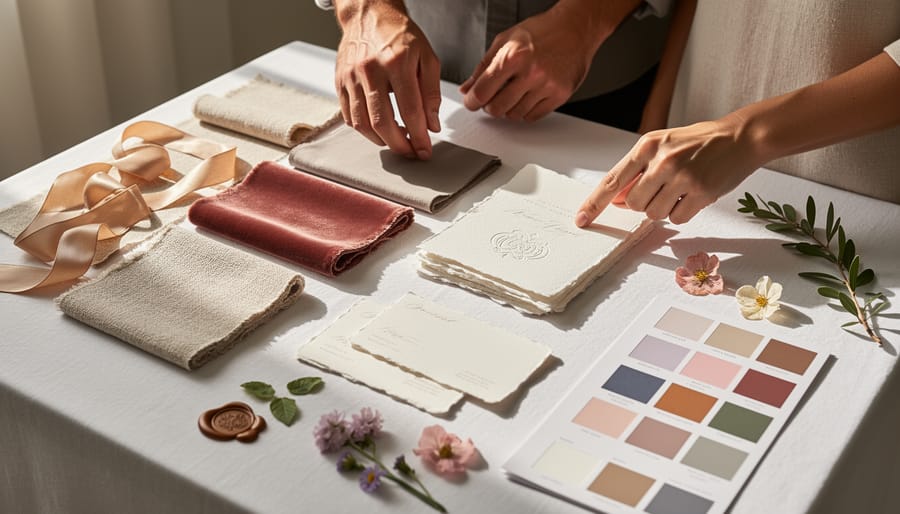
Ad Hoc Style Analysis: Following Inspiration as It Strikes

Ad hoc style analysis is a flexible, in-the-moment read of whatever you’re already drawn to. Instead of working through a formal process, you bring the images, colours, venues, and ideas you’ve been collecting, and someone helps you see the pattern in them as it emerges. There’s no worksheet and no fixed order of operations. You follow your curiosity, and the direction takes shape along the way.
This approach works best when you’ve been quietly gathering inspiration for a while. If you’ve saved photos, screenshotted a florist’s feed, and bookmarked a venue or two, you’ve already done most of the heavy lifting. The only missing piece is an outside eye to connect the dots.
Picture a couple who pinned about a dozen favourites: a candlelit barn dinner, a garden arch dripping with wildflowers, and a warm, earthy colour palette. They figured their taste was all over the place. In a single conversation, their style consultant pointed out the common thread: relaxed, organic, and golden-hour romantic.
That kind of quick clarity is what ad hoc analysis does best. It also pairs naturally with understanding wedding concepts and themes, because a few well-chosen favourites often reveal a theme you didn’t realize you’d already chosen.
Planned Style Analysis: A Guided, Step-by-Step Discovery
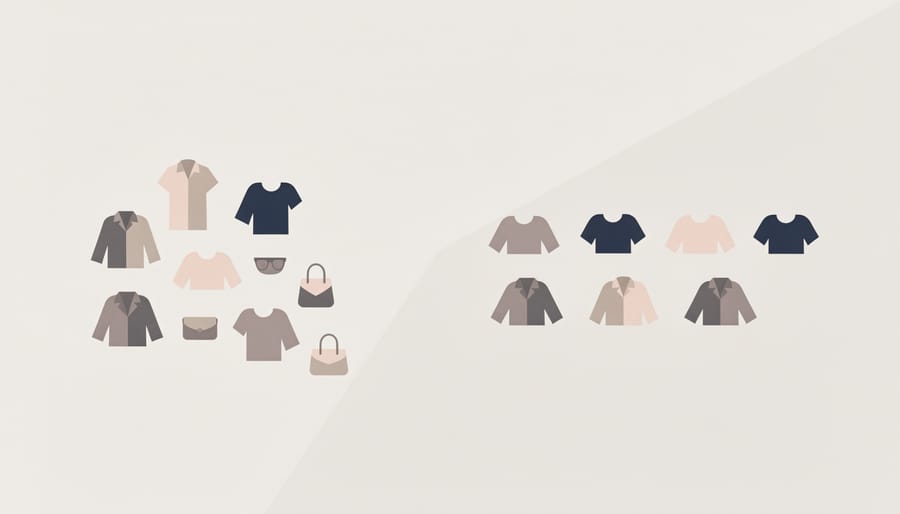
A planned style analysis takes the opposite approach to ad hoc. Instead of reading your inspiration as it arrives, you move through a guided process over several touchpoints, each one building on the last.
It usually starts with a set of questions about how you want your day to feel, not just how it should look. Then you create mood boards, rank your priorities (is it florals, lighting, or the invitation suite that makes your heart race?), and land on a clear style direction you can hand to every vendor.
Here’s a story that shows how this plays out. One couple came to us with a Pinterest board of nearly 400 pins: moody candlelit tablescapes, bright garden arches, a boho aisle, and a sleek modern cake. They worried they simply couldn’t decide. Through a few structured conversations, we noticed that nearly every image shared soft textures, warm metallics, and an intimate, evening glow. Their signature look turned out to be “romantic and tactile,” and suddenly the scattered board made perfect sense.
The payoff of this approach is clarity. Once your direction is named and agreed on, choices about décor, attire, stationery, and florals feel easier, and your whole day starts to look like it belongs together.
Key Terms You’ll Hear in a Style Consultation
Walking into a consultation, you’ll probably hear a few terms that sound more technical than they are. Here’s what they actually mean:
- Mood board
- A collage of images, colours, textures, and ideas that captures the feeling you want your day to have. Think of it as your wedding vibe in picture form.
- Colour palette
- The small group of shades that will show up across your florals, stationery, attire, and décor. Most couples land on three to five.
- Cohesive theme
- A look and feel that ties every detail together, so the invitations, tablescapes, and ceremony space all seem to belong to the same story.
- Style direction
- The overall personality of your wedding, such as romantic garden, modern minimalist, or cozy rustic. It’s the compass your planner uses when making design decisions.
- Inspiration audit
- A review of everything you’ve saved, pinned, or screenshotted, so your planner can spot the patterns and set aside what doesn’t fit.
None of these terms require homework on your end. You don’t need a finished mood board or a perfect palette before you arrive. Bring what you have, and your planner will help you shape it into something clear and unmistakably yours.
Ad Hoc vs. Planned Style Analysis, Dimension by Dimension
Speed and Time Commitment
Time is often the deciding factor, so let’s start there.
An ad hoc style analysis moves quickly. If you’ve already saved a handful of images you love, a planner can often spot the common thread in a single conversation, sometimes in under an hour. You leave with a clear direction and can start making decisions about florals, attire, and stationery right away. This is a lifesaver for short engagements, or for couples juggling demanding jobs who simply can’t carve out lots of planning time.
A planned style analysis takes longer by design. It usually unfolds over several touchpoints, with guided questions, mood board reviews, and time to sit with your ideas between sessions. That might mean a few weeks before your direction feels locked in. The upside is that the pace is steady and structured, so nothing gets rushed.
Neither speed is better. A fast start can feel energizing, while a slower build gives your taste room to settle. Think about how much runway you have, and how much time you realistically want to spend on style before the next big decision.
Flexibility vs. Cohesion
Ad hoc analysis is wonderful at leaving room for happy accidents. You fall for a peony arch one month, a moody candlelit tablescape the next, and your taste can keep evolving right up until the decisions are due. The trade-off is that those separate loves don’t always speak to each other. A rustic stationery suite, a sleek modern gown, and a romantic floral palette can each be gorgeous on their own and still feel like three different weddings in one room.
A planned analysis works the other way around. Because you’re answering guided questions and building a shared direction first, every choice gets measured against the same look and feel. Décor, attire, stationery, and florals end up reading as one story, and you spend less time second-guessing whether something “fits.” Visual tools help here too, since moodboards aid cohesive decisions by giving everyone the same reference point.
If you love spontaneity but still want a polished result, you don’t have to pick a side. Stay loose while you gather ideas, then ask your planner to help you name the thread that ties your favourites together.
Decision-Making as a Couple (and With Family)
When two people have two different tastes, the approach you choose changes how the conversation feels. With an ad hoc analysis, each of you can toss in whatever you’re loving that week, and a planner finds the thread that connects it all. It’s quick and low-pressure, but it can leave one partner feeling less heard if the louder voice wins. A planned analysis gives you each your own turn, usually through separate questions, so your preferences get weighed fairly before anything is blended.
Family adds another layer. Parents often have strong opinions, and your wedding party may too. Try collecting everyone’s ideas early, then deciding together which ones actually fit your vision. That keeps the input welcome without letting it steer. Deciding what matters most to you both, from florals to the wedding DJ budget, helps you stay aligned when opinions pile up.
To keep it fun, make it a date. Pour a drink, scroll inspiration side by side, and each pick three must-haves and one thing you’d happily skip. Agreeing on a few priorities first makes compromise feel like teamwork rather than a tug-of-war.
Fit With Your Planning Service and Timeline
Your planning service shapes which approach feels natural, and a good planner can move between them as your timeline changes. Here’s how each one tends to play out:
- Full planning: a planned analysis gives your planner a clear style blueprint to guide every vendor choice from day one.
- Destination planning: a planned approach helps you lock in a look before you’re coordinating from far away.
- Day-of coordination: an ad hoc read works well when most details are set and your planner only needs the common thread to bring it together.
Maybe you’re doing a casual celebration at home and want to backyard wedding planning without a long process. A quick, flexible style read can be plenty. Or maybe you’re booking a venue overseas and need a tighter plan before anyone boards a plane.
Many couples blend the two. You might start with a relaxed look at your favourite inspiration, then add structure once your priorities come into focus. Having that clarity early also helps you make every dollar count, since you’re spending on what truly reflects your style rather than chasing every passing idea.
Which Style Analysis Approach Should You Choose?
Here’s the good news: you don’t have to pick one approach and stick with it forever. Think of this as a starting point, not a verdict on your taste or your planning skills.
If you already feel pretty sure about your vibe, say you can describe your wedding in three or four words and your pinned photos nearly match, ad hoc analysis will probably feel like a relief. It works well when your timeline is short, you and your partner are largely on the same page, and you’d rather keep things loose and let inspiration find you.
A planned approach tends to suit couples whose ideas are scattered, whose Pinterest boards seem to belong to three different weddings, or who are balancing input from partners, parents, and the wedding party. The structure gives everyone something to point to when opinions start pulling in different directions.
Plenty of couples start out ad hoc and shift to a planned approach once venue, season, and guest details start taking shape. That’s completely normal, and a good planner will happily meet you wherever you are.
One practical tip for your first consultation: bring ten to fifteen images you genuinely love, not the ones you think you should love. Include a few that surprise you, like a dress detail, a table setting, or even a photo from a friend’s wedding. Those unexpected picks often reveal the common thread faster than anything else.
Common Questions About Wedding Style Analysis
Most couples show up with the same handful of worries, so here are the answers that come up again and again in style consultations.
Do we need a defined style before a consultation?
Not at all. Plenty of couples arrive with only a few saved images and a feeling, and finding the common thread is exactly what the consultation is for.
Can we switch from an ad hoc to a planned approach midway?
Absolutely. Many couples start by following their instincts, then move into a more structured process once the details start piling up, and nothing you’ve already gathered goes to waste.
How do we blend two very different tastes?
Start by each naming your top three must-haves, then look for the colours, textures, or moods you both light up about. A planner can help you weave the overlap into one cohesive look, so neither of you feels like you gave up your vision.
How many inspiration images should we bring, and does this work for a destination wedding?
Somewhere between 10 and 20 favourites is plenty, since too many can blur the picture. And yes, style analysis works beautifully for destination weddings, because your style guides how you adapt to a new setting.
If your question isn’t listed here, that’s completely normal. Every couple’s vision comes with its own quirks, and there’s no such thing as a silly question when you’re figuring out how your wedding should look and feel. Bring your curiosity (and your messy Pinterest board), and we’ll take it from there.
Here’s the truth we tell every couple: there’s no wrong way to find your style. Maybe you’ve got a camera roll full of inspiration and just need someone to point out the thread running through it. Maybe you’d rather answer thoughtful questions and build your vision step by step. Both paths lead to the same happy place, a wedding that feels unmistakably like the two of you.
And you don’t have to figure it out alone. In a Theme and Style Consultation with WeddingGirl.ca, we take whatever you’re bringing, whether that’s a tidy mood board or a wonderfully scattered handful of favourites, and shape it into a cohesive look and feel. No pressure, no guesswork, just a conversation that leaves you feeling excited instead of overwhelmed.
Whenever you’re ready to begin, reach out and let’s start talking about your day.