
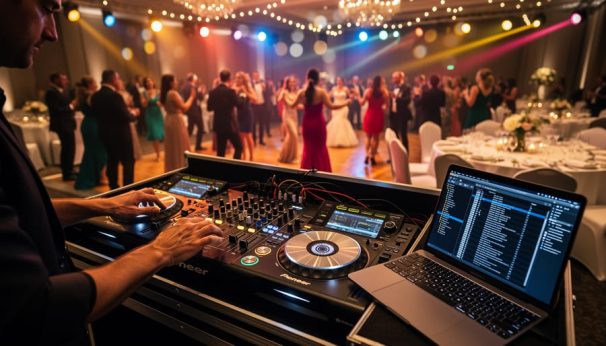
Most couples set aside somewhere between 8 and 12 percent of their overall wedding budget for the DJ, though the number that feels right for you depends on a few big levers. How many hours you need music, whether you want a DJ who also serves as your emcee, and whether your ceremony and cocktail hour need separate sound setups all move the price. So do your date, your location, and how in-demand your DJ is that season.
I won’t pin a dollar figure on it here, because rates swing widely from city to city and from one DJ to the next. What I can tell you is what that money typically covers: the DJ’s time, professional sound equipment, a planning session or two with you, and often a microphone for toasts. Add-ons like uplighting, a photo booth, or a ceremony speaker can nudge the total up fast.
The good news? A wedding DJ is one of the easiest vendors to budget for once you know what you’re paying for. Below, we’ll break down cost by hours and package, walk through a line-by-line breakdown, and share a few negotiation tips so you can make every dollar count without cutting the dance floor short.
What Wedding DJs Typically Cost Based on Hours, Season, and Package Level
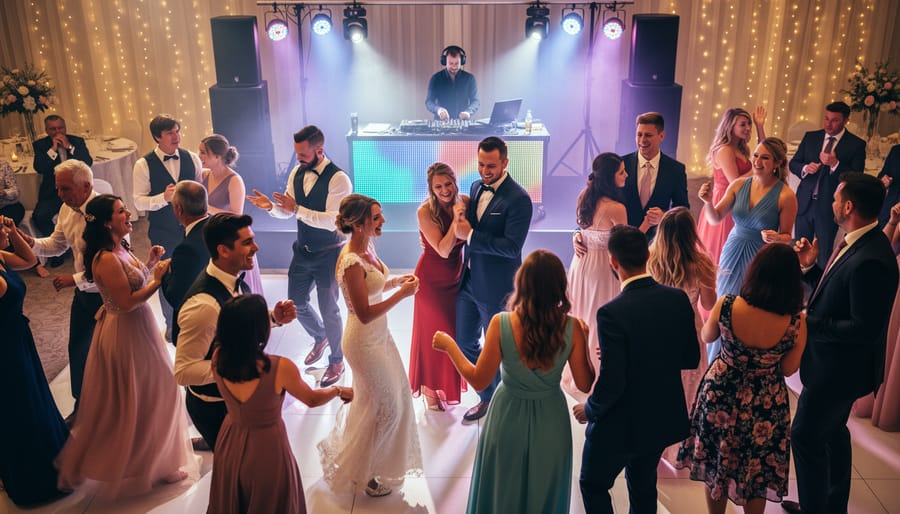
Hourly Rates vs. Flat Packages
Most DJs quote in one of two ways, and knowing which one you’re looking at makes comparing quotes so much easier.
Hourly billing charges you for the time the DJ is actually playing, usually with a minimum of three or four hours. It works well if you’re planning a shorter reception, say a cocktail-style evening or a brunch celebration, because you only pay for what you use. The catch is that overtime adds up fast. If the speeches run long or your crowd is still going strong at midnight, each extra hour is billed on top of the base rate, and that can nudge your total higher than you expected.
Flat packages bundle a set block of time with defined extras, often including the MC duties, a music planning consultation, and basic lighting. You get one clear number, which makes it easier to slot into your budget spreadsheet and harder to be surprised by later. Packages tend to shine for full-day coverage, where ceremony audio, cocktail hour, and dancing all happen with the same DJ.
A simple rule of thumb: if your timeline is tight and predictable, hourly can save you money. If your day has several moving parts, a flat package usually offers better value and fewer surprises. Either way, ask exactly what overtime costs before you sign.
Peak Season, Weekends, and Holiday Dates
Your wedding date can shift your DJ quote as much as anything else on the list. A Saturday in June or September is what most couples want, so DJs often charge their top rates and book up early. Move the same event to a Friday, a Sunday, or a November evening, and many DJs are happy to sweeten the deal since those slots would otherwise sit empty.
Holiday weekends are a bit different. Long weekends and New Year’s Eve can carry a premium because DJs have plenty of other offers on the table.
If you’re feeling flexible, here are a few gentle ideas:
– Ask for a quote on two or three different dates and compare them side by side.
– Consider a Friday or Sunday celebration, or a shoulder-season month like April or October.
– Pair your date decision with your venue, since outdoor venue costs often shift with the calendar too.
There’s no wrong choice here. Just know a little date flexibility can free up money for the dance floor.
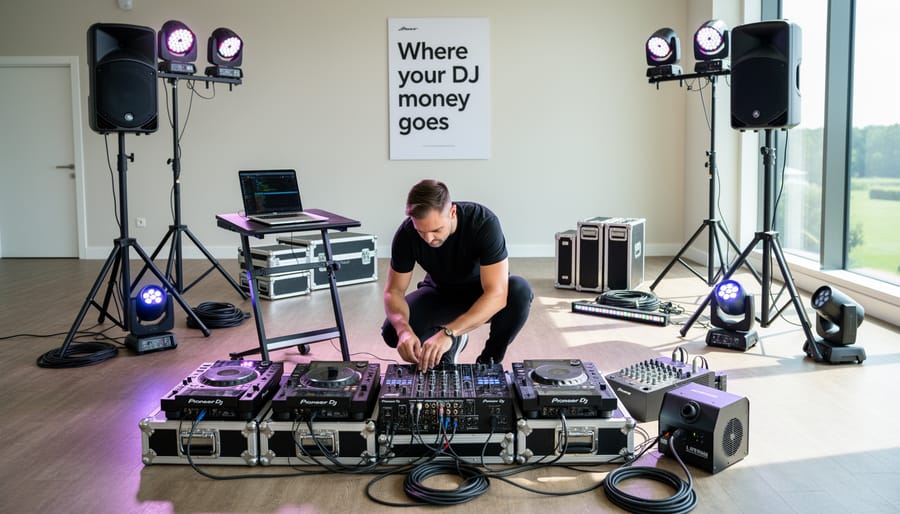
Where Your DJ Money Actually Goes: A Line-by-Line Cost Breakdown
A wedding DJ quote can look like one big number, but it’s really a bundle of smaller costs. Once you see what’s inside, comparing vendors gets a lot easier (and a lot less stressful).
Here’s what typically makes up a quote:
- Performance time: the hours your DJ is actually playing, plus any agreed overtime rate.
- Sound system: speakers, mixers, and cabling sized to fit your guest count and venue.
- MC services: announcements, introductions, and keeping the night moving on schedule.
- Planning meetings: time spent building your must-play and do-not-play lists and walking through the timeline.
- Travel and setup: getting the gear to your venue, loading in early, and packing down afterward.
- Backup equipment: spare controllers, mics, and speakers so a glitch never stops the party.
- Insurance: liability coverage, which some venues require before they’ll let a vendor in.
Notice how much of that happens when the music isn’t playing. A four-hour reception often means a DJ is working eight or more hours once prep, travel, and teardown are counted. That’s a big part of why a quote can look higher than the hours on your timeline suggest.
When you’re comparing quotes, line them up item by item rather than just by total. Two DJs might quote similar numbers, but one includes an MC and backup gear while the other lists them as add-ons. Ask each vendor to spell out what’s covered, whether a planning consultation is included, and what happens if your reception runs long. A quote that looks like the cheaper option on paper can end up costing more once those extras are added.
If something on the list doesn’t feel essential to you, say so. Many DJs are happy to adjust a package, and understanding the pieces gives you room to ask.
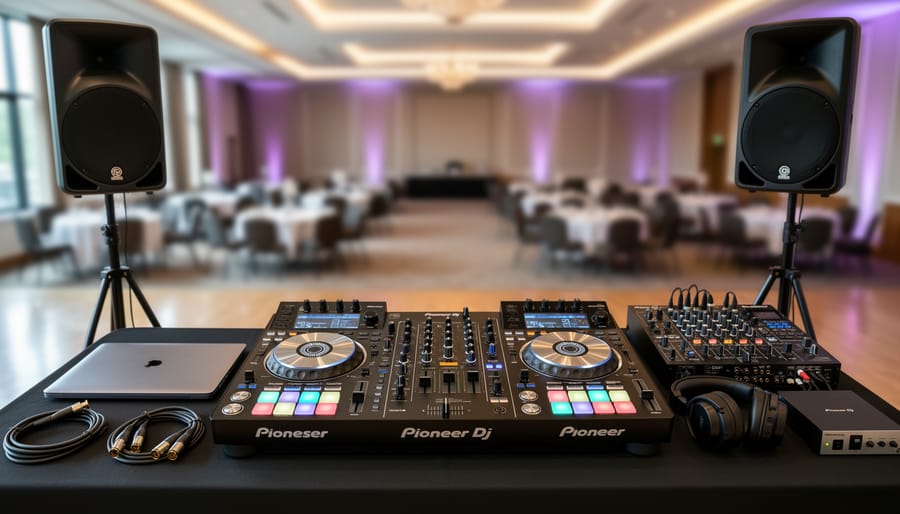
What Raises or Lowers Your DJ Quote: Key Price Factors
Add-Ons Worth Paying For (and Ones to Skip)
Not every add-on earns its spot on the invoice, and the good news is you get to pick. A few extras tend to pay off. Ceremony audio is a smart one, since a clear mic for your vows and a speaker for your processional song means every guest hears the moment. Dance floor lighting is another, because a little color on the floor can make a half-empty room feel like a party. If your venue has high ceilings or dim corners, uplighting is worth considering too, and it can stretch your decor budget as well.
Then there are the extras you can comfortably pass on. Fog machines, confetti cannons, and fancy video screens look fun in theory, but they rarely change how your guests feel. A second set of speakers only matters if your space is large or split into multiple rooms, so ask your DJ whether one setup will cover it. If your venue already offers a sound system, you may not need to pay for duplicate gear.
Where you hold the celebration matters here, too. Choosing one of the budget-friendly venues with built-in lighting or sound can free up money for the add-ons you really want.
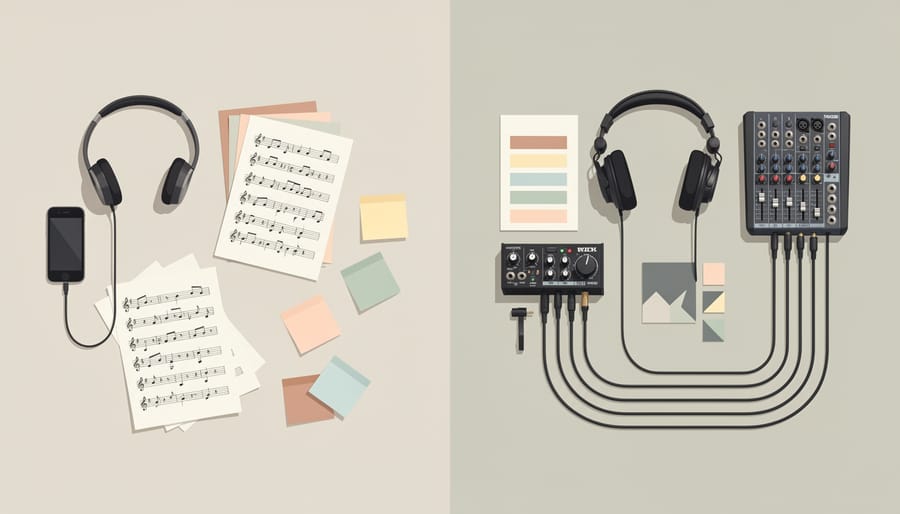
DIY Playlist vs. Hiring a Pro: Weighing Cost Against Experience
Choosing between a playlist and a professional DJ comes down to what you value most: a lower upfront cost or a smoother night. Neither path is wrong, and plenty of couples have a wonderful time with either.
The DIY route looks cheap on paper, but a few costs tend to sneak in. You may need to rent speakers and a wireless mic, and someone has to run the setup all evening, whether that’s a friend who’d rather be dancing or a venue staffer who may not be available. There’s also the risk of a tech glitch (a dropped Bluetooth connection or an ad popping up mid-first-dance), plus no MC to announce the grand entrance, cake cutting, or bouquet toss.
Pros
- DIY music usually costs far less than a professional DJ, even after equipment rentals.
- You control every song and can build a playlist that feels completely personal.
- A pro reads the room and adjusts the music when the dance floor needs a boost.
- A DJ brings backup gear and an MC, so the schedule runs without anyone on your guest list playing tech support.
Cons
- A DIY setup depends on equipment and a volunteer who may have to miss part of the party.
- Playlists can’t respond to the crowd, so the energy may dip with no one to adjust it.
- Hiring a professional takes a bigger bite out of your entertainment budget.
- A pro’s schedule and song list can feel less flexible if you want last-minute changes.
If neither extreme feels right, there are some friendly middle grounds. You could hire a DJ for the reception only and keep the ceremony and cocktail hour on a curated playlist. A hybrid setup works well too: the DJ handles announcements and peak dance hours while your own playlist covers quieter moments. Another option is a playlist managed by your wedding coordinator, who can cue songs and make announcements without a full DJ package.
A good rule of thumb is to think about how much you want the dance floor to be a highlight. If it’s a priority, a pro is worth the line item. If your celebration is more of an intimate dinner, a thoughtful playlist might be all you need.
Smart Ways to Fit a DJ Into Your Wedding Budget
Start with the big picture: decide what share of your overall wedding budget belongs to entertainment, then work backward. If dancing is the heart of your celebration, give music a bigger slice and trim somewhere that matters less to you, like favours or a formal floral arch. There’s no right percentage, only the one that fits your priorities.
Once you have a number, a few moves can stretch it:
– Shorten the coverage. Ask whether a four-hour reception package beats hourly billing, or whether you can skip a separate cocktail hour sound setup.
– Bundle ceremony and reception. Many DJs discount when one person handles both, and you only pay for one setup and teardown.
– Pick an off-peak date. A Friday or a November Saturday often comes with more flexibility.
– Ask your planner for vendor recommendations. Planners know who delivers reliably at fair rates, and they can flag DJs who already know your venue.
Planning something more intimate? The same logic applies to backyard wedding planning where a simple sound setup might be all you need.
From our planning team’s perspective, protect the dance floor budget last. Couples tend to cut music when other costs creep up, then regret a quiet room at 10 p.m. If something has to give, trim extras like lighting upgrades before you trim playing time or the DJ’s experience.
Wedding DJ Budget FAQs
Got questions? Here are the ones couples ask us most when they’re sorting out the DJ line in their budget.
When should we book our DJ?
Popular dates, especially summer Saturdays, can fill up many months ahead, so booking as soon as you’ve locked in your venue and date is a smart move. If you’re planning off-peak or on a weekday, you’ll likely have more flexibility.
Should we tip our DJ, and do they expect a meal?
Tipping is a kind gesture rather than a requirement, and many couples tip when the DJ went above and beyond. A vendor meal is common for those working a long reception, so ask your DJ during booking and give your caterer a heads-up for the final count.
Do DJs charge extra for overtime?
Often, yes. Many DJs bill an hourly rate for time beyond your package, so it helps to ask about extension pricing upfront in case the dance floor is too good to shut down.
What should be in a DJ contract?
Look for the date, start and end times, total cost, deposit and payment schedule, equipment list, and an overtime rate. A backup plan if your DJ falls ill and a cancellation policy are worth checking too.
If you’re still weighing a DJ against a live band, think about the energy you want and the space you have. A band can bring a showstopping presence, while a DJ offers a wider song range and typically a smaller footprint, and either can be wonderful. Whichever you choose, getting the details in writing keeps your budget, and your peace of mind, right on track.
Here’s the good news: a wedding DJ doesn’t have to be a budget-buster to be unforgettable. Start with the range that fits your guest count and hours, ask each pro what’s included, and give the DJ a clear spot on your spreadsheet before the other details start competing for it.
Remember, the number on a quote is only part of the story. Compare packages line by line, think about which add-ons truly serve your vision, and don’t be shy about asking for adjustments, like trimming coverage or bundling your ceremony and reception. Whether you hire a pro for the whole day, just the party, or blend in a DIY element, the right choice is the one that feels like you.
Music is what turns a lovely evening into the night everyone talks about, and that magic really does fit many budgets. If you’d like a hand building a plan that feels calm and personal, WeddingGirl.ca is here with planning and budgeting support for every step. You’ve got this, and your dance floor will, too.