
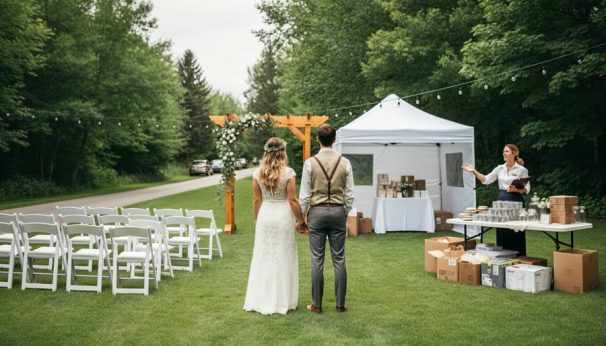
Planning a backyard wedding in Canada means securing a marriage licence from the province where your ceremony takes place, confirming your officiant is provincially licensed, and proactively addressing three big hurdles: permits for structures like tents, neighbour notification about noise and parking, and liability insurance. You can legally marry anywhere in Canada without restrictions on roofs or walls, but the logistical and social realities of hosting dozens (or hundreds) of guests on private property require careful coordination well before your wedding day.
The appeal is undeniable. Your own garden becomes the backdrop, you control every detail from the ceremony arch to the dessert table, and the memories unfold in a space that already holds meaning for you. But the trade-off is real: you become the event organizer responsible for acquiring permits, coordinating vendors, managing guest flow, and troubleshooting everything from power supply to sudden rainstorms. Many couples discover that professional planning support transforms the dream from overwhelming to achievable, especially when navigating municipal bylaws that vary widely across provinces and even between neighbouring towns.
This guide walks you through the complete process, from understanding which permits apply to your property and guest count, to building a realistic timeline that accounts for vendor bookings and weather contingencies. We’ll cover the non-negotiables (marriage licence validity windows of 30 to 90 days depending on your province, officiant credentials, and insurance requirements) and the often-overlooked details that can derail your day if ignored, like parking logistics and noise restrictions that may prompt neighbour complaints. Whether you’re hosting an intimate gathering of twenty or a full celebration of two hundred, the framework stays the same: legal compliance first, physical setup second, and community consideration woven throughout.
What You’ll Need for a Backyard Wedding in Canada
Legal and Administrative Essentials
Your backyard wedding starts with three non-negotiable documents. First, you’ll need a marriage licence from the province or territory where you’re holding the ceremony, it doesn’t matter where you live, only where you say “I do.” These licences are valid for 30 to 90 days depending on your province, so time your application accordingly. No residency requirements exist in Canada, which simplifies things if you’re marrying outside your home province.
Second, book a provincially-licensed officiant authorized to perform ceremonies in your wedding location. Officiant licensing is province-specific, so confirm their credentials match your ceremony province early in the process.
Third, determine what permits your event requires. While Canada allows marriages anywhere without restrictions on roofs or walls, your backyard setup may trigger permit needs. Tents or temporary structures, especially those on paved surfaces like parking lots, can require development permits in some municipalities. Gathering size, noise exemptions, and alcohol service may also fall under permit requirements depending on your local bylaws. As the event organizer, you’re responsible for securing these permits, so start researching your municipality’s rules as soon as you’ve set a date. Processing times vary widely, so allow generous lead time rather than waiting until the last minute.
Physical Setup and Vendor Services
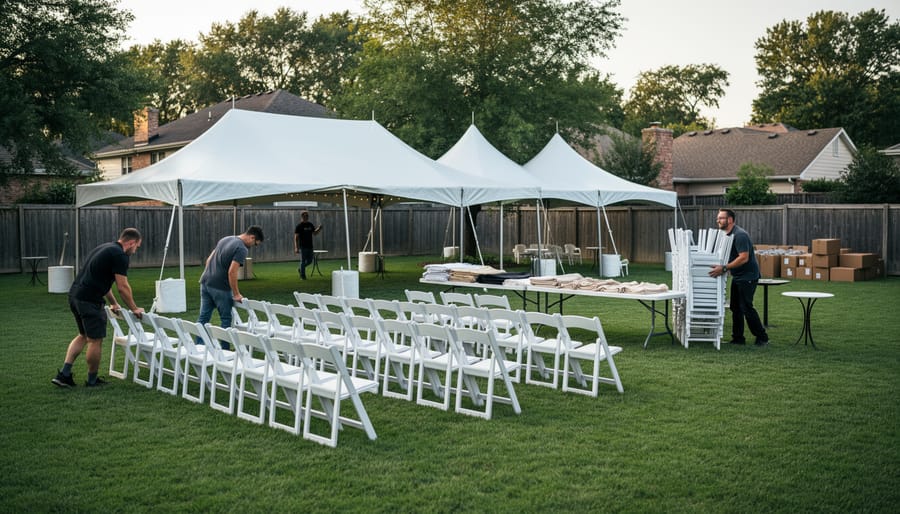
The backbone of any backyard wedding is the physical infrastructure you bring in. Tents top the list, they shelter guests from weather and define your event space. If you’re setting up a tent on grass, it’s typically straightforward, but placing one on a parking lot or hard surface may trigger development permit requirements in your municipality, so check local rules early. Beyond the tent, you’ll need tables and chairs for your guest count, plus linens if the rental doesn’t include them.
Lighting transforms the atmosphere once the sun sets. String lights, uplighting, and pathway lanterns create ambiance while ensuring guests can navigate safely. Sound equipment matters too, whether it’s microphones for vows and toasts or a speaker system for dancing, clear audio keeps the ceremony and reception flowing smoothly.
On the service side, catering is non-negotiable unless you’re arranging a potluck (which carries its own logistical challenges). Professional caterers handle food prep, service, and cleanup, freeing you to enjoy the day. If you’re serving alcohol, a licensed bartender isn’t just helpful, it’s often required by your event insurance and helps you comply with provincial alcohol service laws.
Finally, consider hiring a day-of coordinator or full-service wedding planner. They manage vendor arrivals, troubleshoot setup snags, and keep your timeline on track, which becomes invaluable when you’re juggling permits, neighbour relations, and a dozen moving parts in your own backyard.
Insurance and Logistics Documentation
Event insurance isn’t legally required, but it protects you from liability if a guest is injured or property is damaged. Many rental companies won’t deliver tents or equipment without proof of coverage, and policies typically cost a few hundred dollars for basic liability. When guest counts exceed 50 or alcohol is served, insurers may require additional details about your setup and security measures.
Parking can make or break neighbour relations. Map out where guests will park, street parking, your driveway, a nearby lot, and communicate the plan clearly on your invitations. If street parking is limited, consider shuttle service from a central location or carpooling arrangements.
Noise management deserves a written plan. Know your municipality’s noise bylaw hours (often 11 p.m. on weekends) and design your timeline around them. Share your schedule with neighbours in advance, including when music will start and stop. Some couples hire acoustic musicians for the ceremony and keep amplified sound modest during the reception.
Alcohol service rules vary by province. In some areas, serving alcohol at a private residence requires no special permit as long as it’s not sold. Other jurisdictions may require a special occasion permit, especially if you’re hiring bartenders or the event feels commercial in scale. Check with your provincial liquor authority early in planning.
Important Restrictions and Considerations Before You Start
Neighbour Relations and Noise Bylaws
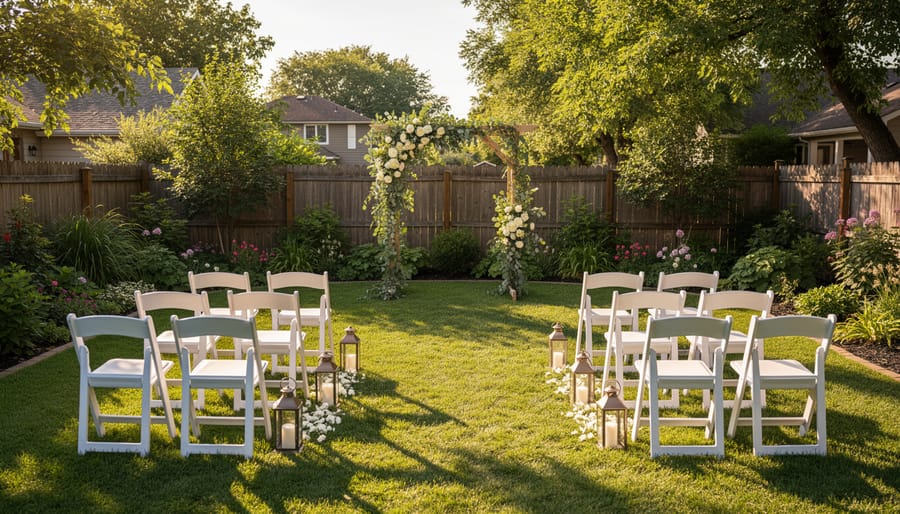
Neighbour relations can make or break a backyard wedding. The reality is that some neighbours will oppose outdoor events because of noise, increased traffic, and parking congestion, concerns that have derailed venue applications even in commercial settings. Your best defence is proactive communication. Notify neighbours at least a few weeks in advance, share the event date and expected end time, and acknowledge that you’re aware of the potential disruption. Understanding local noise bylaws is essential: most municipalities restrict amplified sound after 10 or 11 PM, and some have daytime limits on weekends. Plan your timeline to end music and festivities before the legal cutoff, giving yourselves a buffer in case things run over. If your celebration will affect street parking, consider warning neighbours in advance or arranging off-site parking to minimize tension. A small gesture, a handwritten note, an invitation to stop by for cake, or a bottle of wine after the event, can turn potential adversaries into allies.
Zoning and Property Use
Your property’s zoning classification can limit how you use the space for events. Many municipalities treat a formal wedding with guests, vendors, and infrastructure as a commercial-style activity rather than private use, triggering restrictions even on your own land. Some areas cap attendance numbers, prohibit certain setups, or require special permissions for gatherings that resemble venue operations.
Development permits often become necessary when you’re installing temporary structures, particularly tents on hard surfaces like driveways or patios. The permit ensures the setup meets safety standards and doesn’t violate setback requirements or neighbourhood bylaws. If your backyard wedding feels too complex or your property faces restrictions, exploring budget-friendly locations designed for events might simplify the process. Check with your municipality early, zoning issues discovered late can force you to scale back plans or relocate entirely.
Capacity and Realistic Expectations
Insurance companies typically set coverage tiers based on guest count, whether you’re serving alcohol, and available parking, so your backyard’s realistic capacity matters from the start. A property that comfortably fits 30 guests for a seated dinner might only support 20 once you account for a tent, catering station, and required walking paths. If you’re planning a larger celebration, consider researching small wedding venues that already have infrastructure in place. Work within your actual space constraints rather than forcing a guest list that creates parking chaos, neighbour complaints, or unsafe crowding, insurers will ask about these specifics before issuing a policy.
Step-by-Step: Planning Your Backyard Wedding
Step 1: Secure Your Marriage Licence
Your marriage licence is the legal foundation of your backyard wedding, and getting it right is straightforward. You’ll need to obtain the licence from the province or territory where your ceremony takes place, not where you live, which matters if you’re hosting guests at a family cottage in another province. Canada has no residency requirements, so you can legally marry anywhere in the country regardless of where you call home.
Timing matters here: marriage licences are valid for a specific window, typically 30 to 90 days depending on the province. Apply early enough that the licence will be active on your wedding day, but not so early that it expires before the ceremony. Most couples apply two to three months before their date to comfortably fall within the validity period. Check your specific province’s requirements when you apply, as processing times and validity windows vary slightly across the country.
Step 2: Book a Provincially-Licensed Officiant
Your officiant makes your marriage legal, so booking someone who’s properly licensed for your ceremony province is non-negotiable. In Canada, officiants hold provincial licences, meaning someone authorized to perform weddings in Ontario can’t legally marry you in British Columbia. Before you fall in love with someone’s ceremony style or personal vibe, confirm they’re licensed where your backyard is located.
Start your search early, ideally right after securing your marriage licence. Popular officiants book months ahead, especially during summer wedding season. You’ll want time to meet candidates, discuss your vision, and ensure they understand what a backyard setting requires, flexibility with setup, comfort working outdoors, and willingness to adapt if weather forces last-minute changes.
Look for someone who balances legal competence with the personal touch you want. Ask about their experience with backyard weddings specifically: do they bring backup sound equipment in case wind affects acoustics? Will they rehearse positioning so guests can see and hear clearly without a formal aisle? The right officiant doesn’t just read the script; they help shape a ceremony that feels intimate and intentional in your unique space.
Step 3: Confirm Permits and Municipal Requirements
Start by checking your municipality’s website for event-specific regulations. Many cities require development permits for temporary structures like tents, especially if they’re placed on hard surfaces such as parking lots or driveways. Some jurisdictions also regulate gathering sizes or require noise exemptions for evening events.
As the event organizer, whether that’s you or your hired wedding planner, you’re responsible for identifying and obtaining any necessary permits. Contact your local planning or licensing department directly rather than relying on assumptions. Ask specific questions: Do you need approval for a tent? Are there guest count thresholds? What about amplified music after certain hours?
Give yourself ample lead time to navigate the approval process. Processing times vary widely between municipalities and can shift based on workload and season. Starting this research early, ideally when you’re first confirming your venue choice, prevents last-minute scrambling and ensures you’re hosting a fully compliant celebration. If permit requirements feel overwhelming, a wedding planning service can handle the research and applications on your behalf.
Step 4: Arrange Insurance and Address Alcohol, Parking, and Noise
Event insurance isn’t just recommended, it’s often required by rental companies and may be mandated by your municipality depending on guest count. Policies typically cover liability, property damage, and vendor no-shows, with premiums varying based on whether you’re serving alcohol and how many people you’re hosting. Start researching options early, as some insurers need several weeks to issue coverage.
Parking deserves as much attention as your guest list. Count available street spots, driveway spaces, and whether neighbours will tolerate overflow parking. If space is tight, consider shuttling guests from a nearby lot or clearly communicating carpooling expectations on your invitations. Blocked driveways and congested streets are the fastest way to sour neighbour relations before the first toast.
Alcohol service rules depend on your province. Some allow home consumption without special permits for private events, while others require licences if you’re serving beyond immediate family. Check with your provincial liquor authority rather than assuming it’s fine, vendors may refuse service without proper documentation, and liability falls on you as the host.
Noise management means setting realistic timelines. Most municipalities enforce quiet hours starting between 10 PM and 11 PM. Plan your ceremony and reception to wrap before those limits, and give neighbours specific details about when music will start and stop. A proactive conversation now prevents bylaw complaints mid-reception.
Step 5: Book Essential Vendors and Rentals
Once you’ve cleared the legal and logistical groundwork, it’s time to secure the vendors who’ll bring your vision to life. Start with tent and furniture rentals, these form the physical foundation of your event and often book months in advance, especially during peak wedding season. Your caterer and bar service come next, as food and beverage logistics require detailed coordination with your space and guest count. Don’t forget sound equipment for your ceremony and reception, plus lighting if your celebration extends into the evening. If the vendor coordination feels overwhelming, consider hiring day-of coordination or a full-service planner; working with a professional can make the difference between DIY stress and smooth execution. Unlike venues that handle everything in-house, backyard weddings require you to assemble your own team, which gives you creative freedom but demands careful timeline management and vendor communication.
Step 6: Create Your Setup and Day-Of Timeline
Work backwards from your ceremony time to create a realistic setup schedule. If you’re getting married at 4 PM, your tent company will likely need access by 8 or 9 AM, sometimes the day before if it’s a large structure requiring permits. Caterers typically arrive three to four hours early for full-service events, while DJs and sound techs usually want ninety minutes to test equipment and troubleshoot any issues.
Build in weather contingency: if rain is forecast, have your rental company confirm their setup timeline can shift earlier if needed. Most vendors can adapt, but only if you’ve discussed backup scenarios beforehand. For breakdown, plan at least two hours after the last guest leaves. Tired couples often underestimate how long it takes to pack glassware, break down a tent, and restore the yard.
Don’t schedule vendors back-to-back with zero margin. A delayed catering truck or a tent pole that needs adjustment can cascade through your entire day. Thirty-minute buffers between major setup milestones give everyone breathing room. Share this timeline with your vendors in writing a week before the wedding, and confirm who’s responsible for coordinating on the day, whether that’s you, a family member, or a hired coordinator who can handle the inevitable curveball.
How to Know Your Plan is Complete and Ready
Legal Documentation Check
Start by pulling out your marriage licence and confirming the issue date and expiry window, it’s valid for 30 to 90 days depending on your province, so double-check it covers your ceremony date with a comfortable margin. Next, verify your officiant is licensed in the province or territory where you’re getting married, not just where they live. A quick conversation or email confirmation ensures there’s no last-minute scramble. If you obtained any permits for structures or gatherings, confirm they’re approved and you have copies on hand. This isn’t about paperwork anxiety, it’s about walking into your wedding day knowing the legal foundation is solid.
Vendor and Logistics Confirmation
Contact every vendor three to five days before your wedding to reconfirm arrival times, setup locations, and any site-specific requirements like where to park their vehicles or access power. Ask caterers about final guest counts and dietary restrictions, confirm tent companies understand your property layout, and verify your sound system can handle the space without violating noise bylaws. Email your parking plan to guests at least a week ahead, include a simple map showing where to park, overflow options if space is tight, and whether street parking is allowed in your neighbourhood. Your weather backup plan needs to be actionable, not aspirational: if rain is forecast, know exactly when the tent company will arrive to set up sides, which indoor space can accommodate your ceremony if needed, and how you’ll communicate last-minute changes to guests.
Final Neighbour and Community Check
A week or two before the wedding, circle back to any neighbours you haven’t already notified. Let them know the specific date, what time the music will start and end, and where guests will be parking. A handwritten note or quick doorstep conversation goes a long way, some couples deliver small treats or flowers as a thank-you for their patience. This final check isn’t just courtesy; it prevents last-minute complaints and helps you enjoy your day knowing everyone’s on the same page.
Common Questions About Backyard Weddings in Canada

Planning a backyard wedding brings up questions you might never encounter with a traditional venue. Here are the answers to the most common concerns couples have when considering a backyard celebration.
Do I need special permission to get married in a backyard?
No special permission is required to hold a wedding ceremony in a backyard in Canada, you can get married anywhere, any time, with no restrictions about roofs or walls. However, you’ll need a marriage licence from the province or territory where the ceremony takes place, and a provincially-licensed officiant authorized to perform marriages in that location.
How far in advance do I need a marriage licence?
Marriage licences in Canada are valid for 30 to 90 days from the date of issue, depending on your province or territory. Plan to obtain your licence within this window before your wedding date, and remember there are no residency requirements, you don’t need to live in the province where you’re getting married.
Can I have a tent without a permit?
This depends on your municipality and the tent’s location. A development permit may be required for tents or other structures, particularly if they’re constructed on parking lots or other hard surfaces. Check with your local municipality early in the planning process to understand what’s required.
What if my neighbours complain?
Neighbour concerns about noise, traffic, and parking are common reasons for opposition to backyard events. Give advance notice of your wedding date and expected duration, keep music at reasonable levels, and provide clear parking instructions to guests to minimize disruption and maintain goodwill.
Do I need wedding insurance for a backyard event?
While not legally required, event insurance is highly recommended for backyard weddings. Many rental companies require proof of insurance before delivering tents and equipment, and coverage protects you from liability if a guest is injured or property is damaged during your celebration.
Beyond these fundamentals, remember that parking logistics and alcohol service rules vary by location. If you’re serving alcohol, research whether you need a special occasion permit in your province. The event organizer, whether that’s you or a hired planner, is responsible for acquiring any necessary permits, so don’t assume your rental company or caterer will handle these requirements automatically.
A backyard wedding in Canada lets you create something deeply personal without the formality of a traditional venue. You’re exchanging vows in a space that already means something to you, surrounded by the people who matter most. But that intimacy comes with responsibility. You’ll need to navigate marriage licences, provincial officiant requirements, and municipal permits. You’ll coordinate rentals, manage parking logistics, and address neighbour concerns with transparency and respect. It’s detailed work that requires attention to legal requirements and genuine consideration for your community.
This is exactly where wedding planning services prove their worth. A planner who understands Canadian regulations can guide you through permit processes, connect you with licensed officiants, and coordinate vendors so nothing falls through the cracks. They handle the timeline, the backup plans, and the day-of logistics that keep everything running smoothly. That support means you spend less time worrying about noise bylaws or tent permits and more time focused on what actually matters: celebrating your commitment in a place that feels like home. With the right preparation and help, your backyard becomes more than a location. It becomes the backdrop for a wedding that’s unmistakably yours.