

Two families, one wedding, and a lot of opinions: the smoothest way to bring a Z & D family together is to give both sides the same information at the same time, agree on a few shared decisions early, and keep one clear point of contact for each household. Plan on about an hour for a first all-family conversation, and a few weeks of light check-ins after that. No special skills required, just a willingness to listen before you plan.
Here’s why it works. Most family friction at weddings isn’t about the big stuff. It’s about who heard what first, whose traditions got a spot in the ceremony, and who feels like a guest instead of a host. When both families start from the same page, those small sparks rarely catch.
Picture it: the Z side grew up with a Sunday-dinner-for-thirty tradition, and the D side thinks a “big event” means a quiet backyard gathering. Neither is wrong. They just need a way to meet in the middle without anyone feeling edged out. That’s what a little structure does. It turns “whose way?” into “what’s our way?”
Whether you’re blending two big households, two small ones, or something in between, the steps ahead will help you gather what you need, spot trouble before it grows, and check in along the way, so planning feels warm instead of tense.
What You’ll Need Before the Family Planning Conversations Begin
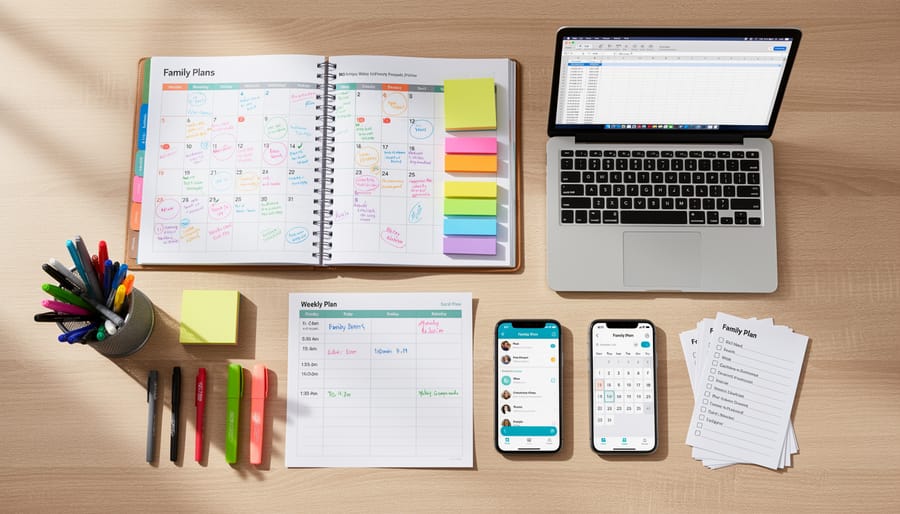
Before anyone sits down to talk traditions or guest counts, a little prep goes a long way. Think of it as setting the table before dinner: when everything’s within reach, nobody has to scramble, and conversations stay friendly. Here’s what to have ready:
- A shared planning app or folder, so both families see the same information in one place.
- A one-page vision statement that captures what matters most to you as a couple.
- A simple guest-list spreadsheet with columns for each side of the family.
- A budget framework with categories and blank amounts, so no one assumes a number.
- A family contact sheet listing names, roles, phone numbers, and preferred ways to reach each person.
- A calendar of key milestones, like venue decisions, invitations, and the rehearsal dinner.
You don’t need anything fancy. A shared Google Drive folder and a couple of basic documents will do the job beautifully. The point is to make the planning visible and easy to follow, not to create extra homework.
Why does this matter so much? Opinions fly fastest when people are guessing. If Aunt Dee thinks the guest list is open-ended while the couple has a firm number in mind, tension builds quietly until it spills over at the worst moment. When everyone can look at the same vision statement, the same spreadsheet, and the same timeline, the conversation shifts from “what’s happening?” to “how can I help?” That small change lowers the temperature before it ever rises.
Tip: share these tools at your first family gathering, rather than sending them out cold. A warm introduction makes everyone feel like part of the team.
Heads-Up: Family Dynamics Pitfalls to Watch For

Every family brings its own rhythm to wedding planning, and that’s a good thing. Still, a few patterns tend to creep in when two households start planning together, and spotting them early keeps things warm.
Watch for decisions drifting into group chats. When a venue idea or menu change gets settled in a thread the couple isn’t part of, someone ends up feeling sidelined. Quietly bring the conversation back to a shared space, like your planning folder or a scheduled call.
Pay attention to assumptions, too. Who is hosting the rehearsal dinner, who is contributing, and who gets a seat at the head table are all questions better asked out loud than guessed at. Presuming either side’s role or budget can sting, even when nobody means it that way.
Traditions deserve extra care. If a family custom gets brushed off as “old-fashioned” or “too much,” that can land as a comment on the family itself. Ask what the tradition means to them before deciding how (or whether) it fits. Many couples find a graceful blend works better than choosing one side over the other. If you’d like a few ideas, here are some tips on handling family wedding conflicts before they grow.
Then there’s the last-minute guest-list addition. A “just one more cousin” request is rarely about the cousin. It’s usually about wanting to belong, so respond with curiosity first and numbers second.
A breather is not a failure. If you’ve paused twice on the same topic, it may be time to use a neutral mediator, whether that’s a trusted friend or a professional coordinator who can hold the middle ground for both families.
Step-by-Step: Getting Two Families on the Same Page
Start With Your Shared Vision as a Couple
Before either family weighs in, the two of you need to be on the same page. When you and your partner are aligned, every suggestion from a parent, grandparent, or aunt has something steady to land on, instead of pulling you in two directions. Start by naming your top three priorities together, whether that’s an intimate guest list, a particular feel, or honouring certain ceremony traditions.
Then turn those priorities into a short vision statement, just a few sentences you can share with both sides. If you want help sharpening it, a style consultant can turn your wedding vision into something concrete. Here’s the full sequence this section builds toward:
- Align as a couple on your top priorities and write them down.
- Share your vision with each family separately, warmly, and in your own words.
- Host a relaxed kickoff gathering where both families can meet and chat.
- Ask each family about their must-have traditions.
- Assign roles that fit each person’s strengths and enthusiasm.
- Set up one communication channel and a regular check-in rhythm.
- Agree on who makes the final calls, so decisions stay with the two of you.
- Build in a plan for tough moments, like a pause-and-regroup rule.
Think of your vision statement as a gentle compass. Keep it short enough to fit on a single card, and kind enough that no one feels left out.
Bring Both Families to the Table (Kindly)
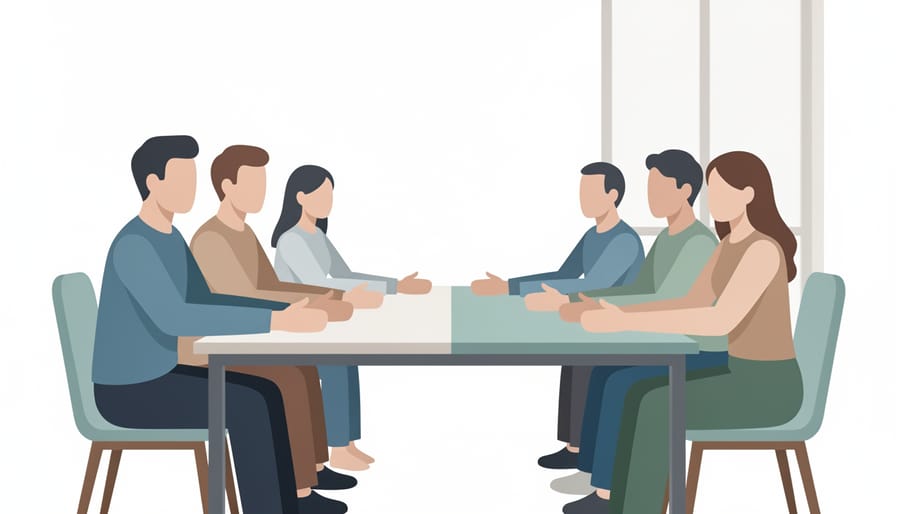
Think of the kickoff as a relaxed get-to-know-you, not a business meeting. A shared dinner, a backyard brunch, or a video call all work well, especially if your families live in different cities. Keep it to about an hour, send a loose agenda a few days ahead, and share your one-page vision statement so nobody walks in guessing.
Start by saying out loud what the two of you are excited about. Then invite each side to share one or two traditions that matter most to them. Asking “What’s one thing you’d love to see woven into the day?” tends to work better than “What do you want?” because it invites a story rather than a demand. Let each family go in turn, and keep the time even so no one feels like the supporting cast.
Here’s a tip from a couple I know: one set of parents spoke up right away while the other stayed quiet, and the couple realized afterward they’d only heard half the picture. A quick follow-up text to the quieter side, saying “We’d love to hear your thoughts too,” opened the door without any awkwardness.
Jot down what you hear in your shared planning folder, and confirm it back before you wrap up. If a particular idea needs logistics, like hosting at home, set it aside as a “later conversation.” For example, a backyard ceremony will raise practical questions about permits & rentals, and those are best handled once everyone feels heard.
End on something warm, like a toast or a shared photo, so the first family gathering feels like a celebration rather than a negotiation.
Give Everyone a Role That Fits

Every family has its natural talents, and the trick is putting them to work before good intentions turn into stepping on toes. Start by listing what actually needs doing, then match each task to the person who’d genuinely enjoy it. Your aunt who treats every gathering like a mini-festival? She’s your rehearsal dinner host. The grandfather who keeps a perfect memory of family history? He’s the keeper of heirlooms, making sure the lace veil or the vintage cufflinks arrive safely and on time.
Here are a few pairings that tend to work well:
– Heirloom coordination: someone detail-minded and sentimental, who can track what’s being worn, carried, or displayed.
– Rehearsal dinner hosting: a warm, social relative who loves bringing people together.
– Guest hospitality: a cousin or friend who can welcome out-of-town arrivals, share local tips, and point people toward the right hotel or shuttle.
– Cultural ceremony elements: an elder or family member who knows the customs well and can explain them to everyone else.
When you’re blending traditions, the graceful move is to invite each side to share what matters most, not just what’s customary. Ask, “Which part of this ritual feels essential to you?” You may find that one family’s tea ceremony and the other’s toast tradition fit together beautifully, each with its own moment to shine.
Keep roles clear and written down in your shared folder, so nobody wonders who’s handling what. And give people a little room to shape their task. A role that feels like an honor, rather than an assignment, turns enthusiasm into real help, and it tells both families they have a meaningful place in your day.
How to Know It’s Working (and What to Do Next)
You’ll know the coordination is working when the questions start to shrink. Instead of the same “wait, who’s handling that?” coming from three different relatives, people begin answering each other. Other good signs: decisions land on time, both families point to the same plan rather than their own versions of it, and you and your partner feel supported rather than managed.
Try a quick check-in at the halfway mark of your planning timeline. Sit down together with fifteen minutes and ask:
– Are we hearing the same questions repeatedly?
– Did the last few decisions happen without a standoff?
– Does each family feel included in the parts that matter to them?
– Do we feel like the hosts of this wedding, or the referees?
If you’re nodding along, keep going. If a couple of answers give you pause, that’s your cue to revisit roles, refresh the shared folder, or schedule another relaxed family call. Small adjustments now save big headaches later, especially once venue costs and deposits start shaping the timeline.
And that’s the moment to consider handing off the family logistics. A full planner can steer the whole process, a destination planner can manage guests and travel across two families, and a day-of coordinator can run timelines, cue relatives, and field questions so nobody has to. You get to simply be present, which is the whole point.
Common Questions About Family Dynamics and Wedding Coordination
Every blended-family wedding has its own rhythm, so think of these answers as starting points rather than rules. Here are the questions couples ask us most often.
How do we handle guest-list disagreements between families?
Sit down together first and agree on a total headcount and a few guiding priorities, then share that framework with both sides. When each family knows the limits upfront, it feels less like a personal “no” and more like a shared plan.
What if our families have different traditions?
You don’t have to choose one over the other. Ask each side which traditions matter most to them, then weave in one or two meaningful moments from each so everyone sees themselves in the day.
How do we say no to a family member kindly?
Start with gratitude for their enthusiasm, then be clear and warm about the decision, ideally framed as something you and your partner decided together. Offering a different way for them to be involved often softens the moment.
When should we hire a day-of coordinator, and who should share our decisions?
Bringing one on a few months out gives them time to take over family logistics so no one has to play referee on the day. As for sharing news, each partner can update their own family, which keeps messages personal and consistent.
If a question comes up that isn’t covered here, trust your gut and remember that you two set the tone for everyone else.
At the end of the day, bringing two families together isn’t a hurdle to clear on the way to your wedding. It’s part of the love story itself. Remember that couple whose families approached planning in totally different ways? By the wedding weekend, one side had sketched the seating chart while the other had arranged the toasts, and nobody could say whose idea was whose. That’s the magic of a blended Z & D family: two sets of traditions, opinions, and big hearts working toward the same celebration.
So give yourselves grace. Some conversations will go smoothly, and a few will need a deep breath and a second try. That’s completely normal, and it doesn’t mean anything is going wrong.
If you’d like a calm, experienced hand along the way, whether that’s full planning help or day-of coordination so both families can simply soak it all in, WeddingGirl.ca is here whenever you’re ready to reach out.