

If you’ve searched “family dynamics llc,” you’re probably hoping to find a name, a service, or just someone who can help when your family and your wedding plans start pulling in different directions. We can’t point you to one specific company here, but we can give you what most people in your spot actually need: a clear way to handle family tension before it takes over your engagement.
The short version? Talk early, set boundaries kindly, and hand off the pressure points to someone who isn’t related to anyone. That means a few honest conversations about roles and expectations, a short list of non-negotiables you and your partner agree on together, and, if the guest list or seating chart is already causing sparks, a professional wedding coordinator who can be the calm, neutral voice in the room.
Why does this work? Most wedding family conflict isn’t really about the flowers or who sits at table four. It’s about feeling included, respected, or worried about change. When you name that gently and give everyone a clear role, the temperature drops fast.
Think of the mom who wants a say in the dress, or the stepdad unsure where he fits in the processional. Their feelings are real, and so are yours. Let’s look at how to hold both without losing your sanity, or your joy.
What People Really Mean When They Search ‘Family Dynamics LLC’
If you’ve typed “Family Dynamics LLC” into a search bar, chances are you weren’t hunting for one particular company. More likely you were looking for a lifeline. Something along the lines of, “Who can help me with my family while I plan this wedding?”
That instinct is a good one. Couples reach for all kinds of outside support when relatives start weighing in: a mediator, a counsellor, a coach, or a coordinator who has seen it all before. Each can play a different role, and none of them is a magic fix.
Here’s the thing worth saying plainly: family dynamics aren’t a business you hire. They’re a very real part of every wedding, from the quietest elopement to the biggest celebration. Everyone arrives with history, hopes, and opinions, and that’s completely normal.
What you can hire is a neutral guide. A skilled wedding professional steps into the middle of the conversation so you don’t have to. They field the questions, hold the timeline, and help decisions feel clear rather than personal. When Auntie wants a different venue or a parent wants a longer guest list, someone else can carry that conversation with warmth and tact.
Think of it as building a small support team around you. The goal isn’t to avoid your family, it’s to keep the planning peaceful enough that everyone can celebrate together.
Why Weddings Bring Family Feelings to the Surface

Common Flashpoints Couples Run Into
Every family has its own pressure points, but certain ones show up again and again once wedding planning gets real. Knowing them ahead of time helps you spot a brewing disagreement before it becomes a standoff at Sunday dinner.
- Guest list size: Everyone has a “must invite” cousin, and the numbers climb fast.
- Who pays for what: Contributions can come with unspoken expectations about influence.
- Venue and ceremony traditions: Family customs and your own vision don’t always match.
- Plus-ones: Deciding who can bring a guest feels simple until someone is left out.
- Children at the wedding: Some relatives expect the whole crew invited, others want an adults-only evening.
- Parents’ role in decisions: Loving input can slowly turn into a full vote.
Here’s the comforting part: none of these mean your family is difficult. They mean people care, sometimes a little loudly. Most flashpoints share a root, which is that someone wants to feel included in a milestone that matters to them.
When you can name the likely trouble spot, you can talk about it calmly and early. A quick, kind conversation about the guest list in month two beats a tense one in month ten.
Blended Families, Divorced Parents, and Other Real-Life Layers
Not every family fits the tidy picture we imagine when we picture a wedding, and that’s exactly as it should be. You might have a stepmom who raised you alongside a mom who’s still very much in the picture. Maybe your parents divorced years ago and still can’t share a room comfortably. Perhaps there’s a parent you’ve chosen not to invite, or a mentor, best friend, or neighbour who has been more family than anyone related by blood. And some couples are bringing together two cultures or faiths, each with its own ideas about who sits where and who speaks when.
The kindest starting point is to avoid assuming anything. Ask each person what role would feel meaningful to them, instead of handing out roles by default. A stepparent might love walking you partway down the aisle, or might prefer a quieter spot of honour, like a reserved seat and a special corsage. Divorced parents can often be seated in separate rows, with separate photo moments, so nobody has to perform comfort they don’t feel.
For chosen family, give them a visible place, such as a mention in the ceremony, a spot in the processional, or a toast. For multicultural and multi-faith weddings, talk with elders about which traditions matter most, then decide together which to include in full and which to honour in smaller ways.
The goal isn’t a perfectly symmetrical family portrait. It’s making sure everyone who matters to you feels seen, welcomed, and respected on your day.
How a Wedding Coordinator Becomes Your Calm in the Chaos

Planning Stage: Setting Boundaries Early
Before the opinions start rolling in, sit down together and decide who actually gets a say. A planner can guide that conversation, helping you sort out which decisions are yours alone and where you genuinely want input. Maybe your parents are contributing and have strong feelings about the menu. Maybe your grandmother only cares that the ceremony feels meaningful. Naming this early saves everyone from guessing.
Once you know your priorities, build a shared vision. A planner helps you land on a few guiding words, like “relaxed,” “intimate,” or “elegant,” so every choice can be measured against them. When a relative suggests something that doesn’t fit, you can say, “We’re going for cozy and candlelit,” instead of a flat no.
Boundaries also keep practical choices from becoming family debates. Whether you’re weighing venue planning or sorting out backyard wedding permits a planner can field the questions and share the decisions you’ve made, so you don’t have to defend each one at Sunday dinner.
Finally, share news kindly and together. A short, warm message like “We’ve decided on a smaller guest list, and we’re so grateful you’re part of this” goes a long way. Clear, early, and gentle beats late and awkward every time.
Wedding Day: Letting Someone Else Handle the Drama
Picture this: it’s two hours before the ceremony, and the bride’s uncle has just announced that he’s brought a plus-one nobody knew about, and she’d love a seat near the front. In a day without a coordinator, that message travels straight to the couple, usually while they’re getting ready and trying to breathe.
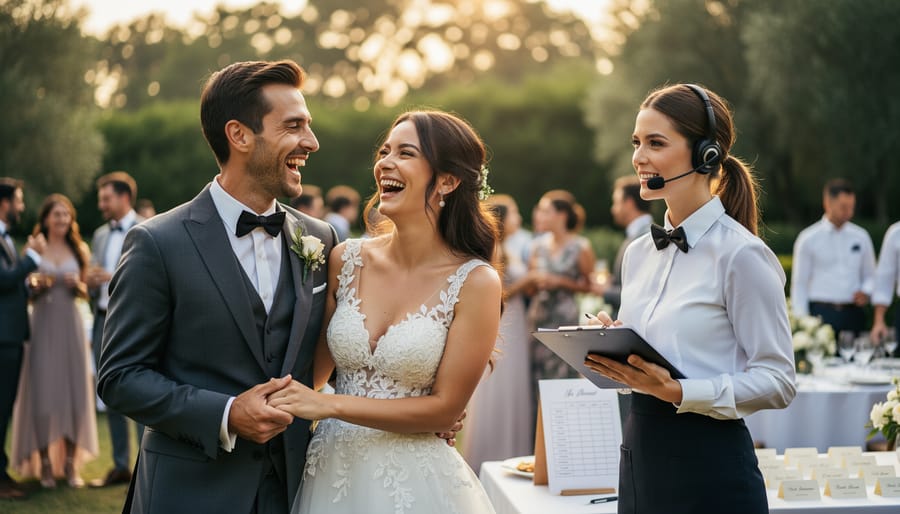
With a day-of coordinator, it never gets that far. The request lands with someone who already knows the seating chart, the caterer’s final headcount, and which tables have a little wiggle room. A quiet word with the venue team, a place card added, and the uncle is happily settled. The couple hears about it afterward, if at all.
That’s the real gift here. A coordinator becomes the single point of contact for relatives, vendors, and surprise guests, so questions about where to park, when the toasts begin, or whether Grandma can move closer to the dance floor never reach you. Late arrivals get gently redirected. Last-minute requests get a kind “let me see what I can do” instead of a rushed yes or an awkward no.
When the logistics belong to someone else, you get to do what the day is actually for: hug your people, soak in the vows, and stay present for every moment.
Conversation Starters That Keep Things Kind
The way you say something often matters more than the decision itself. A little warmth up front can turn a tense chat into a team effort. Start by framing everything around what you’ve chosen rather than what you’re turning down. “We’ve chosen an intimate celebration” lands softer than “We don’t want a big wedding.” One invites understanding, the other invites debate.
It also helps to ask before you assume. Never presume who is contributing financially, or how much, because every family handles this differently. Try opening with curiosity: “We’d love to hear what matters most to you about the day.” Then listen first. When you do get to budget conversations keep them separate from emotional topics like traditions, so nobody feels their love is being priced.
Before you talk to anyone else, sit down together and align on vision. When you both know your non-negotiables, you can speak with one calm, united voice, and that makes gentle boundaries so much easier to hold.
Here are a few ready-to-use phrases for the trickiest moments:
| Tricky situation | A kind phrase to try |
|---|---|
| Guest list pushback | “We know how much you’d love to celebrate with everyone, and we’re keeping our list small so we can really connect with each person there.” |
| Unsolicited venue opinions | “Thank you for sharing that, it’s clear you care. We’ve chosen this venue because it feels like us.” |
| Tradition questions | “That tradition means so much, and we’re finding a way to honour it in our own style. Can you tell us what you love about it?” |
| Budget boundaries | “We’ve set a plan we feel good about, and we’d love your help making it special in other ways.” |
Notice how each phrase thanks the person, names the decision as yours, and keeps the door open. You’re not shutting anyone out, just steering with care.
Honouring Traditions Without Losing Your Own Vision
Honouring family traditions and staying true to your own vision aren’t opposites. Most couples find the sweet spot when they stop asking “Do we include this?” and start asking “How do we make this ours?”
Begin by naming what each tradition actually means. A grandmother’s insistence on a particular dance might really be about connection. A parent’s attachment to a certain ritual might be about continuity and belonging. Once you know the feeling behind the custom, you can often honour it in a form that suits your day.
Small, personal touches tend to land best. You could serve a family recipe as part of the menu, even as a late-night bite or a signature cocktail inspired by a beloved relative. An heirloom can travel with you down the aisle, wrapped around your bouquet stems, tucked into a pocket, or pinned inside a jacket. A short ceremony ritual works beautifully too: a blessing from an elder, a handfasting, a shared cup, or a moment where both families offer words of welcome.
If your families come from different cultural or faith backgrounds, invite each side to explain what matters most to them. Ask open questions rather than assuming you already know. Every family practises its heritage in its own way, so let the people closest to the tradition guide you.
You also have permission to adapt. Shorten a ritual, modernize the music, or honour a custom in spirit when the full version doesn’t fit. Explaining your choices warmly, as something you’re carrying forward on your own terms, usually helps everyone feel respected.
Seating Charts, Speeches, and Photos: Where Family Drama Hides
Some of the most dramatic family moments happen over logistics, not feelings. A table assignment, a toast order or a photo list can quietly turn into a very big deal. A little structure up front keeps everyone feeling seen.
Seating is the classic pressure point. Start with your closest circle, then group guests by relationship rather than by side. If two relatives haven’t spoken in years, a calm buffer table does more than hoping for the best. Here’s a simple way to build a seating plan and a photo list at the same time:
- Write your guest list with notes on who gets along, who needs mobility access, and who’s bringing little ones.
- Seat parents and grandparents first, close enough to the action that no one feels sidelined.
- Place any estranged or tense pairs at separate tables, but never in a “naughty corner” that sends a message.
- Draft your family photo list in groups of no more than six to eight people, moving from largest to smallest.
- Name one outgoing relative per side to round people up, so you’re not hunting for Uncle Raj mid-cocktail hour.
- Share the finished list with your photographer and coordinator at least a week ahead.
Toasts deserve the same gentle planning. Decide who’s speaking before the day, give each person a time limit (three minutes is plenty), and confirm the order with your coordinator. This protects you from the well-meaning relative who grabs the mic unannounced. If you’re weaving in family or cultural moments, think about how they fit alongside your other ceremony traditions so the timeline stays clear and nobody’s moment gets squeezed out.
A clear, simple timeline shared with the people involved is the quiet secret behind a calm celebration.
Questions Couples Often Ask About Family and Wedding Planning
What if our parents disagree with each other?
Start by getting clear on what you and your partner want, then share that decision together, calmly, and one topic at a time. When parents see a united front, the debate tends to shift from “who’s right?” to “how can we help?” If it keeps flaring up, ask each parent to take ownership of one piece, like the welcome toast or the family photo list, so everyone feels heard without competing.
How do we handle opinions we never asked for?
A warm, simple phrase goes a long way: “Thank you, we love that you care about this. We’re still deciding, and we’ll let you know.” It acknowledges the person without committing you to anything. Repeat it as often as needed. Kindness doesn’t require you to say yes.
Can a planner act as a mediator?
In many ways, yes. A good planner or coordinator can be the neutral point of contact, passing along decisions, holding the timeline, and explaining logistics so you don’t have to deliver every “no” yourself. They’re experienced at keeping conversations practical and calm. What they can’t do is resolve long-standing family conflicts. Their role is to keep the wedding running smoothly around them.
When should we bring in a counsellor?
If the tension feels bigger than the wedding, it may be worth getting extra support. Signs include old hurts resurfacing again and again, estrangement or grief that’s weighing on you, conflict that’s affecting your relationship with each other, or dread that overshadows the excitement. A family therapist or counsellor can offer tools for communicating and setting boundaries that outlast the big day. Reaching out isn’t a sign something is wrong with your family. It’s a sign you’re taking care of the people you love, including yourselves.

At the heart of it, your wedding is a celebration of love, not a flawless performance. There will be a seating chart that needs a second look, an opinion or two you didn’t ask for, and maybe a moment when someone’s feelings need tending. None of that means you’re doing it wrong. It means the people who love you care deeply about this day.
Family harmony rarely appears by accident. It grows from kind, clear conversations, boundaries set early, and a little patience on the hard days. And you don’t have to carry all of it yourselves. Having a calm, experienced team in your corner can turn a tense moment into a small blip and leave you free to enjoy the planning.
If you’d love that kind of support, the team at WeddingGirl.ca is here to take the pressure off, so you can focus on what matters most. Breathe, lean on the people who’ve got you, and let the day be about the two of you, surrounded by everyone you hold dear.