
A concept is the feeling you want your wedding to give people. A theme is the visual story that expresses it, and a style is the overall look and mood that holds it all together. Say you want a day that feels like a warm, candlelit dinner with your favourite people (concept). Your theme might be “garden supper club,” and your style could be relaxed, romantic, and softly rustic. Same wedding, three layers, each one guiding the next.
Why does this matter so early in planning? Because every choice that follows, from invitations to florals to lighting to what your guests wear, gets easier when it has a clear point of view to answer to. Without one, it’s easy to end up with a pile of pretty ideas that don’t quite belong together. With one, decisions start to feel like yes or no instead of maybe.
That’s exactly what a Theme and Style Consultation is for. It’s a guided conversation that helps you turn scattered inspiration into a cohesive direction that feels like you, whatever your tastes, traditions, or priorities look like.
Below, we’ll break down what these terms really mean, how the process works, the main types of themes and styles, and how couples put them to work.
What a Wedding Theme and Style Consultation Really Means
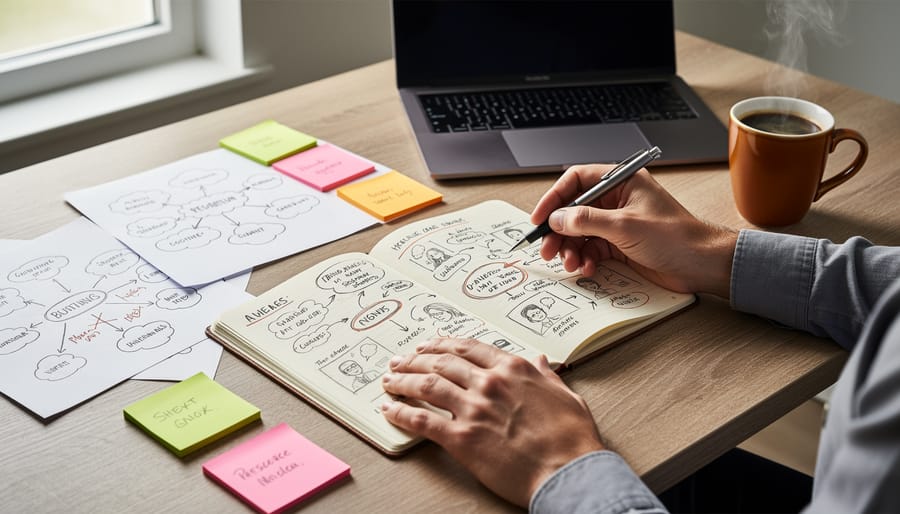
Concept vs. Theme vs. Style: Untangling the Terms
These three words get tossed around like they mean the same thing, but each one answers a different question, and knowing which is which makes every later decision easier.
The concept is the big idea, the “why.” It’s the story or feeling at the heart of your day. The theme is the “what,” the way that idea shows up visually through colours, motifs, and details. The style is the “how,” the overall look and feel that ties it all together, whether that’s modern, romantic, or relaxed.
Here’s a quick example. Say you and your partner met on a coastal hike. Your concept might be a “windswept coastal romance,” a day built around the feeling of salt air, open sky, and walking toward something wonderful together. Your theme brings that to life with a palette of sea glass, sand, and soft grey, along with driftwood accents and ocean-inspired stationery. Your style is the finishing mood, maybe relaxed and organic with a touch of elegance, so the whole thing feels effortless rather than costume-y.
Notice how the concept stays constant while the theme and style can flex. That’s exactly what a planner helps you sort out, and our guide to the style consultant process shows how those pieces come together into one clear direction.
How the Consultation Works, From First Chat to Finished Vision
The Questions That Shape Your Wedding Story
A good consultation feels less like an interview and more like a long, easy chat over coffee. Your planner is listening for the details that make your story yours, because those details become the creative direction later on.
Here are a few questions worth mulling over before you arrive:
- How did you meet, and what do you remember most about that first day?
- Which shared memory instantly makes you both smile?
- What feeling do you want guests to carry home, whether cozy, celebratory, or awestruck?
- What are your must-haves, and what are your absolute no-thanks?
- What season, setting, or kind of space are you drawn to?
Practical factors shape the answers, too. A venue’s architecture, the time of year, and the guest experience all steer what’s possible, from how the light falls at golden hour to whether people mingle outdoors or settle in at long tables. Even something like backyard wedding planning brings its own questions about layout, comfort, and flow that a planner will happily explore with you.
Expert tip: bring a mix of saved images and non-visual inspiration. Pinterest boards are lovely, but the song from your first road trip, a favourite meal from a trip abroad, or the scent of the place you got engaged can reveal just as much about your style. Those sensory clues often surface the details no photo ever could.
Popular Wedding Themes and Styles to Spark Your Imagination
The Building Blocks That Bring a Theme to Life
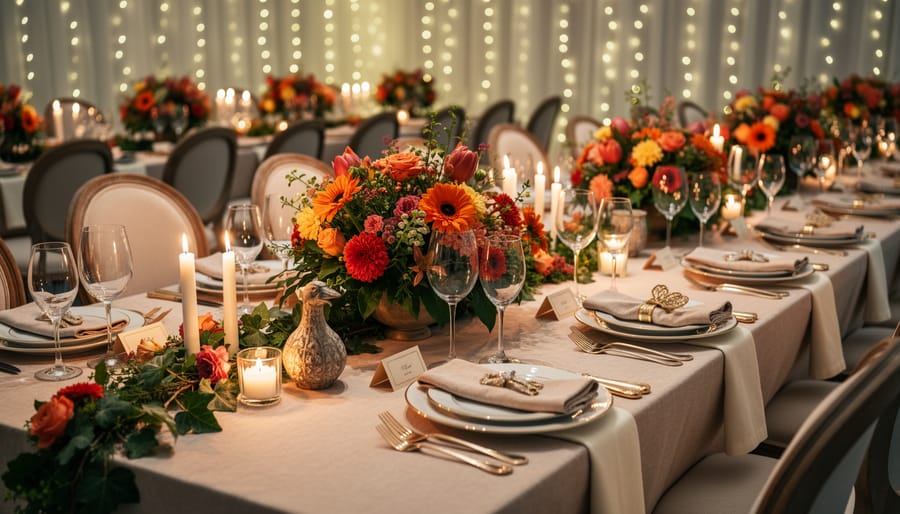
Think of a theme as a handful of building blocks, and a consultation is where we decide how each one carries your story. Your palette sets the emotional temperature, so soft blush and sage feels gentle while deep burgundy and gold feels dramatic. Florals and greenery bring that palette to life with texture and season. Lighting shapes the mood more than most couples expect; candlelight and warm string lights make a room feel intimate in a way overheads never will.
Then come the details guests actually touch. Tablescapes tell your story at arm’s length through linens, candles, and place settings. Stationery and signage introduce your style long before the day arrives, from the invitation to the welcome sign. Attire reflects you as a couple, and the menu can nod to a favourite meal, a family recipe, or the place you first met. If you’re weaving in elements from a culture or tradition, it’s worth taking the time to do so respectfully.
Here’s my expert tip: you don’t need to theme everything. Pick two or three “hero” elements, maybe the florals, the lighting, and the menu, and invest your energy there. Let everything else stay simple and quietly supportive. This is also one of the smartest ways to make every dollar count because your budget goes toward what guests will genuinely remember.
How a Theme and Style Consultation Helps in Real Wedding Planning
A clear creative direction does more than make your wedding photogenic. It becomes a filter for nearly every decision you’ll face.
Start with venues and vendors. When you know your story is “windswept coastal romance,” you stop touring ballrooms and start looking at spaces with natural light, open air, or water views. Photographers, florists, and rental companies also become easier to compare, because you’re asking, “Does their style fit our vision?” instead of simply, “Do we like their portfolio?”
Consistency is the next gift. Without a guiding idea, it’s easy to say yes to a gorgeous chair, a trending cocktail, and a dramatic arch that don’t quite belong together. With one, each choice has a place to land. Even when you’re excited by new ceremony trends you can ask whether they support your story or just crowd it.
It also makes budgeting smarter, whatever your budget looks like. Knowing what matters most helps you put your resources where you’ll feel them: maybe flowers that make your aisle unforgettable, maybe a dinner your guests will talk about for years. Everything else can be simple and still feel intentional.
Consider a couple who came to us with a folder of 300 saved images and no idea how they fit together. Over one conversation, we noticed that nearly every photo had candlelight, long tables, and a feeling of gathering. Their story was really about family dinners, and the plan came together around an intimate, warmly lit feast. Suddenly, venue, menu, and decor all pointed the same way, and they stopped second-guessing.
The same approach adapts to different formats:
– Full planning: the direction guides every vendor and design decision from the start.
– Destination weddings: it helps you choose a location and details that suit the place instead of fighting it.
– Day-of coordination: your coordinator has a clear blueprint to protect and bring to life.
– Intimate celebrations: a few well-chosen details carry the whole mood.
Common Questions About Wedding Themes and Style Consultations
Couples tend to ask the same handful of things once they start thinking about their creative direction, so here are the answers we give most often.
Do we need a theme at all?
Not in the traditional sense. Some couples want a full-on concept, while others simply want a clear look and feel that ties the day together. A consultation helps you find the right level for you, whether that’s a bold statement or a few quiet touches.
When should we book a consultation?
As early as you can, ideally before you lock in your venue or major vendors. Your style direction can guide those choices, so having it in place makes everything that follows feel easier.
Can we mix more than one style?
Absolutely. Many of our favourite weddings blend styles, like a modern minimalist space softened with romantic garden florals. The key is having one thread, such as a colour, a texture, or a feeling, that connects everything.
What if we disagree on style?
This is more common than you’d think, and it’s a great reason for a guided conversation. A planner helps you find the overlap, so you each see something you love in the final plan.
Do we need a finished Pinterest board first?
Not at all. A few saved images, a favourite song, or a trip you loved is plenty to start with.
And if you’re wondering whether this works for smaller celebrations or destination weddings, it does. A clear creative direction is just as helpful for an intimate dinner for twenty as it is for a large celebration, and it can be especially reassuring when you’re planning from a distance. The size of the day doesn’t change the value of knowing what you want it to feel like.
At the end of the day, a theme isn’t a rulebook or a trend you have to chase. It’s simply your love story made visible, the way your personalities, your memories, and the feeling you want your guests to carry home show up in the details they can see, taste, and hear.
That’s the real gift of a Theme and Style Consultation. It takes the tangled mess of “we love everything” and turns it into one clear direction, so every choice, from the venue to the napkins, feels easier and more like you. You don’t need a finished vision to begin, just a willingness to talk about what matters to you both.
If you’re ready to start that conversation, we’d love to hear your story. Reach out to WeddingGirl.ca and let’s begin shaping a wedding that feels unmistakably yours.